How to Qualify for Offer in Compromise: Real Success Tips
The Real Story Behind OIC Qualification
Let me be straight with you: getting an Offer in Compromise (OIC) approved isn't as simple as just owing the IRS a lot of money. I've worked with countless taxpayers, and many mistakenly think they're a shoo-in for an OIC simply because their tax debt feels insurmountable.
The truth is, the IRS uses a very specific, and frankly, rather impersonal formula to determine your eligibility. They analyze practically every detail of your finances, from your daily expenses to your long-term savings.
They're essentially considering three key questions:
Doubt as to Liability: Is there a legitimate question about whether you actually owe the tax? This is rare, but sometimes applies.
Doubt as to Collectibility: Can you realistically pay back what the IRS claims you owe, even over time? This is the most common reason for an OIC.
Effective Tax Administration: Would forcing you to pay cause significant hardship? This is the hardest to prove and often involves serious circumstances.
This all boils down to something called reasonable collection potential.
In simple terms, it's how much the IRS thinks they can realistically collect from you over the coming years. It's not about what’s fair or your individual situation; it’s a purely mathematical calculation based on strict IRS guidelines.
Understanding Reasonable Collection Potential
How does the IRS determine your reasonable collection potential? They look at your assets (things you own, like a house, car, or savings) and your future income (what you're likely to earn).
They use this information to project how much you could potentially pay, either through regular installments or by selling off assets. Want a deeper dive?
Check out this guide on how to qualify for tax forgiveness.
Here’s a real-world example: Imagine you owe $50,000 and own a home with $100,000 in equity. Even if your current income is low, the IRS might determine your reasonable collection potential is close to the full $50,000.
Why? Because they assume you could potentially sell the house or take out a loan against the equity to pay off the debt.
The IRS Doesn't Mess Around
The IRS offers a pre-qualifier tool on their website – it's meant to give you a quick idea of whether you might qualify for an OIC. Here's a peek at the Offer in Compromise page:
While helpful for a preliminary assessment, this tool isn’t the be-all and end-all. The actual application process demands far more detailed documentation, and believe me, the IRS will scrutinize it closely.
Even if the pre-qualifier gives you a thumbs-up, a real, live IRS agent might uncover other factors affecting your eligibility. Your specific situation and how well you present your financial information will ultimately make or break your OIC application.
The Financial Reality That Trips Up Most Applicants
Let's be upfront: the IRS's idea of "financial hardship" is tough. I've actually seen people get turned down because their grocery bills were a tad higher than the IRS’s national standard.
They use these pre-set expense tables that might not match your real costs at all. For example, what if you live in a place where rent is sky-high? Even if your rent is above their "local" standard, they'll use their lower number, not yours.
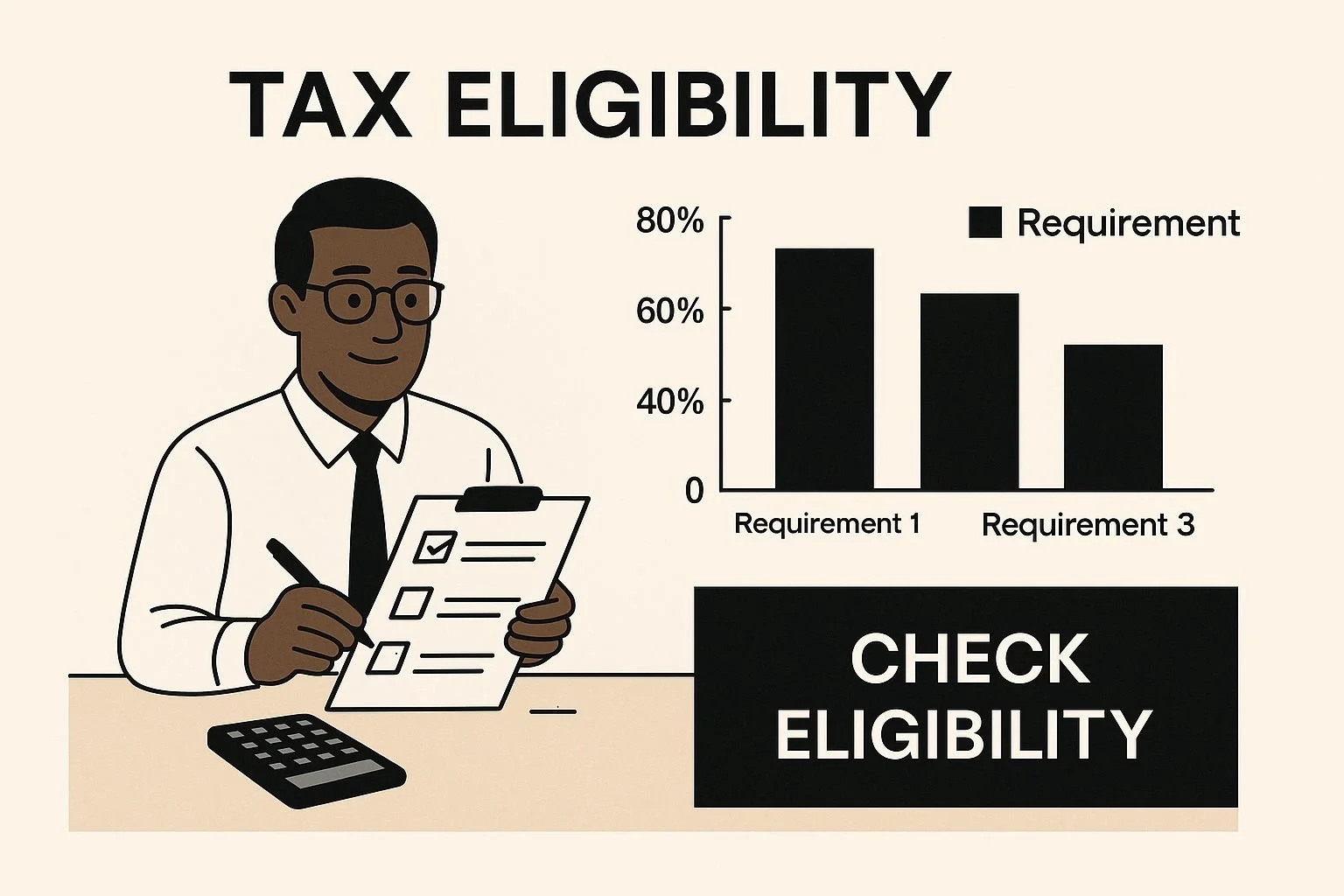
This infographic shows a tax advisor going through a checklist, highlighting how important it is to really dig into whether you qualify for an Offer in Compromise (OIC).
Careful planning and a solid understanding of the rules are key when you're considering an OIC. Knowing how the IRS thinks and what they’re looking for is half the battle.
Assets Don't Disqualify You, But...
Early in my tax career, I was surprised to learn that owning things like a house or a car doesn't automatically rule you out for an OIC. But, it does change how the IRS looks at your application.
If you have assets, particularly retirement accounts or a home, they start factoring in your age, your health, and how easily you could sell those assets. The timing of your application can make a huge difference too.
I’ve seen cases where someone applied during a brief income bump, and got denied, but later got approved when their income dipped back down.
The IRS Statement of Limits also plays a crucial role, so be sure you understand how it applies to you. For a deeper dive, Check out our guide on the IRS Statement of Limits.
Acceptance Rates and the IRS's Mindset
Understanding historical OIC acceptance rates can be really helpful. One study showed that between 2010 and 2017, the IRS accepted about 44% of OICs from individuals, but only about 24% from businesses.
That’s a big gap, and it shows how much tougher they are on businesses. Want to dig deeper into acceptance rates and what affects them? Discover more insights here.
Let's talk a bit more about those acceptance rates and what they mean for you. It’s helpful to understand the IRS's perspective. To get a clearer picture, take a look at this comparison table:
| Taxpayer Type | Acceptance Rate | Primary Scrutiny Areas | Common Rejection Reasons |
|---|---|---|---|
| Individual | 44% | Ability to pay, reasonable living expenses, asset equity | Incomplete financial information, unrealistic expense claims, potential for future income increase |
| Business | 24% | Viability of the business, potential for future profitability, asset liquidation value | Lack of clear business plan, insufficient documentation of financial hardship, potential for recovery through other means |
As you can see, the IRS scrutinizes different areas for individuals versus businesses. For individuals, they focus heavily on your ability to pay and whether your claimed expenses are reasonable.
Businesses, on the other hand, are evaluated based on their long-term viability and potential for future profits.
Understanding these differences is critical for crafting a successful OIC. By addressing the IRS’s key concerns upfront, you can significantly increase your chances of approval.
Proving Your Case
The IRS isn't trying to make your life miserable, but they need more than just "I can't afford it." They need solid proof. Think of it like lending a friend a large sum of money. You'd want to know they could pay you back, right?
The IRS works on the same principle, just on a much bigger scale with stricter rules. They need to be convinced that accepting your offer is the best way to get as much of the owed taxes back as possible.
Your job is to paint a clear picture of your finances, showing that your offer is truly the most you can realistically pay while still covering your essential living expenses.
This takes serious preparation and a strategic approach. It's not just about gathering paperwork; it's about telling your financial story in a way the IRS understands and accepts.
Mastering the Paperwork Without Losing Your Mind
Let's be honest, the documentation for an Offer in Compromise (OIC) with the IRS can feel overwhelming. It's like a deep dive into your finances, a full-on audit.
Having walked countless people through this process, I can tell you which documents are absolutely critical.
Form 656 kicks things off, but it's Forms 433-A (for individuals) and 433-B (for businesses) that often trip people up. These forms are incredibly detailed, wanting every single financial detail.
The trick isn't just filling them out accurately, it's about presenting your financial situation strategically (while being 100% truthful, of course!). This is where experience really pays off.
For instance, when you're listing your monthly expenses, knowing what the IRS considers "allowable" versus "excessive" can make or break your application.
I've seen OICs rejected because of an unjustified gym membership, while others with expensive medical treatments (properly documented, of course) got approved. Think strategically and justify every single expense.
Telling Your Financial Story
The real key to a successful OIC is crafting a clear and coherent financial narrative. Your bank statements, pay stubs, and receipts need to tell a story of genuine financial hardship.
I had a client whose OIC was initially rejected. We reorganized their documents to chronologically show their financial downturn, instead of just providing random snapshots, and their offer was accepted. It's all about painting a clear picture.
This brings us to Form 656 itself:

This screenshot shows the first page of Form 656, the Offer in Compromise form. Notice the level of detail required – thorough preparation is essential. Getting this right is the first step towards potentially qualifying for an OIC.
Organizing for Success
Think of it like applying for a loan. The bank won't just take your word that you'll repay them. They need documentation, credit history, and proof of income. The IRS is similar.
They're not trying to make your life difficult, but they need solid proof that your offer is truly the most you can pay. This means meticulous record-keeping and clear documentation.
Don't just hand them a mountain of paperwork. Organize everything logically. Use a table of contents, label each section clearly, and highlight the most important information. Make it easy for the IRS to understand your situation.
A well-organized application shows you're serious and respects the process, something the IRS appreciates. This careful approach will ultimately be key in navigating the complexities of qualifying for an offer in compromise.
Strategic Offer Calculation That Actually Works

This is where the rubber meets the road with an Offer in Compromise (OIC): the offer calculation. This single step can save you thousands, or it can completely tank your chances of qualifying.
The IRS has a formula, yes, but the real magic is knowing how to work strategically within that framework. I've seen offers get rejected for being too low, and I've seen people overpay, leaving money on the table they could have kept. It's a delicate balance.
The basic formula uses your asset equity (what you own) and your projected future income (what you'll earn).
Seems straightforward, right?
But the details are where things get interesting. For a deeper dive into the IRS Offer in Compromise formula and how to maximize your chances of success, check out this helpful article.
The Nuances of Asset Valuation
Here's the inside scoop: how you value your assets has a huge impact on your offer amount. The difference between quick sale value (what you'd get if you had to sell fast) and fair market value (what it's theoretically worth) isn't just a technicality—it can translate to serious savings.
Let's say your house has a fair market value of $300,000. But, if you had to sell it quickly, after realtor fees and closing costs, you might only net $240,000.
Being able to demonstrate that lower quick sale value can significantly reduce your offer amount. Trust me, every dollar counts.
Monthly Income: Beyond the Basics
The IRS looks at your average income from the past few months, but they also consider your future earning potential. This is where it can get tricky. I’ve worked with clients who were temporarily unemployed while applying for an OIC.
We structured their offers based on their realistic long-term earning capacity, not their current zero income. This was absolutely key to getting their offers accepted. Timing is everything, and seemingly small changes in your finances can drastically affect your offer amount.
Before we move on, let's look at how the IRS typically values assets. Understanding this is critical for accurately calculating your offer.
Asset Valuation Methods for OIC Calculations
How the IRS values different types of assets and the calculation methods used to determine reasonable collection potential
| Asset Type | Valuation Method | Typical Percentage of Fair Market Value | Special Considerations |
|---|---|---|---|
| Real Estate | Quick Sale Value | 80-90% | Location, condition, market fluctuations |
| Vehicles | Kelley Blue Book, NADA Guides | 80-90% | Condition, mileage |
| Retirement Accounts | Often Exempt | Varies by plan type | Protection may vary by state law |
| Stocks & Bonds | Current Market Value | Generally 100% | Fluctuations can be factored in |
| Business Assets | Valuation by appraiser | Varies widely | Complexity of business, industry factors |
This table gives you a general idea, but remember, each case is unique. Working with a tax professional can help you navigate these complexities and ensure you’re using the most advantageous valuation methods for your specific situation.
Putting It All Together
Calculating your OIC offer isn’t a one-time thing. It needs ongoing assessment and recalculation as your finances change. Even small shifts can impact the amount you should offer.
Remember, the goal is to present the most accurate and advantageous picture of your financial situation, all while staying completely within IRS guidelines. This balancing act takes careful planning and serious attention to detail, but getting it right can be life-changing.
Don't underestimate the power of strategic planning in this critical stage. The difference between a successful OIC and a rejected one often comes down to how well you present your financial information and calculate your offer amount.
A well-structured, thoughtfully presented offer can unlock a financial fresh start.
Surviving the Application Process Like a Pro
So, you've submitted your Offer in Compromise (OIC). Now what? Well, let's just say you're in for a bit of a ride. I call it "bureaucratic purgatory," and knowing what to expect can save your sanity.
The waiting game can be long – anywhere from six months to over two years. The IRS’s current workload and the complexity of your case both play a role.
Here's the inside scoop: what you do during this waiting period matters. A lot. The IRS often asks for more documents, and how you respond can make or break your OIC.
I've seen it firsthand. Quick, thorough responses show good faith. Slow or incomplete ones? Not so much.
Staying Compliant Is Key
Here's a major gotcha: the compliance requirement. You absolutely must stay current on all your taxes while the IRS reviews your OIC.
Miss a quarterly payment or file late, and your application could be toast. Think of it like trying to get a loan while piling up more debt—it doesn't work.
The Investigation: It's Invasive, But Necessary
Brace yourself. The investigation process can feel pretty intrusive. Revenue officers will verify everything you’ve claimed. They’ll contact your bank, and sometimes even visit your home or business.
Look, it’s not personal. It's standard procedure. Knowing that can help you cooperate without feeling overwhelmed or defensive.
You might find this guide on settling IRS debt helpful during this time.
Managing Expectations and Communication
Keep meticulous records of every interaction with the IRS. Dates, times, names of agents, specifics of conversations – write it all down. This documentation is gold if questions come up later.
Let's be real, having your finances under a microscope for months (or years) is stressful. Set realistic expectations from the start. Focus on staying compliant, not obsessively checking your application status.
It’s a marathon, not a sprint. The IRS has a lot of applications to process. Patience and persistence are key. While you wait, you might want to brush up on how to qualify for an offer in compromise. It never hurts to reinforce your understanding of the process.
Inside the IRS Review Process
Knowing how the IRS reviews your Offer in Compromise (OIC) application is like having a secret weapon. It helps you understand what to expect and seriously boosts your chances of success.
After years of working with the IRS, I've learned that Revenue Officers follow specific rules and even have quotas.
This impacts how they handle each case. They aren't trying to be difficult, they're just following procedures designed to protect both taxpayers and the government.
Red Flags and Scrutiny
Some things immediately raise eyebrows at the IRS.
Did you recently transfer a large asset? Red flag.
Inconsistent income reporting? Another one.
Living a lifestyle that doesn't match your stated income? You get the picture.
The IRS looks for patterns and inconsistencies. They’re trained to spot potential issues that might suggest someone is hiding assets or underreporting income. It's not personal, it's just procedure.
The Appeals Process: Your Second Chance
What if your OIC is rejected? Don't freak out. The appeals process is there for a reason. I've seen many cases overturned on appeal simply by providing better documentation or tweaking the offer slightly.
Sometimes the initial reviewer misses something important, or a taxpayer’s situation changes enough to warrant a second look.
The key is understanding why the rejection happened and addressing those specific issues.
Don't just resubmit the same paperwork and hope for a different outcome.
The Importance of Documentation and Communication
Keep detailed records of everything during the review process, which can often take a while. This means copies of every letter, email, and notes about phone calls (date, time, who you spoke with).
It's a pain, but trust me, it can be a lifesaver if any disagreements pop up later.
Also, remember that IRS OIC acceptance rates change. In 2019, they accepted 17,890 OICs, but this number dropped during the COVID-19 pandemic.
This probably reflects the economic turmoil and the IRS’s reduced capacity at the time. Discover more insights on OIC acceptance rates.
The Emotional Rollercoaster: Staying Sane
Having your finances examined for months or even years is stressful. Be prepared for the emotional toll. Set realistic expectations from the start.
Focus on staying tax compliant instead of obsessively checking your application status. This is a marathon, not a sprint.
Patience and persistence are key to getting through the IRS review process and finally resolving your tax debt.
Your Realistic Path Forward
So, you’ve learned about Offer in Compromise (OIC) qualifications. Now, let's map out a realistic plan. Forget wishful thinking; this is about honestly assessing your situation and charting a clear course.
Brutal Honesty: Can You Really Qualify?
Here’s the hard truth: if you can't show real financial hardship by IRS standards, don't waste your time on an OIC application. I've saved clients thousands by having this tough conversation upfront.
The IRS defines hardship differently than you might. They use strict formulas and guidelines. Be brutally honest with yourself about your actual chances.
Time Is Your Friend (and the IRS's Enemy)
If qualifying is a possibility, prepare for a marathon, not a sprint. Figure on 3-6 months minimum to gather documents and prepare your application. Rushing almost guarantees rejection.
The IRS needs time to review, and you need time to build a solid case. Think of it like building a house – a solid foundation takes time.
Professional Help: Yes, No, Maybe?
Needing professional help depends on your comfort level with complex financial paperwork and your specific tax situation. I’ve seen DIY successes and disasters, and the same goes for professional help.
Accuracy, completeness, and strategically presenting your finances is key. A tax professional experienced with OICs can help you navigate the process and present your case effectively.
Backup Plans: Because Life Happens
While working on your OIC, have backup plans. What if it's rejected? An installment agreement, currently not collectible status, or even bankruptcy might be better options. Having a Plan B (and C) reduces stress later. It's like insurance—you hope you don't need it, but it's there if things go sideways.
OIC Approved? Don't Celebrate Yet!
Even with approval, understand the compliance requirements. This trips up many people. Missed payments or late filings can unravel everything, leaving you worse off. Success means sticking to the agreement terms. It's a contract—you must fulfill your obligations.
The Big Picture: Long-Term Financial Health
Most importantly, use this as a springboard for better financial management. Resolving past tax debt is pointless if you create new problems.
The habits you build during this process are more valuable than any single debt resolution. Think of it as a wake-up call—a chance to build a better financial future.
Resolving tax debt is complex, but with careful planning and a realistic approach, you can navigate it.
Don't go it alone. Contact Attorney Stephen A. Weisberg for a free tax debt analysis and learn how he can help you navigate the complexities of an Offer in Compromise and create a plan for long-term financial success.
➥ Contact Attorney Stephen A. Weisberg for a free Tax Debt Analysis.
Contact Me Here: https://www.weisberg.tax/contact-1
Email: sweisberg@wtaxattorney.com
Phone/Text: (248) 971-0885
Address: 300 Galleria Officentre, Suite 402, Southfield, MI 48034
