How to Find a Good Tax Attorney: What Actually Works
Why Your Tax Attorney Choice Can Make or Break You

Let's face it, tax problems are stressful enough. Picking the wrong attorney can make things a whole lot worse. The right tax attorney can be a lifesaver, while a mediocre one can be a disaster.
I've seen it firsthand with my own clients. Some have told me stories about how a skilled attorney saved their business, or even their home, through smart negotiations.
Others, unfortunately, have shared how a less effective attorney actually made their situation worse, leading to bigger penalties and more financial trouble.
It's not just about the money, either. The wrong attorney can cost you time, peace of mind, and even damage your reputation.
Picture this: you're facing an audit and your attorney isn’t prepared or doesn’t specialize in your specific issue. Or imagine paying for advice that doesn’t actually solve anything, or even makes the problem more complicated.
I’m not trying to scare you, but choosing the right attorney from the beginning is absolutely crucial. It takes some real research and effort, but it's worth it.
Speaking of research, it’s amazing how many lawyers there are in the U.S. According to the Bureau of Labor Statistics, there were about 859,000 lawyers employed in the U.S. as of May 2024.
And the field is expected to grow another 5% by 2033, with around 35,600 new job openings every year. Tax lawyers are a specialized group within this larger field, earning a median annual wage of $151,160.
With so many lawyers out there, and with those kinds of salaries, you can see why it's so important to carefully vet your options.
The Stakes Are High
Your financial well-being is at stake. You need an attorney who not only knows tax law inside and out, but also understands your particular situation. I had a client, a small business owner, who was facing a serious payroll tax issue. It could have shut down her entire company.
She first hired a general lawyer who occasionally handled tax cases, but he didn’t have the specialized knowledge to negotiate effectively with the IRS.
The result? Lost time and increasing penalties. She eventually came to me, and we were able to work out a much better settlement that let her keep her business running. This really shows the difference between a generalist and a true tax specialist.
Think of it like choosing a surgeon for a complicated medical procedure. You wouldn’t pick just any doctor; you’d want someone with specific experience and a history of success.
It's the same with legal representation. Your tax situation deserves focused attention. Picking the right attorney is the first step towards resolving your tax problems and protecting your financial future.
Figuring Out What Kind of Tax Help You Actually Need
Before you even start calling tax attorneys, take a moment to think about your specific situation. Tax law is a vast and specialized field.
Picking the wrong kind of tax attorney is like going to a foot doctor for a broken arm. They're both doctors, yes, but their expertise is completely different.
What exactly are you dealing with? Unpaid back taxes? A dreaded IRS audit? Are you trying to navigate the complexities of estate planning or setting up a complicated business structure?
Each of these situations demands a different legal specialist. An attorney who's a whiz at negotiating offers in compromise with the IRS may not be the best choice for international tax law.
Matching Your Needs to the Right Expertise
Let's look at some common types of tax attorneys and their specialties. Tax controversy attorneys are the ones you want in your corner if you’re facing an IRS audit, appealing a tax decision, or dealing with collections.
If you’re facing a tax fraud investigation (yikes!), you absolutely need a criminal tax defense attorney. This is serious legal territory requiring very specific knowledge.
For business owners, a business tax planning attorney can advise on everything from structuring your business and handling mergers and acquisitions, to staying compliant with tax laws and minimizing your liabilities. And finally, estate planning attorneys specialize in wills, trusts, and navigating the often-confusing world of estate taxes.
For example, let's say you're a small business owner dealing with a payroll tax problem. You might think any tax attorney can handle it.
But an attorney specializing in payroll tax controversies will be far more familiar with the ins and outs of payroll tax regulations and how the IRS typically handles these cases. That kind of specialized knowledge can be crucial for a positive outcome.
To help you visualize this, here's a handy table: Types of Tax Attorneys and Their Specializations
| Specialization | Typical Cases | Best For | Average Timeline |
|---|---|---|---|
| Tax Controversy Attorney | Audits, appeals, collections, offers in compromise | Individuals and businesses disputing IRS rulings | Varies greatly depending on the complexity of the case |
| Criminal Tax Defense Attorney | Tax evasion, fraud investigations | Individuals or businesses facing criminal tax charges | Can take months or even years |
| Business Tax Planning Attorney | Business structuring, mergers and acquisitions, ongoing compliance | Businesses of all sizes | Varies depending on the project |
| Estate Planning Attorney | Wills, trusts, estate tax minimization | Individuals and families | Can range from a few weeks to several months |
As you can see, different specializations handle very different issues. Choosing the right type of attorney can save you headaches and potentially a lot of money down the road.
When You Need More Than One Expert
Sometimes, tax issues can be tangled and complex, possibly requiring more than one type of specialist. Imagine a business owner selling their company.
They might need a business tax planning attorney and an estate planning attorney. The business attorney can handle the tax implications of the sale itself, while the estate planning attorney advises on how the sale impacts the owner’s personal wealth and estate.
This is why a solid initial consultation is so important. A good tax attorney can assess your entire situation and tell you whether you need multiple specialists or if they can handle everything themselves.
One more tip: finding the right tax attorney often means looking beyond just their advertised specialty. Some attorneys might have a broader range of experience than what they list on their website.
Don’t hesitate to ask about their experience with situations like yours. By understanding your needs and doing your research, you’ll be well on your way to resolving your tax issues effectively.
Where the Best Tax Attorneys Actually Come From

Forget those endless online lawyer directories. They’re rarely the source of real tax solutions. Finding a truly good tax attorney often means looking in less obvious places. Knowing where to look can save you a ton of time and frustration.
One of the best starting points? Referrals. Think about it: CPAs and financial advisors work with tax attorneys all the time. They see firsthand who gets results and who doesn't.
These referrals often come with valuable insights – like which attorney is a shark at negotiating offers in compromise. That kind of insider knowledge is priceless.
Another often-overlooked resource? State bar associations. They do more than just list attorneys. They actually certify specialists in areas like tax law.
The American Bar Association website is a good starting point, but the real power lies in digging into resources like your state bar association. They'll have more detailed information on certifications and specializations, helping you narrow your search.
Beyond the Usual Suspects
Let's be real – when was the last time you saw a billboard for a tax attorney? It just doesn't happen. The best tax attorneys often build their business through referrals and their reputations within professional organizations.
These organizations frequently have rigorous membership standards, which can give you confidence in their members' expertise. They’re an excellent place to begin your search.
Want to get a feel for how complex tax law can be? Check out our guide on small business tax deductions.
Another avenue to explore? Contacting tax attorneys directly. Many offer brief initial consultations. This gives you a chance to get a sense of their style and see if you click.
This is often the key to uncovering those hidden gems – the attorneys who aren’t advertising but have an amazing track record. Finding the right tax attorney isn't just about finding a name; it's about finding a professional who understands your unique situation and can expertly handle the complexities of tax law to get you the best possible outcome.
Spotting the Difference Between Real Attorneys and Opportunists
So, you're drowning in tax issues and know you need professional help. The problem is, the tax resolution world can feel like a minefield. It’s full of companies that look slick and sophisticated, but operate more like pushy salespeople than legal experts.
Knowing the difference can save you a mountain of cash and stress.
Think about it: you wouldn’t hire a painter to fix your leaky roof, would you? You’d want a qualified roofer. The same logic applies to your taxes. You need someone with specific legal credentials – a qualified tax attorney – not just any tax preparer.
Key Differences Between Attorneys and Tax Settlement Companies
Let's break down the major differences. The most important distinction? Regulation. Tax attorneys must pass the bar exam and adhere to a strict code of ethics.
Tax settlement companies? Not so much. This is a crucial difference when you're entrusting someone with your financial life.
Another key difference lies in the services they offer. A licensed tax attorney can represent you in court, negotiate directly with the IRS, and offer comprehensive legal advice.
Tax settlement firms often concentrate solely on negotiating Offers in Compromise (OICs). While OICs can be a good option in certain circumstances, they're not a one-size-fits-all solution.
There's a real gap between tax attorneys and tax settlement firms when it comes to success rates and client satisfaction. Tax attorneys are licensed professionals, while tax settlement firms aren’t held to the same standards.
Investopedia points out that the IRS rejects a significant number of OICs, and client satisfaction with these firms is often pretty low. It’s worth digging into the reality of these firms before you jump in.
Spotting the Red Flags
So how can you spot a legitimate tax attorney? Watch out for these red flags:
Unrealistic Promises: Be skeptical of anyone who guarantees a particular outcome. If it sounds too good to be true, it probably is.
Pressure Tactics: A reputable attorney won't push you into signing a contract or paying upfront before they’ve thoroughly evaluated your situation.
Lack of Transparency: If a company is cagey about their fees or how they work, that's a warning sign. A good attorney will be open and honest about their pricing and the services they offer.
Focus on Sales, Not Solutions: Does the conversation feel more like a sales pitch than a legal consultation? That’s a major red flag.
Questions to Ask Potential Attorneys

Here are a few questions to quickly separate the wheat from the chaff:
Are you a licensed attorney?
What is your bar number?
Do you specialize in tax law?
What's your experience with cases similar to mine?
What are your fees, and how do you structure them?
Finding the right tax attorney takes careful research and due diligence. Don't be afraid to ask the tough questions. Your financial well-being is on the line.
What You'll Really Pay for Quality Tax Representation
Let's talk money. Nobody likes surprises, especially when it comes to legal fees. Finding the right tax attorney means understanding what influences their cost.
From my own experience talking to both attorneys and those who hire them, I know pricing can be all over the map. Knowing the "why" behind the cost is half the battle.
One of the biggest factors is the fee structure. Some attorneys charge by the hour, which seems straightforward, but it's not always so simple. Some bill in 15-minute increments, others by tenths of an hour.
That little difference can really add up, especially with a complicated case. Then you have flat fees, which are great for predictable budgeting, but might not be the best deal if your case is simpler than you initially thought.
Finally, there are contingency fees, where the attorney only gets paid if you win. These exist for some tax situations, but they're not as common.
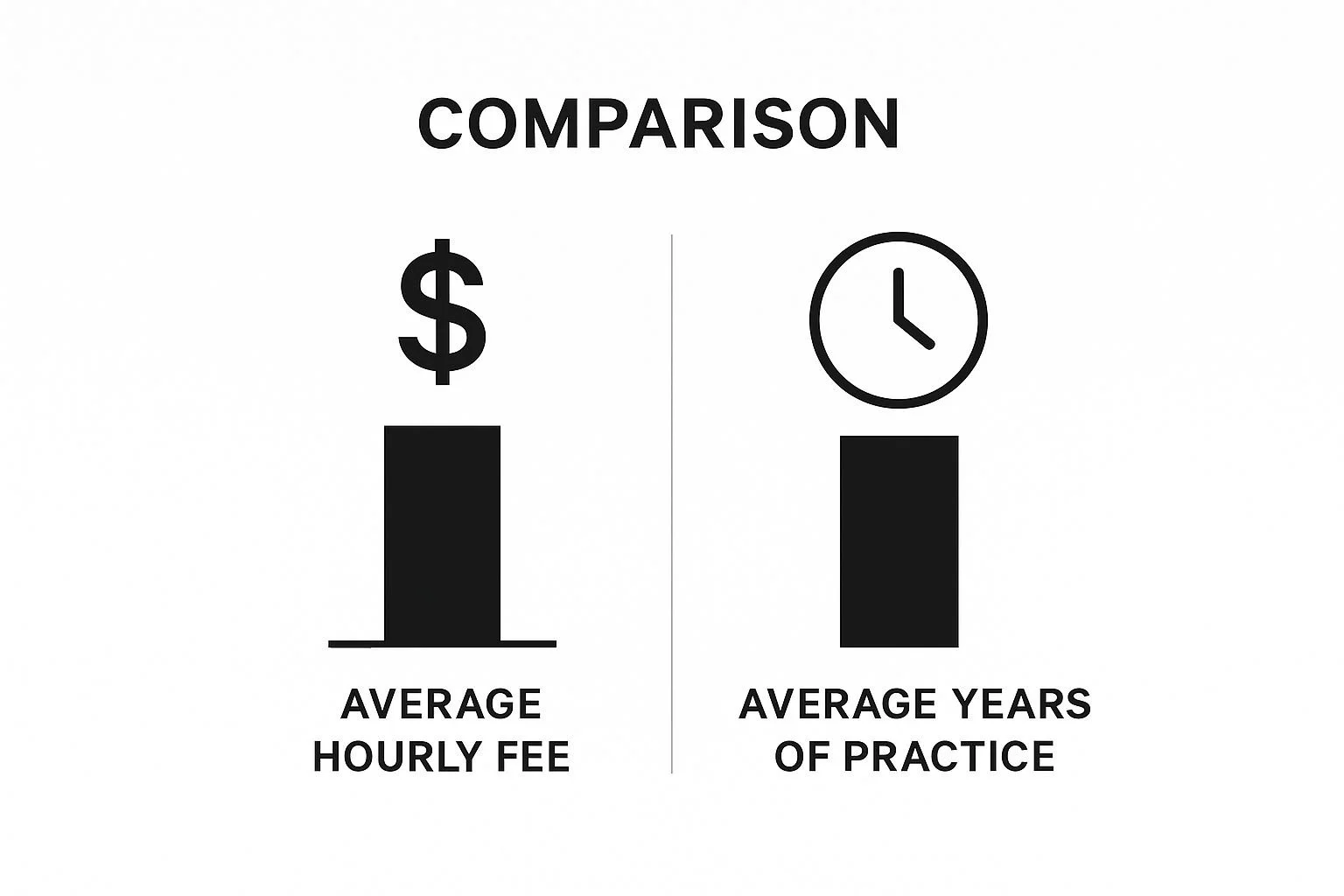
The infographic above shows how an attorney’s years of experience often correlate with their hourly rate. Experience usually means specialized knowledge and a strong track record – and that comes at a premium.
This doesn’t mean you should automatically go for the priciest option, but it does highlight the importance of balancing experience with your budget.
Managing Costs Effectively
Getting the best bang for your buck means finding that sweet spot between cost and expertise. Even if initial consultations are free, being prepared makes a huge difference. Organize your documents and have a clear list of questions. This way, you get the most out of that first meeting.
For some added practical tips, check out our guide on how to file back taxes.
Sometimes spending a bit more upfront can actually save you money down the road. A highly experienced tax attorney might resolve your issue quickly and efficiently, which can minimize penalties and interest.
To give you a better idea, the average hourly rate for tax attorneys in major U.S. cities ranges from $200 to $550. Some cases, especially simpler ones, might involve a flat fee between $3,500 and $4,500.
This can change depending on the complexity of your case, the attorney's experience level, and where they’re located. To put this into perspective, the median wage for lawyers in general was $151,160 in 2024. This shows just how specialized tax law is.
Getting a clear fee structure upfront is essential. Initial consultations, which are often free, are a good time to make sure the cost aligns with the value before making a commitment. Learn more about attorney costs and factors.
Before we wrap up, let's look at a helpful breakdown of common fee structures. Understanding these can give you a clearer picture of what to expect.
To help you understand the different ways tax attorneys charge, I've put together this table:
Tax Attorney Fee Structures Breakdown
Detailed comparison of different fee arrangements, typical costs, and which structure works best for different case types
| Fee Type | Typical Range | Best For | Pros | Cons |
|---|---|---|---|---|
| Hourly Rate | $200-$550+ | Complex cases requiring extensive research or litigation | Predictable billing based on time spent | Can become expensive quickly if case drags on |
| Flat Fee | $3,500-$4,500+ | Straightforward cases like Offer in Compromise (OIC) or simple tax preparation | Predictable cost upfront; good for budgeting | May not be the best value if the case is resolved quickly or becomes more complex |
| Contingency Fee | Percentage of the amount saved/recovered (typically 30-40%) | Cases where the taxpayer is likely to receive a significant refund or reduction in tax liability | No upfront cost; attorney is incentivized to get the best result | Less common in tax law; not suitable for all cases |
As you can see, each fee structure has its own pros and cons, making it essential to choose the one that best fits your specific tax situation and financial circumstances.
Finding the right tax attorney is about more than just the price tag. It's about understanding what you’re getting for your money and making sure you have the expertise and support you need. Think of it as an investment in your financial well-being—an investment worth getting right.
Trusting Your Gut While Staying Objective
So, you've done your research, interviewed some candidates, and now you're down to the wire: choosing the right tax attorney. This isn't about picking the shiniest resume.
It's about finding someone you can trust with your financial well-being—a true partner. You need to balance those objective qualifications with your gut feeling.
Think of it like buying a car. You wouldn't just grab the first one that catches your eye, would you? You'd compare mileage, safety features, and take it for a spin.
Choosing a tax attorney is similar. Weigh their technical skills against your communication, their experience with their availability, and definitely their fees against their actual value.
Recognizing Red Flags
I've seen clients hire attorneys who looked fantastic on paper but were a terrible fit in reality. One client, a small business owner facing an audit, hired a highly credentialed attorney.
Communication was a nightmare. My client felt lost and unheard, adding more stress to an already stressful situation. Ultimately, despite the attorney's qualifications, they weren't the right fit.
If something feels off, trust your intuition, even if the attorney seems qualified. You might find this interesting: IRS tax forgiveness programs.
Here are some big red flags to watch out for:
Evasive Answers: Dodging questions or giving vague replies is a bad sign. They might be hiding something.
Overpromising: No attorney can guarantee outcomes, especially with tax law. Run from anyone who makes promises they can't keep.
High-Pressure Sales Tactics: A good attorney won't pressure you into a contract. They understand this is a big decision.
Poor Communication: Clear and consistent communication is crucial. Unresponsive or unclear explanations signal potential issues down the line.
Setting Yourself Up for Success
Finding the right tax attorney is not just about their qualifications; it's about the working relationship. Think partnership. Set clear expectations upfront. Discuss how you prefer to communicate, how often you want updates, and how involved you want to be in decisions.
I had a client, a real estate investor, who valued being actively involved in her case strategy. She wanted to understand the "why" behind each decision, not just be passively informed. Finding an attorney who respected her collaborative approach was key. It eased her stress and built trust.
Remember, the most qualified attorney might not be the right fit for your needs. That's okay. Recognizing this early can save you time, money, and loads of frustration.
It's about finding the right blend of experience, expertise, and personality to make a stressful process a little easier. The right attorney can dramatically impact the outcome of your tax situation.
Your Roadmap to Finding and Hiring the Right Attorney
Finding the right tax attorney can feel overwhelming, but having a solid plan makes all the difference. Your situation is unique, so your approach should be too. Whether you're a small business owner facing a tax audit or an individual struggling with income tax debt, a clear roadmap is key.
Preparing for Initial Consultations
Most tax attorneys offer free initial consultations. See these meetings as your opportunity to interview them. Don't go in empty-handed. Preparation is essential to maximize this valuable time.
Gather your important documents: tax returns, IRS notices, and any correspondence you've had. Having this organized not only saves time but also shows the attorney you're serious.
Prepare a list of questions. What are your biggest concerns? What do you hope to achieve? Ask about their experience with similar cases, their fees, and how they communicate with clients.
This helps you gauge their competence and if your personalities click. A good working relationship relies on communication and trust.
Making the Most of Your First Interaction
First impressions are important. Be on time and be honest about your situation. A good tax attorney isn't just a legal expert, they're a counselor and advisor. The more open you are, the better they can understand your options and create a tailored plan.
Pay attention to how they communicate. Do they explain things clearly, or do they bury you in legal jargon? Do they genuinely want to help, or are they just focused on landing a client? Remember, you're hiring an advocate to guide you through a potentially stressful process.
For tips on handling IRS debt negotiations, check out our article How to Negotiate IRS Debt.
Troubleshooting Common Obstacles
Finding the right attorney isn't always easy. What if they're too busy? Don't hesitate to ask for recommendations – perhaps they have colleagues they can suggest. What if your situation is urgent? Explain the circumstances and see if they can offer any immediate advice or prioritize your case.
Addressing the Emotional Side
Facing tax issues can be emotionally draining. It's normal to feel overwhelmed or anxious. Having a clear plan helps manage these feelings. Finding the right attorney is a big step toward resolving your problems. It's about taking control and moving forward.
Don't let fear paralyze you. With the right support and a well-defined plan, you can navigate this challenging time and regain your financial peace of mind.
Ready to take control of your tax situation? Contact Attorney Stephen A. Weisberg for a free Tax Debt Analysis. With over 10 years of experience helping individuals and businesses, Attorney Weisberg offers personalized strategies and clear communication to guide you toward the best possible outcome. Don’t let tax problems control your life – take the first step toward resolution today.
➥ Contact Attorney Stephen A. Weisberg for a free Tax Debt Analysis.
Contact Me Here: https://www.weisberg.tax/contact-1
Email: sweisberg@wtaxattorney.com
Phone/Text: (248) 971-0885
Address: 300 Galleria Officentre, Suite 402, Southfield, MI 48034
