What Happens During IRS Audit? A Clear Step-by-Step Guide
That brown envelope from the IRS in your mailbox is enough to make anyone’s heart skip a beat. But before panic sets in, it’s important to understand what an IRS audit really is. At its core, it's just a review of your financial information to make sure what you filed matches up with reality, according to tax law.
This guide will walk you through exactly what happens during an IRS audit, breaking down each step from that initial notice to the final outcome.
Your Guide to the IRS Audit Process
First things first: an audit doesn't automatically mean you’ve done something wrong. The IRS flags returns for all sorts of reasons. It could be a simple computer-generated random selection, a mismatch between a 1099 form and your reported income, or even an audit of a business partner that leads them to your return.
The key is to stay calm, be professional, and get your documents in order. Think of this guide as your roadmap—it’s here to demystify the process and give you the confidence to handle whatever comes your way.
Understanding the Initial Steps
The whole journey kicks off the moment you open that letter. The infographic below lays out the first three things you should do right away, which will set the tone for everything that follows.
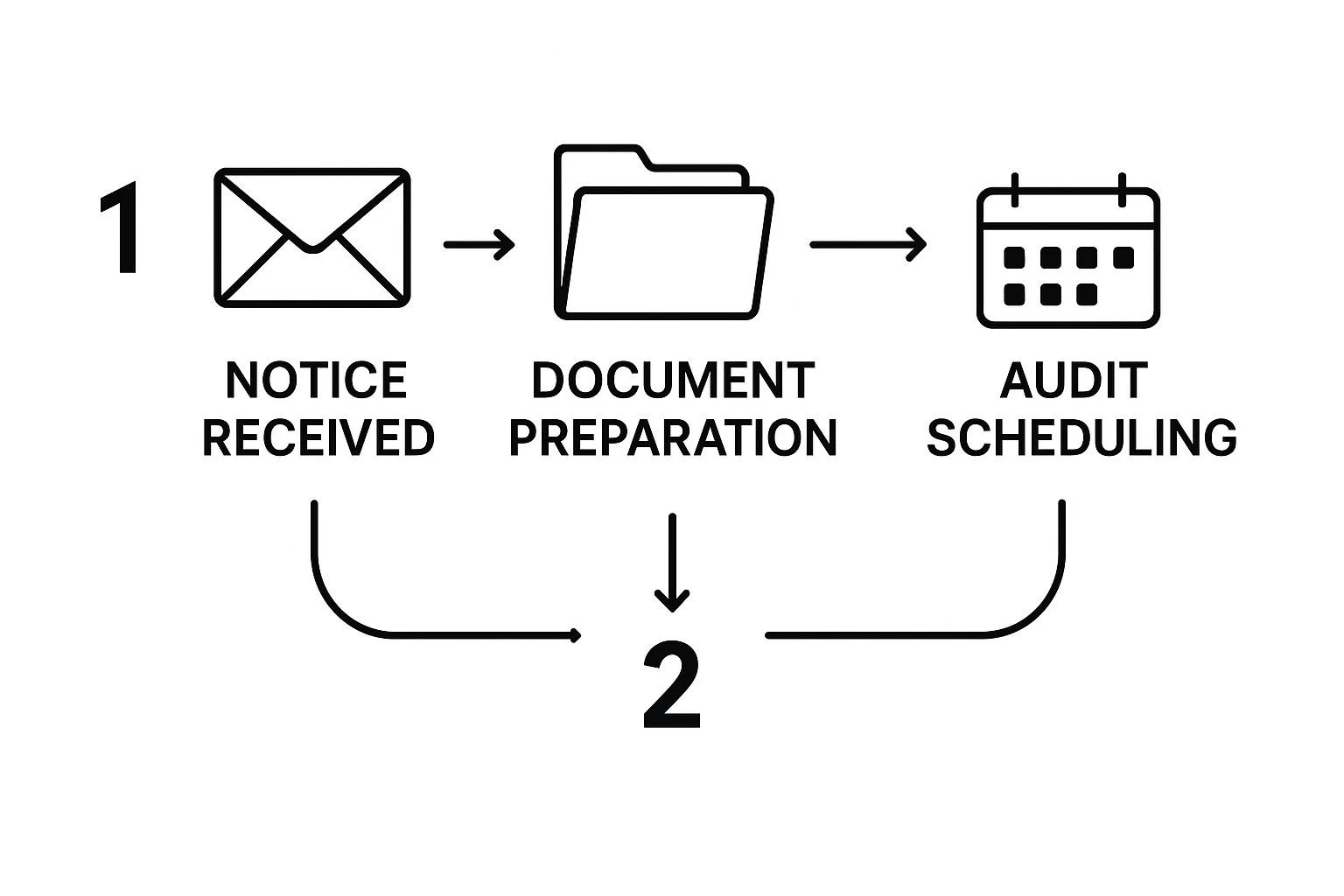
As you can see, a successful outcome starts with solid preparation, long before you ever pick up the phone to talk to an auditor.
While an audit notice is always serious, it helps to remember they are still quite rare. For most individual taxpayers, the audit rate has been well below 1% for years.
That said, the IRS is shifting its focus. Audit rates for high earners—those making over $10 million—are projected to jump from 11% in 2019 to an estimated 16.5% by 2026.
Of course, the best way to handle an audit is to avoid one in the first place. You can learn more about what red flags the IRS looks for by checking out our guide on how to avoid an IRS audit. A clean, well-documented tax return is always your best defense.
Decoding the Three Types of IRS Audits

So, you’ve received that dreaded letter from the IRS. Before you panic, it’s important to understand that not all audits are the same. In fact, they come in three main flavors, and the notice you get will spell out exactly which kind you’re facing.
Figuring out the type of audit is your first move. It tells you what to expect and how to build your game plan.
The most common and least terrifying type is the Correspondence Audit. Just like it sounds, this one is handled entirely through the mail. The IRS will send a letter asking you to verify a few specific things on your return, like maybe the charitable donations you claimed or some medical expenses.
Your job is simply to gather the requested documents—receipts, bank statements, etc.—and mail or fax copies back to them by their deadline. Think of it as a focused fact-check, not a deep dive into your entire financial life.
The Office Audit
A step up from there is the Office Audit. This one requires a trip to a local IRS office for a face-to-face meeting with an auditor. While more involved than a correspondence audit, it’s still usually limited to specific items on your tax return that are a bit more complex.
For instance, they might want to go over the income and expenses you reported for your small business or side hustle. If you're called in for one of these, you’ll want to bring:
The audit notice letter itself.
Every document they asked for, like bank statements, receipts, and business ledgers.
A complete copy of the tax return under review.
A word of advice: only bring what they specifically ask for. Don't volunteer extra information. Keep your answers direct, concise, and focused on the question asked.
The Field Audit
Finally, we have the Field Audit, which is the most comprehensive and serious of the bunch. This is where an IRS Revenue Agent comes to you—at your home, your business, or even your accountant's office.
Field audits are typically reserved for more complex returns, whether for an individual or a business. The scope here is much wider, giving the agent the green light to examine multiple areas of your finances. This isn't just about one or two line items; it's a full review. Given the stakes, getting professional representation is almost always the right call here. Digging into the truth about IRS audits can give you a better grasp of why these happen in the first place.
Ultimately, the kind of audit you face hinges on how complex your tax return is and what specific red flags caught the IRS's attention. While mail-in audits are far more common, a field audit demands serious and thorough preparation.
It's also worth noting that things are always changing at the IRS. For example, between January and May 2025, the agency saw a significant number of its auditors leave—roughly 27% of tax examiners and 26% of revenue agents. Since these are the folks who conduct audits, such a staff reduction could mean the IRS has fewer resources for intensive examinations, especially for everyday taxpayers.
The First Step: Receiving Your IRS Notice
It all starts with a single envelope. Every single IRS audit kicks off with a formal letter sent through the mail—never a surprise phone call, an urgent text, or a demanding email. If you get a call from someone claiming to be from the IRS and asking for money, hang up. That’s a scam. The real IRS handles this stuff officially, on paper.
That first letter is your roadmap for everything that comes next. Don't just skim it. You need to read it carefully because it lays out all the ground rules for the audit. It will tell you the type of audit, which tax years they're looking at, and exactly what parts of your return caught their attention. The natural reaction is to panic, but just take a breath and break down what it says.
What to Look For in Your Notice
The notice won't be vague; it will spell out a few key things. Your first job is to pinpoint this information:
Tax Year(s) in Question: The letter will state precisely which return is under the microscope (e.g., your 2023 tax return).
Specific Items: The IRS will list the exact deductions, credits, or income sources they want to double-check. This could be anything from your claimed business expenses to charitable donations.
Response Deadline: You’ll be given a hard deadline to respond. Missing it only makes things more complicated, so circle that date on your calendar right away.
Getting a handle on these details is the first step toward putting together a professional and timely response. How you handle this initial communication really sets the tone for the entire audit.
Receiving an audit notice doesn’t automatically mean you’ve done something wrong. The IRS uses screening software to flag returns with data points that fall outside the norm, and sometimes returns are chosen at random. The key is to respond methodically and provide only the documents requested.
That letter you're holding also ties into the IRS’s statute of limitations for audits. Generally, the agency has three years from your tax filing due date to start an audit. However, that window can stretch to six years if they suspect a "substantial understatement" of gross income, which means you left off more than 25% of your income. And in clear-cut cases of fraud, there's no time limit at all.
How to Prepare Your Documentation for the Audit

Alright, you know what the IRS is looking for. Now comes the real work: gathering the proof. Think of your documents as your star witnesses. The more organized and convincing they are, the stronger your case will be.
Here's the most important rule: Only provide what the IRS specifically asks for. It’s tempting to hand over everything you have to seem transparent, but volunteering extra information can backfire. It might open up new lines of questioning and expand the audit's scope. Stick strictly to the list in your notice.
A neat, organized submission does more than just back up your numbers. It sends a message. It tells the auditor you're cooperative and on top of your finances, which can help the whole process go a lot smoother. On the flip side, a jumbled mess of papers often leads to more questions and a much longer review.
Creating Your Document Checklist
Start by turning the IRS notice into your own personal checklist. Every audit is a little different, but the documents they want usually fall into a few key categories.
Your checklist will probably look something like this:
Proof of Income: This isn't just your W-2s. It includes any 1099 forms from freelance or contract gigs, plus bank statements that show your deposits.
Expense Receipts: If you claimed business expenses, you'll need the receipts, invoices, and credit card statements to prove what you spent.
Mileage Logs: Claimed your car as a business expense? Get ready to show a detailed log. It needs to include dates, where you went, the mileage for each trip, and the business reason for it.
Legal and Financial Forms: Think property deeds, loan agreements, or brokerage statements. These are especially important if you claimed deductions related to them or reported capital gains.
Go down the list and check off each item as you find it. And please, make copies of everything. Never, ever send original documents to the IRS.
Reconstructing Missing Records
What happens if you can’t find a receipt? First, don't panic. It happens.
While the original paper is always best, the IRS will sometimes accept reconstructed records if they’re credible and you have a good reason for not having the original.
For example, say you're missing a receipt for a business lunch. You could pull up the credit card statement showing the charge at the restaurant. Pair that with a note from your calendar about who you met with and why. The idea is to offer a logical, secondary form of proof. It shows you’re making a good-faith effort to be compliant.
A huge mistake people make is dumping a box of disorganized, incomplete records on the auditor. A methodical approach, where every document you provide clearly corresponds to an item under review, makes the auditor’s job easier and puts you in a much stronger position.
For professionals who help clients with tax prep and audits, having a solid system is non-negotiable. Exploring tools that boost efficiency in accountancy firms can be a game-changer for managing mountains of documentation. It all comes down to a system that makes finding and organizing files easy.
How you present your documents matters. A lot. Arrange everything by year and then by the categories listed in the IRS notice. A clean binder with labeled tabs or a well-organized digital folder is infinitely better than a shoebox full of crumpled papers. This level of preparation shows you’re taking the audit seriously.
Navigating the Examination and Knowing Your Rights
Alright, you've sent in your documents, and now the real work begins. This is the examination phase—the heart of the audit process where an IRS agent pores over your records and starts asking questions. It might sound intense, but knowing how the game is played and understanding your rights can take a lot of the fear out of it.
Your job here is to answer the auditor's questions honestly and directly. Think of it less like an interrogation and more like a professional meeting. Be polite, stay cool, and stick to the facts. The absolute golden rule is to answer only the question asked. Don't volunteer extra information.
If you open the door by rambling, you're just inviting the auditor to walk through it and look around. For instance, if they ask about a specific receipt for a business lunch, just provide the documentation and explain that one meal. Don't launch into a monologue about your entire business travel philosophy for the year. Precision is your best friend.
You Do Not Have to Go It Alone
This is a big one: you have the right to representation. This isn't just a suggestion; it's a powerful tool that allows you to hire a tax pro to step in and handle the entire audit for you.
You can bring in a:
Certified Public Accountant (CPA)
Tax Attorney
Enrolled Agent (EA)
These professionals can speak for you. In fact, with proper representation, you might not have to attend the meetings or even speak to the auditor at all unless you're formally summoned. This creates an invaluable buffer, putting an expert between you and the IRS who knows the law, the procedures, and how to keep the audit focused.
The Taxpayer Bill of Rights is your shield. It guarantees you basic protections, like the right to professional and courteous service, the right to privacy, and the right to challenge the IRS's position and make your case.
Your Fundamental Taxpayer Rights
Beyond getting a representative, you have other built-in rights designed to keep the process fair. The IRS is legally bound to respect your confidentiality—they can't just go blabbing about your tax situation to anyone. They also have to act professionally and give you clear explanations for their decisions.
Knowing these rights is what gives you a firm footing during the examination. If you ever feel like you're in over your head or aren't sure how to answer a question, you can actually pause the interview to go talk to your representative. Understanding this framework helps you protect yourself while still cooperating with the audit, which is always the quickest path to getting it resolved and behind you.
Understanding the Three Potential Audit Outcomes

Once the back-and-forth of the examination is over, you’re finally at the moment of truth. Every IRS audit boils down to one of three possible results.
Knowing what these outcomes mean is critical, as each one sets you on a very different path forward. Think of it as the final verdict that determines whether you owe more, get a refund, or can finally breathe a sigh of relief.
The Three Audit Verdicts
The best-case scenario, and the one we all hope for, is a "No Change" determination. This is the IRS’s way of saying, “We looked everything over, and your return is fine as is.” You’ll get a letter confirming this, and just like that, the audit is officially closed. You’re done.
A more common result is "Agreed." This happens when the auditor finds issues and proposes changes to your tax return—and you agree with them. This usually means you owe more tax, often along with penalties and interest. If you’re on board with their findings, you’ll sign an examination report to make it official. The IRS will then send a bill, and you’ll need to figure out a payment plan.
Finally, there’s the "Disagreed" outcome. This is what happens when you and the auditor just can't see eye to eye on the proposed changes. But this isn't the end of the road. It’s your right as a taxpayer to challenge the IRS’s conclusions, and disagreeing is the first step in that process.
Disagreeing with an audit's findings is your right as a taxpayer. It initiates a formal appeals process where you can present your case to an independent level within the IRS, and potentially even to the U.S. Tax Court.
If you find yourself in this position, you still have options. Your next steps could include:
Asking for a meeting with the auditor’s manager to get a second opinion on the case.
Filing a formal protest to take your case to the IRS Independent Office of Appeals.
Petitioning the U.S. Tax Court if all else fails.
Sometimes, new evidence pops up after an audit is already closed. If you have crucial documents that weren't available during the initial examination, you might have grounds for an IRS audit reconsideration to get your case reopened and looked at again.
IRS Audit Outcomes and Your Next Steps
To make it simple, let's break down what each audit result means for you and what you should do next.
| Audit Outcome | What It Means | Your Action Plan |
|---|---|---|
| No Change | The IRS reviewed your return and accepted it as filed. | File the "no change" letter with your tax records. No further action is needed. |
| Agreed | The IRS proposed changes to your tax liability, and you accept them. | Sign the examination report, wait for the official bill, and make payment arrangements. |
| Disagreed | You do not accept the auditor's proposed changes to your tax return. | Do not sign the report. Prepare to appeal the decision with the auditor's manager or the IRS Office of Appeals. |
Each path requires a different strategy, so understanding where you stand is the first step toward putting the audit behind you for good.
Your Top Questions About the IRS Audit Process
Even after you understand the basic steps, the idea of an IRS audit can still be unsettling. Let's tackle some of the most common questions head-on to help clear up the uncertainty.
It’s completely normal to wonder what tipped the scales. While some audits truly are random, certain things on a tax return definitely catch the IRS’s eye.
How Far Back Can the IRS Audit My Taxes?
This is probably the number one concern for most people: just how much of your financial history can they dig into? Generally, the IRS gets three years from the date you filed your tax return to start an audit. This is the standard "statute of limitations."
But that clock can be extended. If the IRS suspects you seriously underreported your income—we're talking by more than 25%—their window stretches to six years. And in the most serious situations, like when fraud is on the table or if you never filed a return at all, there’s no time limit. The past is fair game.
Should I Hire Someone to Represent Me?
You absolutely have the right to represent yourself, and for a simple correspondence audit done by mail, that might be all you need. But when things get more complicated, like with an in-person office or field audit, bringing in a professional is almost always the right move.
An experienced tax attorney, CPA, or Enrolled Agent doesn't just bring knowledge to the table; they bring peace of mind.
They know the game: These pros live and breathe complex tax codes and IRS procedures.
They’re objective: An expert can handle the back-and-forth with the auditor without the emotional stress that you’d naturally feel.
They’re your shield: A representative acts as a buffer between you and the IRS, making sure the audit stays focused on the issues at hand and that your rights are always protected.
Deciding whether to hire a professional really depends on the complexity of your situation and your own comfort level. But having an expert in your corner can stop you from making costly mistakes and almost always leads to a better result.
What Red Flags Are Most Likely to Trigger an Audit?
The IRS selection process isn't a total mystery. While there's a random element, certain things on a tax return practically scream for a second look.
Common red flags include claiming deductions that seem unusually high for your income level, reporting big business losses year after year, or having numbers on your return that don’t match the W-2s and 1099s sent in by your employers and clients. Another classic trigger? Claiming 100% business use of a vehicle. You can bet the IRS will want to see your mileage logs for that one.
Navigating an IRS audit requires a sharp strategy and a deep understanding of tax law. At Attorney Stephen A Weisberg, we offer a complimentary Tax Debt Analysis to show you exactly how we can help before you commit. If you're facing an audit, don't go it alone—contact us today to secure expert representation.
Want to understand your options before you call anyone?
Download my free book — Freedom From Tax Debt — a plain-language guide to how the IRS collections process actually works and what resolution really looks like.
➥ Contact Attorney Stephen A. Weisberg for a free Tax Debt Analysis.
Contact Me Here: https://www.weisberg.tax/contact-1
Email: s.weisberg@weisberg.tax
Phone/Text: (248) 971-0885
Address: 300 Galleria Officentre, Suite 402, Southfield, MI 48034
