First Time Penalty Abatement Guide | Save on IRS Penalties
Ever had that sinking feeling when you open a letter from the IRS and see a penalty tacked onto your tax bill? It’s a common experience, but what many people don't realize is that the IRS has a built-in "get out of jail free" card for taxpayers who usually do everything right.
It's called the First Time Penalty Abatement, and it's essentially the IRS's way of giving a one-time pass to good taxpayers who made an honest mistake. Think of it as a courtesy—a legitimate path to potentially wipe away thousands of dollars in penalties if you’ve had an off year.
What Is First Time Penalty Abatement?

An IRS notice with penalties can be a gut punch, but it doesn't have to be a financial knockout. The First Time Penalty Abatement (FTA) isn't some hidden loophole; it’s a formal administrative waiver offered by the IRS for those with a clean compliance history who just happened to slip up.
This program is specifically designed to forgive some of the most common penalties, turning a stressful situation into something far more manageable.
Penalties Covered by FTA
The FTA is all about forgiving isolated mistakes, not letting chronic non-compliance slide. Because of that, the IRS targets this relief to three specific penalties that trip up millions of taxpayers every year.
Here are the penalties that are generally eligible for this one-time forgiveness:
Failure-to-File: This is the penalty you get for not filing your tax return by the due date (including any valid extensions you filed for).
Failure-to-Pay: This one kicks in when you file on time but don't pay the full tax you owe by the original deadline.
Failure-to-Deposit: This is a penalty aimed at employers who don't deposit their required employment taxes on time and in the right way.
Knowing which penalties qualify is your first step. It's also crucial to understand that FTA is just one tool in the toolbox. If you don't meet the strict criteria for FTA, you might still have a shot at relief by arguing "reasonable cause," which is a whole different ballgame. You can learn more about the differences by exploring penalty abatement for reasonable cause in our detailed guide.
The Core Principle Behind The Program
At its heart, the IRS First Time Abate policy is built on a simple, fair idea: rewarding taxpayers who consistently follow the rules. To get this break, you have to prove you have a history of good tax behavior.
What does that look like in the eyes of the IRS? It generally means you haven't been assessed any penalties for the previous three tax years. It also means all your required returns are filed, and you've either paid what you owe or have a formal payment plan in place.
The goal is to give a fresh start to taxpayers who are normally compliant but made a one-off error. It’s the IRS acknowledging that mistakes happen, and they recognize your good record. This policy empowers you to fix the problem without the crushing weight of penalties.
Do You Qualify for Penalty Forgiveness?
The IRS First Time Penalty Abatement (FTA) is one of the best tools in a taxpayer's arsenal, but it's not a free-for-all. Before you even think about picking up the phone, you need to be honest with yourself: do you actually qualify?
Think of it as a pre-flight check. The IRS has three core requirements, and if you can't tick every box, your request won't get off the ground. Getting this right from the start is what separates a successful abatement from a frustrating denial letter.
The Three-Year Clean History Rule
First and foremost, the IRS wants to see that you’ve been a good taxpayer recently. This isn't about being perfect forever, just for a little while.
To be eligible for a first time penalty abatement, you need a "clean" tax slate for the three tax years right before the year you got slapped with the penalty. "Clean" simply means you haven't had any other significant penalties assessed during that time.
Let's say you're trying to abate a penalty on your 2023 tax return. The IRS will pull up your records for 2022, 2021, and 2020. If those years are penalty-free, you’ve cleared the biggest hurdle. A very minor penalty that was already abated usually won't count against you, but a pattern of issues will.
All Required Returns Must Be Filed
This one is a dealbreaker. The IRS will not even consider forgiving a penalty if you have overdue tax returns.
You have to be completely caught up. This means the return with the penalty has been filed, and you don't have any unfiled returns from prior years hanging out there. If you filed an extension for the current year, that’s fine—you’re still considered compliant. But overdue returns from the past are a non-starter.
Pro Tip: Before you request abatement, do a quick self-audit. Did you forget to file that 2019 return? If so, get it filed immediately. Your abatement request is dead on arrival until your filing record is spotless.
You Must Pay or Arrange to Pay
Finally, you have to address the tax bill itself. The IRS isn't going to waive a penalty if you’re making no effort to pay the underlying tax you owe.
You must have either paid the tax in full or entered into a formal agreement to pay it. This usually means setting up an official Installment Agreement with the IRS. Just telling them you plan to pay isn't enough; you need a concrete, approved plan in place and must be current with any required payments.
Figuring out the best way to handle a tax debt can feel overwhelming. It’s worth exploring all the ways you can qualify for tax forgiveness and other relief programs that can work hand-in-hand with an abatement request.
To help you see where you stand at a glance, I've put together a simple checklist.
First Time Abatement Eligibility Checklist
Use this checklist to quickly determine if you meet the core requirements for IRS First Time Penalty Abatement.
| Requirement | What It Means | Example Scenario |
|---|---|---|
| Clean 3-Year History | You had no penalties assessed in the three tax years prior to the penalized year. | To abate a 2023 penalty, your tax years 2022, 2021, and 2020 must be penalty-free. |
| All Returns Filed | You are completely current on all tax filing obligations. | You've filed the return with the penalty, plus any other overdue returns from past years. |
| Tax Paid or Arranged | You have paid the associated tax bill or set up a formal IRS payment plan. | You paid the full tax amount online or have an approved Installment Agreement and are making payments. |
If you can confidently check all three boxes, you're in a great position to ask for forgiveness. Fulfilling these requirements shows the IRS you're serious about getting back on track, which makes them far more likely to grant your request.
How to Request a First Time Penalty Abatement
Alright, you've done your homework and confirmed you meet the three core requirements. Now it's time to actually ask the IRS for a break. Requesting a first time penalty abatement is honestly less intimidating than most people think.
You’ve got two main ways to go about it: a good old-fashioned phone call or a formal letter.
Each path has its own feel. A phone call can get you an answer on the spot, which is great for peace of mind. On the other hand, a written request creates a paper trail, which can be invaluable. Your best bet depends on how comfortable you are talking to the IRS directly and if your situation has any quirky details.
This visual breaks down the crucial steps you need to cover before you ever pick up the phone or start writing.
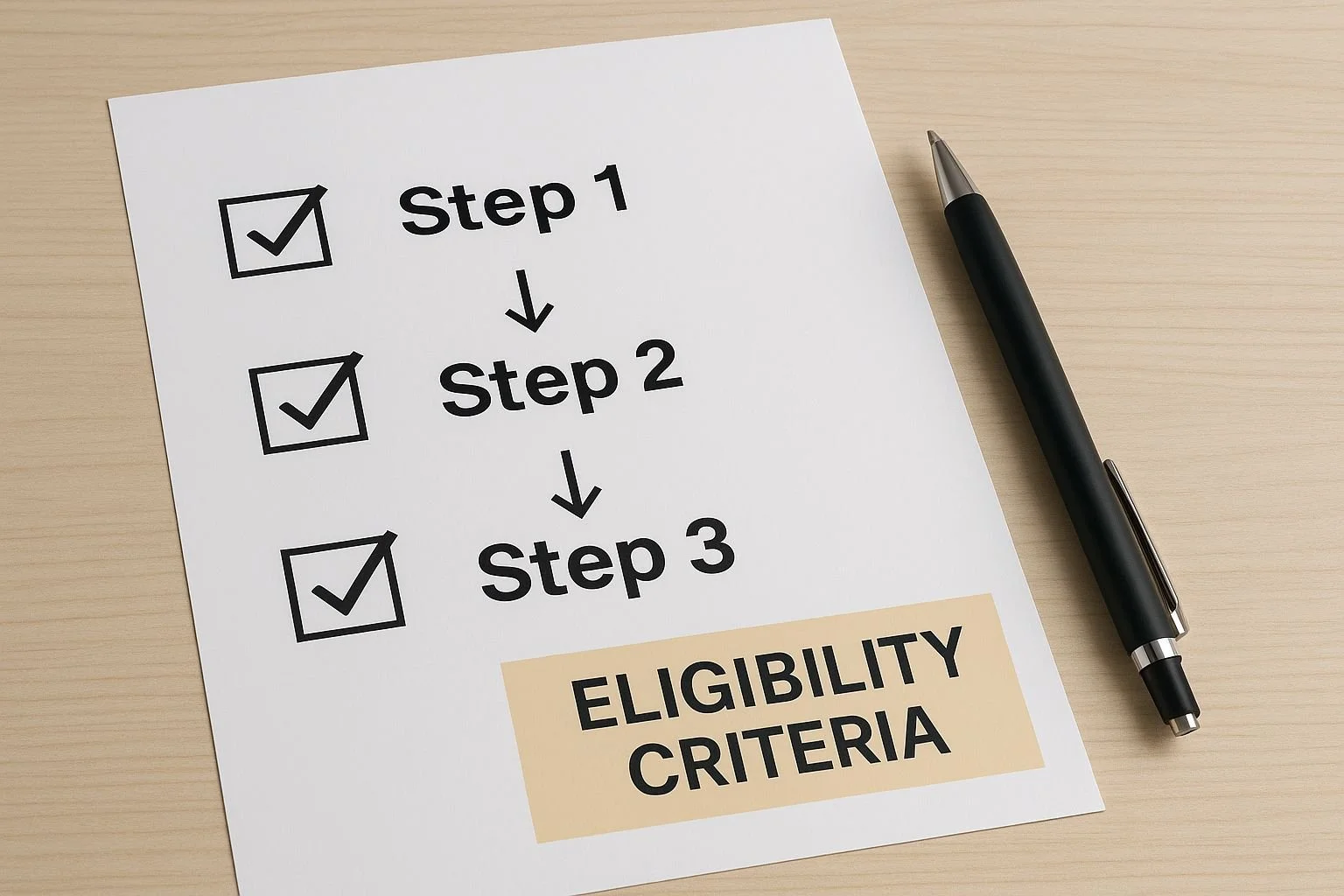
As you can see, it all comes back to confirming your eligibility first. Make sure your compliance history is clean and your tax payments are sorted out before reaching out.
The Phone Call Approach
For a lot of folks, just calling the IRS is the fastest way to get penalty relief. If your situation is straightforward and you clearly tick all the boxes, an agent can often approve the abatement right there on the call.
But don't just dial the number on your IRS notice unprepared. Get your ducks in a row first.
You'll want to have this info laid out in front of you:
Your Social Security Number (or ITIN).
The IRS notice number and the tax year it's for.
A copy of the tax return that got hit with the penalty.
When you get an agent on the line, be polite but direct. Clearly state that you are calling to request a "First Time Penalty Abatement." The agent will pull up your account to verify your clean three-year track record and that all your returns are filed.
If they say yes, don't just hang up and celebrate. Grab a pen and jot down the agent's name, their ID number, and the date and time of your call. You should get an official confirmation letter in the mail within a few weeks, but having those notes is your backup.
Crafting a Written Abatement Request
If you'd rather have everything in writing or your case isn't perfectly simple, sending a letter is a fantastic option. It gives you a solid record of your request and lets you lay out your case logically. To make sure you're not missing any key financial details, a tool like a Tax Document Analyzer AI Agent can be a huge help in organizing the information for your letter.
Your letter doesn't need to be a novel, but it absolutely must be precise. Think of it as building a simple, clear argument for why you qualify for this relief.
Key Insight: From my experience, the most successful letters use the exact phrase "First Time Abatement" or "FTA" right in the first paragraph. This acts as a signpost for the IRS agent reviewing your file, telling them exactly which administrative waiver you're asking for and speeding things up.
Mail your letter to the address shown on your IRS penalty notice. And I can't stress this enough: send it via certified mail with a return receipt. This gives you undeniable proof of when the IRS got it.
Here’s a simple structure for what your letter should include:
| Section of Letter | Purpose and Content to Include |
|---|---|
| Opening |
Start with your name, Social Security Number, address, and the tax year/form number. State clearly, "I am writing to request a First Time Abatement." |
| Penalty Details | Identify the specific penalty by name (e.g., Failure-to-File) and list the exact dollar amount from your IRS notice. |
| Eligibility Proof |
Briefly explain that you meet the criteria. A simple sentence like, "I have a clean compliance history for the past three years, have filed all required returns, and have paid or arranged to pay the tax due" is perfect. |
| Closing |
End with a polite "Thank you for your consideration" and include your phone number. Don't forget to sign and date the letter. |
This organized, professional approach shows the IRS you're serious and understand the rules, which goes a long way in getting your first time penalty abatement request approved.
What Penalties Can You Actually Get Waived?
Before you even think about picking up the phone or writing a letter to the IRS, you need to know if your penalty even qualifies for first time penalty abatement (FTA). It’s a common mistake I see people make—they spend hours crafting a request for a penalty that was never going to be waived in the first place.
The good news? The FTA is specifically designed for the most common slip-ups. If you’re a taxpayer or small business owner with a solid history, the IRS is often willing to forgive these three penalties:
Failure-to-File: This one’s straightforward. You missed the tax deadline, even with an extension.
Failure-to-Pay: You filed on time, but you couldn't pay the full amount you owed by the due date.
Failure-to-Deposit: This is for employers who didn't deposit their payroll taxes on time or in the right way.
If the notice you received from the IRS mentions one of these, you're in a good position to ask for a break.
The Hard Stop: International Penalties
Now for the reality check. The IRS draws a very firm line when it comes to international tax issues.
First Time Abatement almost never applies to international information reporting penalties.
This is a critical point. The IRS doesn’t view failing to file something like a Form 3520 (for foreign gifts) or a Form 5471 (for interests in foreign corporations) as a simple oversight. They see it as a serious breach of global financial transparency, and the penalties are intentionally severe to discourage it.
So, if you’re hoping to get FTA for one of those, you’re unfortunately heading for a guaranteed denial. The "one-time mistake" logic just doesn't fly here.
Why This All Matters
The financial stakes couldn't be more different. A failure-to-pay penalty might cost you 0.5% of the unpaid tax per month. In contrast, an international penalty can be devastating.
Failing to report a foreign gift on Form 3520 can trigger a penalty of up to 25% of the gift's value. FBAR violations? Those can start at $10,000 per mistake.
Knowing which penalties are off-limits saves you from building a case that's doomed from the start. If you’re facing an international penalty, you’ll need to explore a different path, like arguing for reasonable cause, which is a much tougher standard to meet.
But if your penalties do fall into the eligible categories, you have a real shot at getting them waived. To understand all your options, you might want to read our guide on the broader IRS tax forgiveness program.
The Real Cost of Ignoring an IRS Penalty

It’s an all-too-common reflex: you see an envelope from the IRS, and your first instinct is to shove it under a pile of mail and forget about it. While "out of sight, out of mind" might offer temporary relief, ignoring a tax penalty is one of the costliest financial mistakes you can make.
Trust me, that initial penalty amount on the notice? That's just the opening bid. Penalties and interest are engineered to grow, quickly turning what might have been a minor tax hiccup into a crushing financial weight.
The two most common penalties—failure-to-file and failure-to-pay—often work in tandem, creating a perfect storm of compounding debt that can spiral out of control faster than you’d think.
How a Small Bill Spirals
Let’s walk through a scenario I see all the time. Imagine you're a freelance graphic designer who owes $5,000 in taxes. Life gets busy, you miss the April filing deadline, and five months go by before you deal with it.
Here’s a quick and painful look at how those penalties stack up:
Failure-to-File Penalty: This one is the real bruiser. It’s 5% of the tax you owe for each month you’re late. It maxes out at 25%. After five months, you’ve hit that cap, tacking on an extra $1,250 to your bill.
Failure-to-Pay Penalty: This penalty runs at the same time. It’s a smaller 0.5% of your unpaid tax per month. For those same five months, that adds another $125.
All of a sudden, your original $5,000 tax debt has exploded to $6,375. And that doesn't even include the interest that's been piling up on the entire balance the whole time. What started as a manageable bill has jumped by nearly 28% in less than half a year.
The longer you wait, the worse it gets. The failure-to-pay penalty will continue to grow month after month until it also reaches its 25% cap. Ignoring the problem ensures you will pay the maximum possible penalty.
This escalating cost is precisely why understanding your options is so critical. A first time penalty abatement isn't some small favor from the IRS; it's a powerful tool that can stop this destructive cycle dead in its tracks.
Why Acting Fast Is Your Best Strategy
The moment you get that penalty notice, a clock starts ticking. The example above shows just how fast a debt can balloon, but it also reveals your window of opportunity. By immediately requesting an abatement, you could potentially wipe out that entire $1,375 in penalties, bringing your bill back down to the original tax you owed.
Think of it as financial damage control. The sooner you jump on it, the less damage there is to undo. Waiting only guarantees a bigger bill and a much bigger headache.
If you're staring down a growing tax bill, it's also a good time to learn how to settle IRS debt through a smart tax relief strategy. Tackling the problem head-on protects your financial future and stops a simple mistake from becoming a full-blown crisis.
Common Questions About Penalty Abatement
Even with a solid game plan, you're bound to have some questions when you're going toe-to-toe with the IRS. Knowing what comes next—especially if things don't go your way at first—is key to seeing this through with confidence. Here are some quick, real-world answers to the questions I hear most often about the first time penalty abatement process.
What Happens if My Request Is Denied?
Getting a denial letter from the IRS is disappointing, but it's not the end of the line. Not by a long shot.
Your first step is to read that notice carefully. I mean, really read it. The IRS has to tell you why they rejected your request. Sometimes it’s for a simple reason you can fix, like an old tax return you forgot to file.
If you’ve checked their reason and you're still certain you meet the FTA criteria, you can—and should—appeal. The denial letter itself will spell out how to file an appeal with the IRS Independent Office of Appeals.
You generally have 30 days from the date printed on the rejection letter to get your appeal filed. This is a hard deadline. If you miss it, you forfeit your right to have the independent appeals office take a fresh look at your case.
There's also another angle you can take: arguing for "reasonable cause." This is a different standard where you have to prove you tried your best to comply but couldn't because of circumstances outside your control. It’s a tougher argument to win, and this is where having a tax professional in your corner can make a huge difference.
How Long Does the Process Usually Take?
The timeline really depends on how you ask. If you call the IRS and get a helpful agent on the line, they might be able to grant the first time penalty abatement right there during the call. You’ll get a verbal confirmation on the spot, with a formal notice arriving in the mail a few weeks later.
But if you send your request by mail, you need to be patient. It can easily take several weeks, and sometimes a few months, for the IRS to process your letter and mail a response.
This is why I always tell my clients to send it via certified mail and keep a copy of everything. And remember, you must keep making any required tax payments while you wait to avoid digging a deeper hole with more penalties and interest.
Can I Apply if I Am on a Payment Plan?
Yes, absolutely. In fact, being on an active IRS payment plan (officially called an Installment Agreement) doesn't just allow you to apply—it's often a prerequisite.
A core requirement for FTA is that you've either paid your tax debt in full or have formally "arranged to pay" it. An approved payment plan is the perfect example of arranging to pay.
Getting a penalty abatement approved while you're on a payment plan can be a game-changer. It can slash your total balance, which might lead to smaller monthly payments or let you pay off the debt much sooner.
Navigating IRS issues can feel overwhelming, but you don't have to do it alone. At Attorney Stephen A Weisberg, I provide a FREE Tax Debt Analysis to determine exactly how I can help resolve your problems with the IRS or state.
➥ Contact Attorney Stephen A. Weisberg for a free Tax Debt Analysis.
Contact Me Here: https://www.weisberg.tax/contact-1
Email: s.weisberg@weisberg.tax
Phone/Text: (248) 971-0885
Address: 300 Galleria Officentre, Suite 402, Southfield, MI 48034
