Form 4562 Instructions: Master Depreciation Like a Pro
Demystifying Form 4562: When Filing Becomes Mandatory

Understanding when you're required to file Form 4562 is crucial for accurate tax reporting. This form, Depreciation and Amortization, isn't always necessary, but specific financial activities make its use mandatory.
Missing these can lead to missed deductions and potential issues with the IRS. Understanding these requirements is important for optimizing your tax strategy.
Triggering Events for Form 4562
One of the most common reasons for filing Form 4562 is the purchase of business equipment or property. For example, if you buy a new delivery van for your business, or invest in new computers, you'll likely need this form. This is because these purchases qualify for depreciation, the process of deducting the cost of an asset over its useful life.
Additionally, claiming vehicle depreciation requires the use of Form 4562. Whether you use the standard mileage rate or the actual expense method, accurately reporting vehicle depreciation is essential, especially for businesses that rely heavily on vehicles for their operations.
Another instance requiring Form 4562 is when claiming amortization. Amortization applies to intangible assets like patents or copyrights. Similar to depreciation, it allows you to deduct the asset's cost over its lifespan, reducing your tax burden.
Multiple Forms and Business Activities
Some taxpayers might need to file multiple Form 4562s for different business activities. This occurs when you have separate businesses, each with its own depreciable assets.
For instance, if you own a bakery and also a consulting business, each would likely require its own Form 4562. This ensures accurate depreciation tracking for each distinct business.
Form 4562, primarily for U.S. taxpayers, is essential for claiming deductions related to depreciation and amortization of business property and certain listed assets.
For the tax year beginning in 2024, the maximum Section 179 expense deduction is $1,220,000, a deduction taxpayers can elect to expense immediately rather than depreciate over time.
This amount decreases dollar for dollar when the total cost of qualifying property placed in service during the year exceeds $3,050,000. Explore this topic further. Understanding these provisions is key for maximizing deductions.
Common Misconceptions and Clarifications
A common misconception is that Form 4562 is only for large businesses. However, even small businesses and sole proprietors might need to file if they have depreciable assets.
Another misconception is that if you're not claiming Section 179, you don’t need Form 4562. This isn't always true, as other depreciation methods still require it. These misconceptions can be costly. Consulting with a tax professional can provide clarity about your filing obligations.
Unlocking Section 179 Deductions: Smart Strategies That Work
Section 179 deductions present a valuable opportunity for businesses to minimize their tax liabilities. Instead of depreciating equipment purchases over time, businesses can deduct the full purchase price immediately. However, understanding the current regulations and limitations is crucial for effective tax planning.
Maximizing Your Section 179 Deduction
The Section 179 deduction allows businesses to deduct the full purchase price of qualifying property up to a certain limit for the tax year the property is placed in service.
For 2024, the maximum deduction is $1,220,000. This deduction begins to phase out dollar-for-dollar if the total cost of qualifying property placed in service exceeds $3,050,000.
Careful planning is essential to maximize this benefit. For instance, a business purchasing $2,000,000 worth of qualifying equipment can deduct the entire amount.
However, if they purchase $3,500,000 worth of equipment, the deduction is reduced by $450,000 (the amount over the threshold). This highlights the importance of understanding these limits.
Qualifying Property and Strategic Timing
Several types of property qualify for Section 179, including machinery, equipment, and certain software. A critical factor is ensuring the property is used primarily for business purposes. This should be a key consideration when deciding which purchases to make and when.
Strategically timing equipment purchases can optimize tax benefits. If your purchases are nearing the phase-out threshold, delaying some purchases to the next tax year can help you take full advantage of the deduction. This proactive approach can lead to substantial savings.
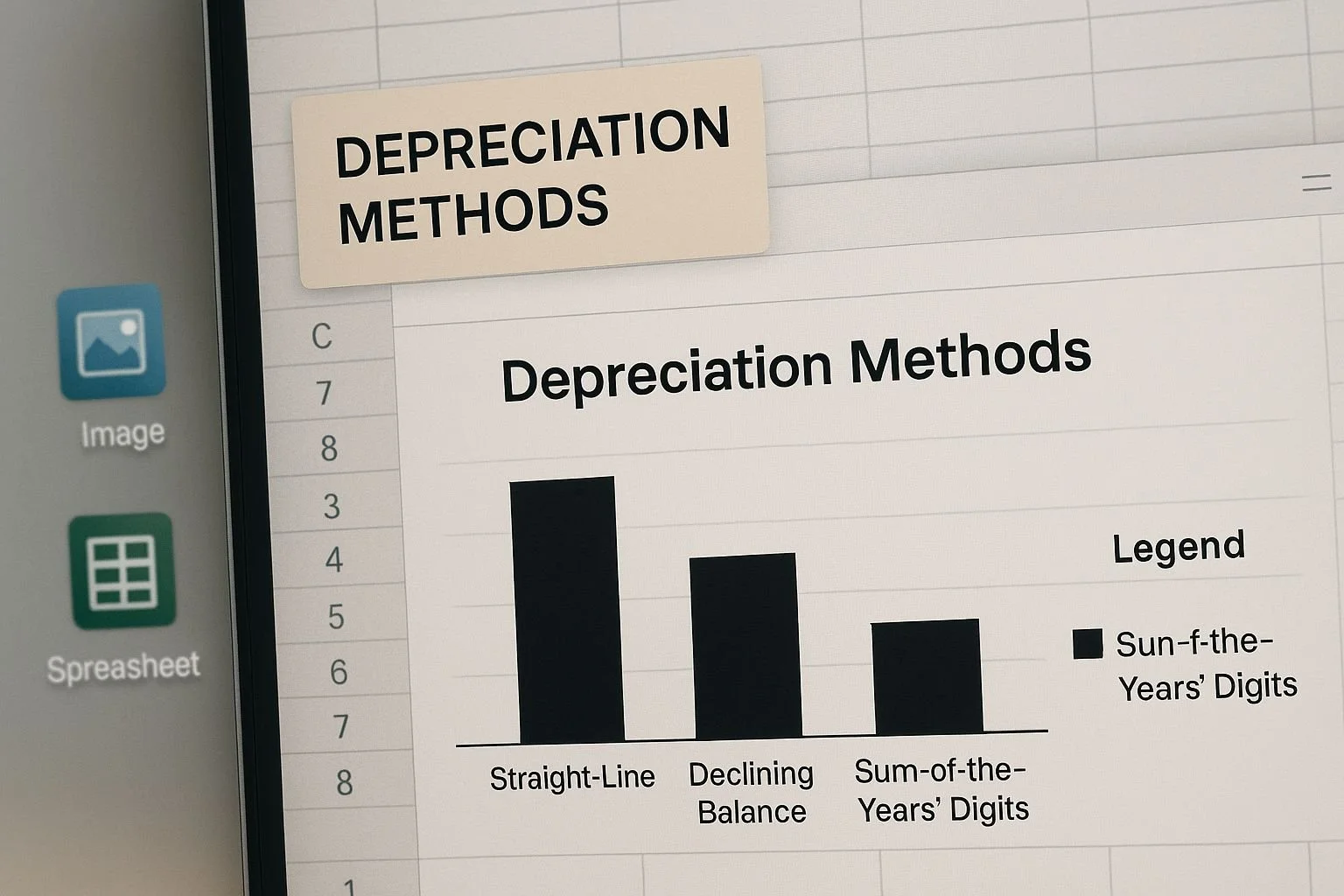
This infographic illustrates different depreciation methods and their impact on tax deductions. It clearly shows how choosing the right depreciation method, such as leveraging Section 179, can significantly affect a business's tax liability.
Coordinating Section 179 with Other Depreciation Methods
Section 179 can be combined with other depreciation methods, such as MACRS (Modified Accelerated Cost Recovery System). You could expense part of an asset's cost under Section 179 and depreciate the remaining balance using MACRS.
This combined approach offers flexibility in managing deductions and cash flow, especially for larger or more complex asset purchases.
The following table summarizes key aspects of the Section 179 deduction:
| Section 179 Deduction Limits and Phase-Out Rules |
|---|
| Tax Year |
| 2024 |
This table provides a quick overview of the deduction limits and qualifying property types for Section 179. Understanding these details is essential for effective tax planning.
Businesses should consider the long-term effects of their depreciation strategy, particularly when planning equipment acquisitions over multiple years.
Managing the phase-out threshold and understanding the interaction between Section 179 and other depreciation methods like MACRS is vital for maximizing benefits year after year.
For further information about tax debt management and other IRS matters, see IRS Offer in Compromise: A Complete Guide to Tax Debt Settlement. A well-defined strategy can significantly contribute to long-term financial health.
By understanding and using these strategies, businesses can fully utilize Section 179 deductions and optimize their tax planning.
Mastering MACRS: Recovery Periods That Maximize Benefits

Depreciation is a crucial element of tax planning, especially for businesses owning significant assets.
The Modified Accelerated Cost Recovery System (MACRS) is the standard method used for calculating depreciation on Form 4562. Understanding MACRS, particularly its recovery periods, can significantly impact your tax savings.
Understanding MACRS Recovery Periods
A recovery period is the pre-defined timeframe the IRS allows for depreciating an asset. These periods are classified by property class and depend on the asset type, acknowledging that assets have varying lifespans and wear-out rates. This categorization is essential for accurate Form 4562 instructions.
For instance, 5-year property often includes items like computers, vehicles, and office equipment. 7-year property might include office furniture and fixtures.
Longer-lived assets, such as certain real property, can fall into 27.5-year or 39-year categories. Correct asset classification is vital for compliance and maximizing tax benefits.
Half-Year and Mid-Quarter Conventions
MACRS uses two key conventions for calculating depreciation: the half-year convention and the mid-quarter convention. The half-year convention assumes an asset's placement in service mid-year, simplifying calculations and applying in most situations.
The mid-quarter convention applies if over 40% of your total depreciable property enters service in the fourth quarter. In this case, the mid-quarter convention applies to all property placed in service that year, regardless of the quarter.
Understanding these conventions is crucial for accurate Form 4562 completion.
Accelerated Depreciation and Cash Flow Advantages
MACRS typically uses an accelerated depreciation method, resulting in higher deductions during an asset's early years and lower deductions later. This differs from straight-line depreciation, which spreads deductions evenly over the asset's lifespan.
The Modified Accelerated Cost Recovery System (MACRS) allows businesses to recover investments over a set recovery period. This accelerates deductions compared to straight-line depreciation.
Tangible property, like machinery, might be depreciated over 5 to 7 years, leading to larger initial tax deductions. Learn more about MACRS and Form 4562 here. This accelerated approach can offer significant cash flow advantages early on, allowing businesses to reinvest for growth.
Optimizing Your Depreciation Schedule
Strategic asset purchase planning and understanding how recovery periods affect your depreciation schedule are key to optimizing tax benefits. Consulting a qualified tax professional can help tailor your depreciation strategy to your business goals.
They can analyze various scenarios and determine the most advantageous approach for your specific situation.
You might be interested in: How to Reduce Tax Liability. Effectively managing depreciation can significantly lower your overall tax burden and free up valuable resources.
Section-By-Section Filing Guide: Your Complete Roadmap
Navigating IRS Form 4562 can seem overwhelming, but a clear understanding of each section can simplify the process. This guide breaks down the form, offering instructions and advice to help ensure accurate and compliant filing. Proper categorization, depreciation elections, and detailed documentation are essential.
Part I: Election To Expense Certain Property Under Section 179
This section allows you to immediately expense the cost of qualifying property, rather than depreciating it over time. This can offer significant tax advantages in the year of purchase.
You'll need to provide a description of the property, its in-service date, and its cost. Calculating the total deduction accurately is crucial. Remember the Section 179 deduction limits and phase-out thresholds. For 2024, the maximum deduction is $1,220,000, with a phase-out starting at $3,050,000.
Part II: Special Depreciation Allowance
Part II lets you claim the special depreciation allowance for qualified property. This provides an additional first-year depreciation deduction, further lowering your tax liability.
Accurate record-keeping, including the property's description, in-service date, and cost, is essential. Correctly calculating the additional first-year depreciation maximizes this benefit. This section works in conjunction with Part I.
Part III: MACRS Depreciation
This section covers assets that don't qualify for the special depreciation allowance or Section 179. Here, you'll use the Modified Accelerated Cost Recovery System (MACRS), the standard depreciation method for most tangible property. You'll need the description, in-service date, recovery period (e.g., 5-year, 7-year), and depreciation method for each asset. Understanding MACRS conventions, like the half-year and mid-quarter conventions, is key for accurate calculations.
Part IV: Summary
Part IV summarizes your depreciation deductions from the previous sections, calculating your total depreciation for the year, which then carries over to your tax return. This section serves as a final check, ensuring accuracy and consistency in your calculations.
Supporting Documentation and Record-Keeping
Maintaining detailed records is crucial when filing Form 4562. These records should include purchase agreements, invoices, and any documentation supporting the business use of assets, especially for listed property like vehicles. Thorough documentation not only supports your deductions but also protects you during an audit.
Electronic Filing and Integration
Form 4562 can be filed electronically, often streamlining the process. Integrating your Form 4562 data with your tax return software simplifies filing and minimizes manual data entry. This integration ensures data consistency across all tax forms.
The following table provides a concise overview of each section:
| Form Section | Purpose | Required Information | Common Errors |
|---|---|---|---|
| Part I | Section 179 Deduction | Property description, date in service, cost | Incorrect deduction limits |
| Part II | Special Depreciation Allowance | Property description, date in service, cost | Miscalculating the allowance |
| Part III | MACRS Depreciation | Property description, date in service, recovery period, depreciation method | Incorrect recovery period or method |
| Part IV | Summary | Totals from previous sections | Calculation errors |
By following this guide and keeping accurate records, you can navigate Form 4562 confidently. Consulting a tax professional can offer personalized advice and ensure you're maximizing available deductions. They can help develop a depreciation strategy tailored to your business.
Listed Property Rules: Vehicle and Equipment Compliance
Listed property often involves items used for both business and personal reasons, like vehicles and computers. This dual-purpose nature creates specific rules for reporting depreciation on Form 4562.
Understanding these rules is vital for accurate reporting and staying compliant. Careful attention to detail and good record-keeping are essential in this area, often subject to audits.
Business Vehicle Depreciation: Navigating the Nuances
Depreciating business vehicles requires understanding luxury auto limitations set by the IRS. These limits restrict the annual depreciation you can claim, regardless of the vehicle's actual price.
They aim to prevent excessive deductions for high-value vehicles. You also need to accurately determine the business use percentage. This percentage, the proportion of time the vehicle is used for business, directly affects your depreciation deduction.
There are two ways to deduct vehicle expenses: the standard mileage rate and the actual expense method. The standard mileage rate offers a fixed deduction per business mile driven, simplifying calculations.
The actual expense method requires tracking all vehicle-related costs. This method might be better for vehicles with high operating expenses or low business use. Your choice impacts your Form 4562 reporting.
Mastering Documentation for Vehicles
Keeping accurate records is essential when depreciating business vehicles. A comprehensive vehicle log is crucial. This log should detail business trips, mileage, dates, and the purpose of each trip.
It should be updated regularly throughout the year, not created retroactively. Keep supporting documents for all vehicle expenses like fuel receipts, maintenance records, and insurance papers. These records are key to satisfying IRS requirements and protecting your deductions.
Beyond Vehicles: Other Listed Property
Listed property isn't limited to vehicles. It also includes items like computers, entertainment systems, and cell phones. Just like with vehicles, meticulous record-keeping is essential to justify the business use of these items.
For example, if you depreciate a computer, a log detailing business tasks performed on the computer strengthens your deduction claim. This principle applies to all listed property to ensure accurate reporting and compliance.
Avoiding Audit Triggers and Maintaining Compliance
Several common errors can attract IRS attention regarding listed property. Overstating the business use percentage is a frequent mistake. Another is insufficient documentation.
By following listed property rules, accurately tracking business use, and maintaining detailed records, you can avoid these problems. Learn more in our article about How to Master Trust Fund Recovery Penalty. This proactive approach protects your deductions and provides peace of mind.
Using dedicated software or apps to track mileage and expenses helps build a robust record-keeping system. This organized approach simplifies tax preparation and ensures you comply with complex listed property rules.
Avoiding Costly Mistakes: Compliance Best Practices
Successfully navigating Form 4562 involves more than just understanding the calculations. It requires a proactive approach to compliance. This means implementing best practices that ensure accuracy and protect you from penalties, interest charges, and IRS scrutiny.
By being organized and meticulous, you can transform Form 4562 from a potential liability into a valuable tax strategy tool.
Record-Keeping: The Foundation of Compliance
Maintaining comprehensive records is essential when dealing with depreciation. These records are the foundation of your claims, providing the necessary evidence to support your deductions. Be sure to retain all important documents, such as purchase agreements, invoices, and titles for depreciable assets.
For listed property, like vehicles, meticulous record-keeping is even more important. A detailed logbook documenting business use, mileage, dates, and trip purposes is essential.
Documenting Business Use Percentages: Avoiding Scrutiny
Accurately documenting business use percentages is a key focus area for the IRS. For vehicles and other listed property, estimations are not enough. You must provide concrete evidence to support your claimed percentages.
This often involves maintaining detailed logs and supporting documentation, such as trip records and appointment schedules. Proper documentation not only ensures compliance but also helps build a strong defense against potential challenges.
Consistency in Depreciation Methods: Avoiding Red Flags
Maintaining consistent depreciation methods across tax years is vital. While changing methods is sometimes allowed, doing so without proper justification can raise red flags with the IRS.
For instance, switching between the standard mileage rate and the actual expense method for vehicle depreciation without a valid reason could trigger an audit.
Consistency demonstrates a clear understanding of the rules and strengthens the credibility of your claims. If you face disagreements, check out our guide on How to Appeal an IRS Decision.
Correcting Prior Year Depreciation: Navigating Complexities
Correcting prior year depreciation requires careful attention. Simply amending previous returns might not be enough. Specific forms and procedures may be necessary depending on the correction's nature and extent.
Understanding these procedures and seeking professional advice when needed ensures accurate corrections and minimizes potential complications.
Handling IRS Notices: A Proactive Approach
Receiving an IRS notice related to depreciation deductions shouldn’t cause panic. A proactive approach is best. Gather all relevant documentation related to the inquiry and respond promptly and thoroughly.
If you're unsure how to proceed, consulting a tax professional is highly recommended. They can help you navigate the process, represent you before the IRS, and protect your rights.
Coordinating Federal and State Depreciation: Ensuring Seamless Compliance
Federal and state depreciation rules don't always align. This can create complexities for businesses operating in multiple states. Understanding these differences and ensuring your filing strategy works seamlessly across all jurisdictions is essential.
This often involves maintaining separate depreciation schedules for federal and state purposes and staying informed about any regulatory changes.
By implementing these compliance best practices, you not only minimize the risk of errors and penalties but also strengthen your position during an audit. This proactive approach to Form 4562 transforms a complex tax requirement into a source of confidence and control.
Ready to take control of your tax strategy and navigate the complexities of IRS regulations? Attorney Stephen A. Weisberg offers a free Tax Debt Analysis to help individuals and businesses understand their options and develop a plan for success.
➥ Contact Attorney Stephen A. Weisberg for a free Tax Debt Analysis.
Contact Me Here: https://www.weisberg.tax/contact-1
Email: sweisberg@wtaxattorney.com
Phone/Text: (248) 971-0885
Address: 300 Galleria Officentre, Suite 402, Southfield, MI 48034
