How Long Can the IRS Collect Back Taxes? Find Out Now
If you're staring down a mountain of back taxes, one of the first questions that probably comes to mind is, "How long can the IRS actually chase me for this?" The answer, at its core, is surprisingly clear: the IRS generally gets 10 years to collect what you owe.
This 10-year clock starts ticking the moment your tax liability is officially "assessed."
The IRS 10-Year Rule Explained
That question—how long can the IRS collect back taxes?—is a heavy one for anyone with an outstanding tax bill. The entire process is dictated by a critical legal timeline called the Collection Statute of Limitations.
Think of it like a countdown timer. The moment the IRS officially records your tax liability in its system, a 10-year clock starts. This "date of assessment" is key; it’s not the day you filed or the original tax deadline, but the specific date the IRS formally logs the debt. Once that happens, the race is on.
What Is the Collection Statute Expiration Date (CSED)?
The finish line for this 10-year countdown is called the Collection Statute Expiration Date, or CSED. Once this date passes, the IRS’s legal authority to come after you for that specific tax debt—including all the penalties and interest that have piled up—is generally extinguished. The debt essentially becomes uncollectible.
This statute of limitations is a cornerstone of tax law, applying to debts from original returns, audits, and even civil penalties. We cover the nuances of how this date is calculated in our guide to the IRS Collection Statute Expiration Date.
Now, before you circle a date on your calendar ten years from now, be warned: it’s not always that simple. Certain actions you take can actually pause, or "toll," the countdown, giving the IRS more time.
To help you get a quick handle on this, here’s a simple breakdown of the key concepts.
The 10-Year Collection Statute at a Glance
| Concept | What It Means for You |
|---|---|
| Statute of Limitations | The IRS has a strict 10-year window to collect taxes after they are assessed. |
| Date of Assessment | This is the official start date. It's when the IRS formally records your tax debt. |
| CSED | The Collection Statute Expiration Date is the deadline. After this, the IRS usually can't collect. |
| Tolling Events | Certain actions (like filing for bankruptcy) can pause the 10-year clock, extending your CSED. |
Understanding your specific CSED is the first and most critical step in forming a strategy to deal with old tax debt. It’s the foundation upon which all other resolution options are built. You can find more details on this topic by exploring insights about the 10-year rule on wiggamlaw.com.
When Does the IRS Collection Clock Actually Start?
Here’s one of the biggest—and most costly—misconceptions about tax debt: many people assume the IRS's 10-year collection clock starts ticking on the day their taxes were due. It’s an easy mistake to make, but it can lead to a world of false hope and poor financial planning.
The truth is, the clock doesn't start until the date of assessment. This is the specific, formal date the IRS officially logs your tax liability into its master file.
Think of it this way: the tax due date is like the day a bill is mailed to you. The assessment date, however, is the day the creditor officially records the unpaid debt in their ledger. That's the moment the clock really starts running for them to collect. Getting this single detail right is the most critical step in understanding how much time the IRS truly has.
Pinpointing the Date of Assessment
So, how does this all-important assessment actually happen? It's not one single event, but a few common scenarios trigger it. If you can figure out which one applies to your situation, you’re well on your way to finding your Collection Statute Expiration Date (CSED).
Here are the main ways the IRS assesses a tax:
You File a Tax Return: This is the most common path. When you file your Form 1040 and show you owe money, the IRS typically assesses that tax shortly after they process the return. Simple and straightforward.
The IRS Files for You: If you don't file, the IRS won't just forget about it. Eventually, they can create a Substitute for Return (SFR) on your behalf. The assessment happens after this process is finalized, which can be months or even years after the original due date passed.
An Audit Is Finalized: Say you go through an audit and the IRS determines you owe more tax. The assessment for that additional amount will happen once the audit is officially closed and you’ve either agreed to the findings or used up all your appeal rights.
Key Takeaway: The assessment date isn't some hidden government secret. You can find this exact date on your official IRS Account Transcript. This document is the definitive source for finding the starting line of your 10-year collection period.
The Timeline from Taxable Event to Assessment
Let's walk through a quick example to make this crystal clear. Imagine you had freelance income during 2023.
Taxable Year Ends: December 31, 2023.
Tax Filing Deadline: April 15, 2024. You file your return on time but can't pay the $5,000 you owe.
IRS Processing: The IRS receives and processes your return.
Date of Assessment: On May 20, 2024, the IRS officially records the $5,000 debt on its books.
In this case, the 10-year collection clock starts ticking on May 20, 2024—not the April 15th tax day. This means your CSED would be May 20, 2034 (assuming nothing happens to pause the clock, which we'll cover later). Getting that start date wrong by just a month could mean you’re on the hook for collection actions far longer than you thought.
Actions That Pause the IRS Collection Clock
That 10-year countdown for IRS collections? It's not quite set in stone. Think of it more like a stopwatch that the IRS can pause under certain circumstances. These pauses, legally known as tolling events, can add serious time to your Collection Statute Expiration Date (CSED).
This is a make-or-break concept for anyone with old tax debt. The CSED isn't a simple "date of assessment plus ten years" calculation. You absolutely have to understand what hits the pause button to know how long the IRS really has to come after you.
This visual below does a great job of showing how your own actions can push that collection deadline much further down the road.
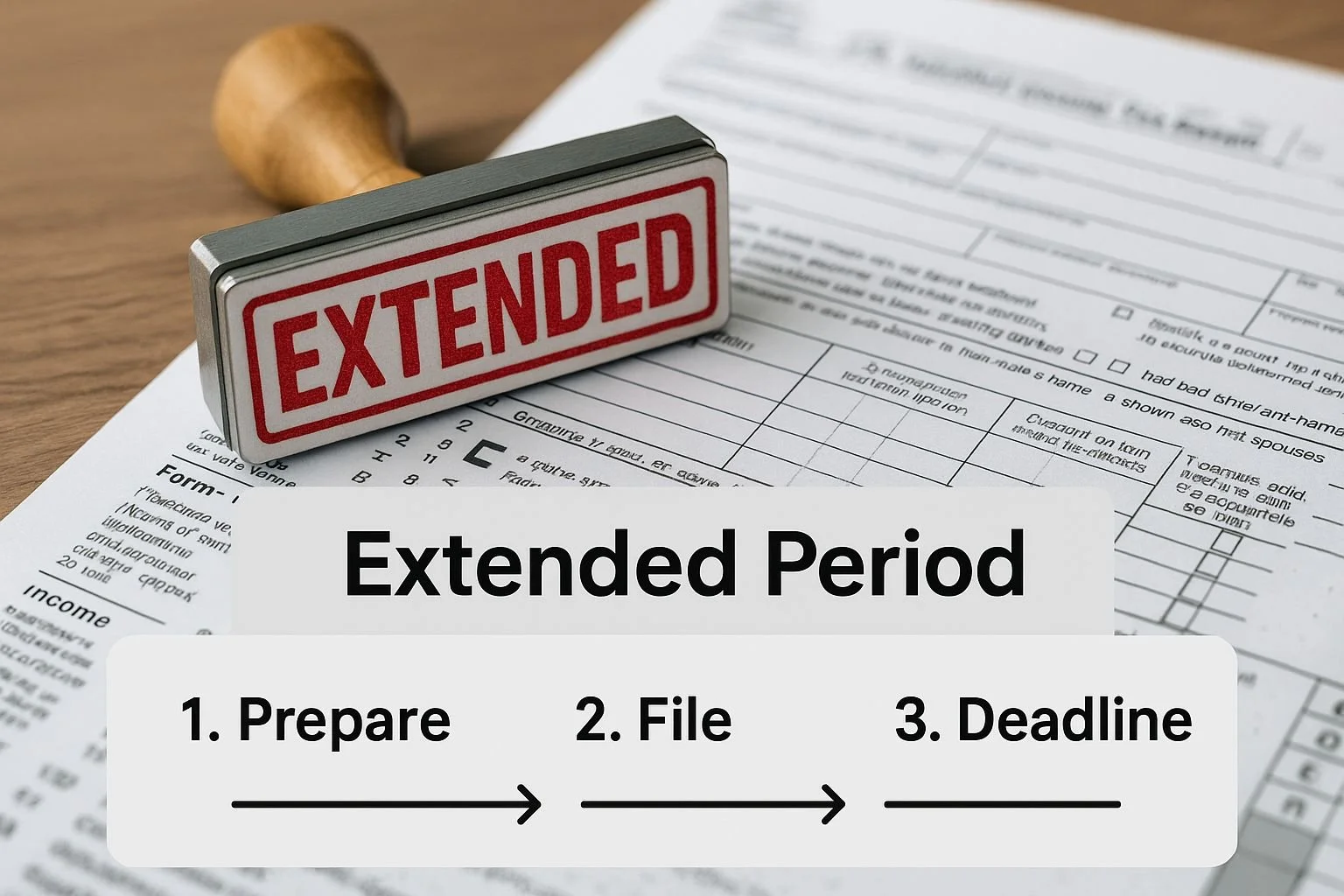
As you can see, what might seem like a smart move to resolve your debt can also give the IRS more time to collect it. It's a critical trade-off to consider.
Bankruptcy Filings
Filing for bankruptcy is probably the most significant tolling event. The second you file, an "automatic stay" slams the brakes on nearly all collection activities from creditors, and that includes the IRS. They legally can't touch you.
But that pause isn't just a friendly gesture. The CSED clock stops for the entire time your bankruptcy case is active. Then, once the case is finalized (either dismissed or discharged), the IRS gets an extra six months on top of that. This gives them a running start to fire up their collection machine again.
Submitting an Offer in Compromise
An Offer in Compromise (OIC) lets you try to settle your tax bill for less than what you owe. It’s a fantastic tool, but be aware: submitting that OIC application instantly pauses your collection clock.
The CSED is tolled from the day your offer is submitted until the day the IRS makes a final decision. If they reject your offer, the clock stays frozen for another 30 days to give you a window to appeal.
Think about it. If your OIC is pending for a year, you’ve just added a year to your CSED.
Collection Due Process Hearings
Before the IRS can get aggressive with things like a bank levy or a Federal Tax Lien, they have to send you a notice. This notice explains your right to request a Collection Due Process (CDP) hearing.
If you request that hearing on time (usually within 30 days), you guessed it—the CSED clock is paused. This pause lasts from the moment you file the request until the IRS Independent Office of Appeals issues a final determination. And if you take that decision to Tax Court, the clock remains stopped for that entire time, too.
Formal Installment Agreements
Even just asking for a formal Installment Agreement with Form 9465 can hit the brakes. While your request is being reviewed by the IRS, the CSED is tolled. If they approve it, the clock usually starts ticking again.
But if they turn you down? The clock stays paused for 30 days after the rejection, giving you time to appeal. And if you do appeal, the clock remains paused throughout that entire process.
It’s easy to see how these common actions can add months, or even years, to your collection timeline. You have to factor them in if you're trying to figure out when your debt might finally be off the books for good.
How the Collection Period Can Be Extended
While some actions just pause the 10-year collection clock, other situations can stretch it out much longer—or even get rid of the deadline for good. It’s absolutely critical to understand these scenarios, because they give the IRS a far longer runway to come after a tax debt. Sometimes, that runway is indefinite.
It might seem strange, but one way the clock gets extended is by you voluntarily agreeing to it. Why on earth would anyone give the IRS more time? This usually comes up when you're negotiating a complex resolution, like an intricate payment plan. By signing Form 900, Tax Collection Waiver, you're essentially extending the Collection Statute Expiration Date (CSED) to a new, specific date. It's often a show of good faith to help get a deal across the finish line.
When the Clock Never Stops
The most serious situations are the ones that remove the statute of limitations entirely. We're not talking about a temporary pause here. These actions mean the IRS can pursue the tax debt forever. No expiration date.
This only happens in cases of serious, deliberate taxpayer misconduct. There are two main triggers:
Filing a fraudulent return: If the IRS can prove you willfully filed a return with the intent to cheat on your taxes, that 10-year clock never even starts. The debt follows you for life.
Willful attempt to evade tax: This is a broader category that includes more than just a bogus return. Think hiding assets, stashing money in offshore accounts to conceal income, or any other scheme designed to deliberately deceive the government.
These aren't honest mistakes. The IRS has to prove a criminal level of intent to defraud, which is why the law takes away any and all time limits on collecting the money owed.
Other Actions That Alter the Timeline
Living abroad can also throw a wrench in the CSED timeline. If you are physically outside of the United States for a continuous stretch of at least six months, the collection clock stops ticking. All that time you spend out of the country doesn't count toward the 10-year limit. The clock only starts running again once you return.
Important: The difference between pausing the clock and removing it completely is massive. An Offer in Compromise might add a year to your CSED, but tax fraud makes the debt a lifelong problem.
Getting a handle on these extensions is a huge part of managing your tax obligations. If you realize you need to get caught up, knowing the right way to do it is half the battle. For a full breakdown, you can learn more about how to file back taxes correctly and avoid making things worse. Taking the right steps from the start is your best defense against needlessly extending the collection period. These scenarios make it clear that the answer to "how long can the IRS collect back taxes" isn't always a simple decade.
Your Action Plan for Managing Old Tax Debt

Knowing how long the IRS can chase you for back taxes is one thing. But just sitting back and hoping the clock runs out?
That’s not a strategy—it’s a gamble. A much smarter move is to get proactive and take back control of the situation. This is your playbook for tackling old tax debt, and it all starts with one crucial step: getting your facts straight.
Your first order of business is to get your hands on your official IRS Account Transcript. This isn't just a summary; it's the definitive record that shows your exact Collection Statute Expiration Date (CSED).
It takes all the guesswork out of the equation, showing you the precise date the IRS assessed your tax and started that 10-year countdown. With this date, you can finally build a plan based on reality, not on hope.
Choosing Your Resolution Path
Once you have your CSED, you can start looking at your options with a clear head. Instead of just picking a solution at random, you can now weigh which path truly fits your financial situation and, just as importantly, how it will affect that collection deadline.
If you're looking for a broad overview, there are some great resources that lay out the top strategies to reduce and manage your tax debt effectively.
Here’s a quick rundown of the most common ways to resolve tax debt and who they’re really for:
Offer in Compromise (OIC): This is for taxpayers in a tough spot financially. If you can prove you genuinely can't pay the full amount you owe, the IRS might agree to settle your debt for less.
Installment Agreement (IA): Think of this as a formal payment plan. It’s a great fit if you can’t pay everything in one go but have enough steady income to make monthly payments.
Currently Not Collectible (CNC) Status: If paying your tax bill would mean you couldn't cover basic living expenses like rent and food, the IRS may put your account in CNC status. This effectively pauses collection efforts until your finances improve.
Taking any of these steps is a big decision, and each one impacts your CSED differently. For a more detailed breakdown of how to handle your unique debt, our guide on finding a complete tax debt solution can offer more personalized insights.
Crucial Insight: Remember this trade-off: Actively working with the IRS to resolve your debt almost always pauses the CSED clock. You get a manageable plan and peace of mind, but in return, you give the IRS more time to collect if things go south.
Comparing Tax Debt Resolution Options
Making the right call means understanding exactly what you're signing up for. This table breaks down the main resolution options and shows how each one directly impacts that 10-year collection clock. Use it to choose a path that gives you relief without accidentally extending your troubles.
| Resolution Option | Who It's For | Effect on CSED Clock |
|---|---|---|
| Offer in Compromise | Taxpayers with limited assets and income who cannot pay their full tax debt. | Pauses the clock while the offer is pending and for 30 days after a rejection. |
| Installment Agreement | Individuals who can afford monthly payments to clear their debt over time. | Pauses the clock while the request is being considered by the IRS. |
| Currently Not Collectible | Those facing severe economic hardship who cannot afford basic living expenses. | Does not pause the clock. The 10-year countdown continues to run. |
At the end of the day, having an action plan is about empowerment. When you understand your CSED and how each resolution option works, you stop being a passive victim of your circumstances. You move into a position of strategic control, ready to solve your tax problems on your own terms.
Common Questions About the IRS Collection Period
Once you start digging into the rules, a few nagging questions always seem to pop up. Knowing the IRS has 10 years to collect is one thing, but understanding the real-world details that apply to your life is another thing entirely.
Let’s walk through some of the most common questions I hear from taxpayers about the Collection Statute Expiration Date (CSED). My goal here is to give you direct, clear answers so you can feel more confident about your next move.
Will the IRS Notify Me When My Collection Period Ends?
Nope. The short answer is a hard no. The IRS will not send you a letter, an email, or any other friendly reminder that their time to collect is running out. Tracking this critical deadline is 100% your responsibility.
Just waiting for the IRS to stop on their own is a huge gamble. Their records might show a completely different CSED than what you’ve calculated, especially if you’ve overlooked events that paused the clock. You have to be proactive, confirm the date for yourself, and make sure the agency actually honors it.
Does Making a Payment Restart the 10-Year Clock?
This is probably the most common point of confusion I see, and it's a big one. For the most part, making a simple voluntary payment on an old tax debt does not restart the 10-year collection clock. The CSED is set in stone from the original assessment date, and just sending them money doesn't move that starting line.
Important Distinction: Now, while a simple payment won't reset the clock, formally entering into an Installment Agreement is a different beast altogether. The process of requesting and getting an official payment plan approved is a "tolling event" that hits the pause button on your CSED, effectively extending how long the IRS can collect.
Getting these details right is crucial. If you're looking at different ways to resolve your tax issue, you need to know exactly how each choice impacts your timeline. For more on this, learning how to negotiate IRS debt can give you strategies to protect your rights while you work toward a solution.
What if the IRS Tries to Collect After the Deadline?
If your CSED has truly expired and there were no hidden extensions, the IRS legally loses its power to come after that debt. Any lien they slapped on your property becomes unenforceable. They must stop all collection efforts, like bank levies or wage garnishments, for that specific tax year.
So, what happens if they try anyway? If you're certain the date has passed and the IRS is still trying to collect, you need to act immediately. Here’s the game plan:
Contact the IRS: You or a tax professional representing you should get on the phone with them right away.
Provide Proof: Show them your CSED calculation, backed up by your official IRS Account Transcripts.
Demand Action: Formally request that they cease all collections and release any related federal tax liens.
If the IRS made a mistake, they are legally required to back off. Having your documentation in order is your best defense against an unlawful collection attempt and a critical step in taking back control of your financial future.
At Attorney Stephen A Weisberg, we believe in empowering you with knowledge before asking for a commitment. Instead of pressure and high-stakes fees, we start with a FREE Tax Debt Analysis to determine the best path forward for your unique situation. If you're facing IRS issues, find out how we can help by visiting weisberg.tax.
➥ Contact Attorney Stephen A. Weisberg for a free Tax Debt Analysis.
Contact Me Here: https://www.weisberg.tax/contact-1
Email: s.weisberg@weisberg.tax
Phone/Text: (248) 971-0885
Address: 300 Galleria Officentre, Suite 402, Southfield, MI 48034
