How to Check if You Owe Back Taxes: Easy Steps to Know
If you want a quick, no-fuss answer, your best bet is to create an IRS Online Account. Seriously, this is the most direct route to seeing exactly what the IRS thinks you owe. You get immediate access to your balance, a rundown of your payment history, and copies of official notices.
That little voice in the back of your head wondering about old tax years? It's a surprisingly common feeling. The IRS is always working to close a massive tax gap, so making sure you're squared away is just smart.
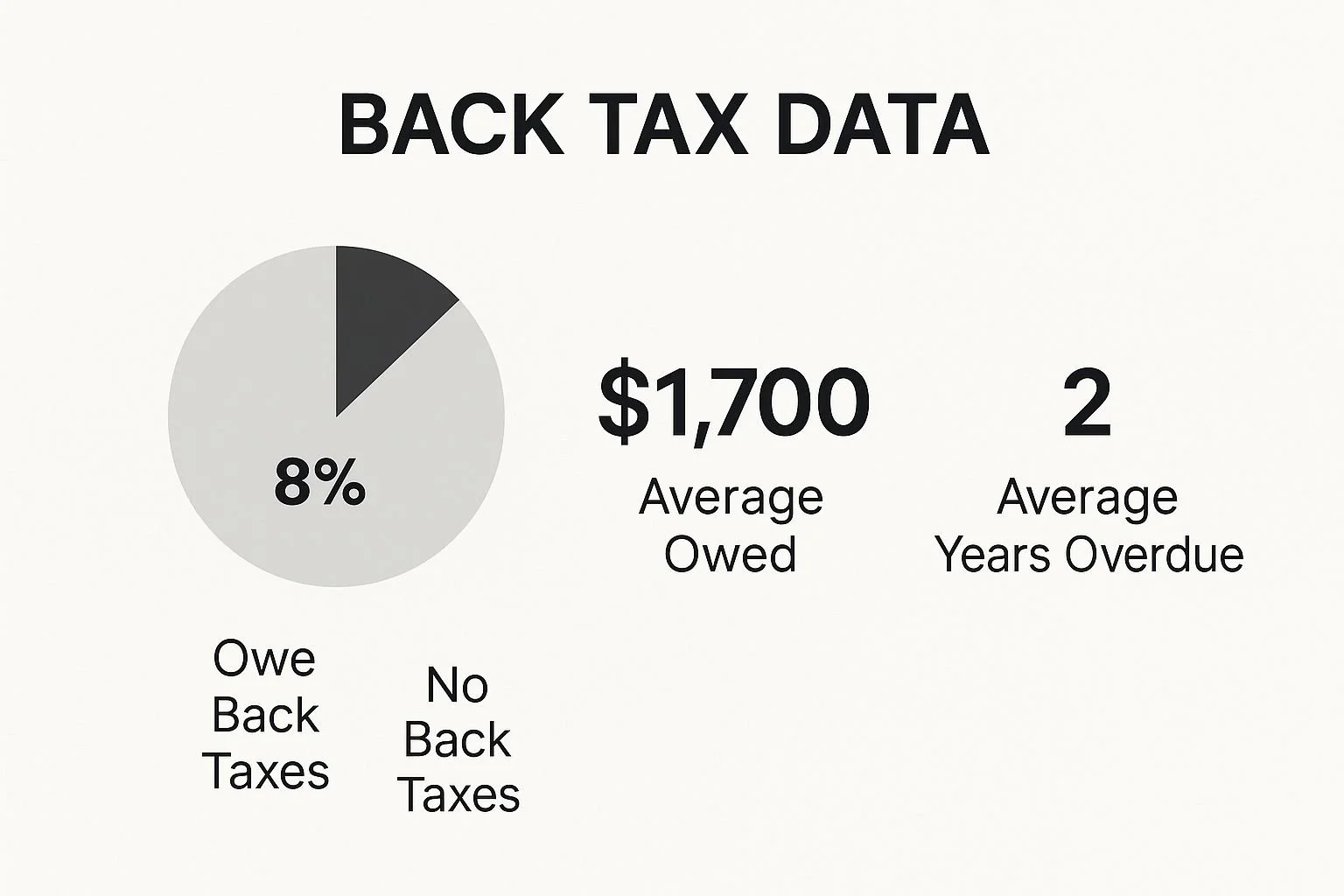
As you can see, plenty of people find themselves in this situation. The key is to stop wondering and get a concrete answer. Finding out where you stand is the absolute first step to resolving any lingering tax issues and finally getting some peace of mind.
Check Your IRS Online Account for a Quick Look

To get in, you’ll first need to securely verify your identity using ID.me, which usually requires a photo ID and a few minutes of your time. Once you’re authenticated, the portal lays everything out for you. You can see your balance for each tax year, check your full payment history, and even pull up digital copies of certain IRS notices.
Having this direct, real-time information is invaluable. It lets you confirm that payments were applied correctly and helps you understand exactly where a balance came from—for instance, if it’s the result of an IRS notice of levy.
Getting Your Hands on an Official Tax Transcript

The fastest and most straightforward way to see where you stand is by logging into the IRS 'View Your Account' portal. This is your personal dashboard, giving you 24/7 access to your tax records without having to wait on hold.
The most useful one for our purposes is the Account Transcript. Think of it as a detailed bank statement for a specific tax year. It lists every single action that has occurred on your account—from the original return being filed to any payments, penalties, or adjustments made along the way. It’s the definitive record.
You can request these transcripts directly from the IRS, either online or by mail. Once you have it, the trick is learning how to read it.
Cracking the IRS Code
The transcript is full of transaction codes, which can look like gibberish at first. But a few key codes will tell you most of what you need to know.
For instance, seeing a code ‘290’ means an additional tax was assessed. That’s a red flag right there. On the other hand, code ‘846’ is good news—it confirms a refund was issued. Learning to spot these codes helps you trace the history of your tax account and pinpoint exactly why a debt popped up or grew.
This level of detail is non-negotiable when you’re looking at tax resolution options. To even be considered for something like the IRS Fresh Start Program, you need a complete and accurate picture of your tax history, and the transcript is where you find it.
Contacting the IRS When You Need to Talk
Let's be real—sometimes the online tools just don't cut it. If you're staring at a confusing IRS notice or your tax situation has a few tricky layers, picking up the phone and talking to a real person is often the best move.
Yes, the wait times can be frustrating, but that direct conversation can clear up confusion in minutes.
Before you even think about dialing, get your paperwork in order. The agent will need to verify it's you, so have your Social Security number, birth date, and the specific tax return you're calling about ready to go. If a particular notice triggered your call, have that in front of you, too. Being prepared makes the whole process smoother.
Knowing When to Call a Tax Professional
Sometimes, the DIY approach just won't cut it. If you've just discovered a shockingly high balance, you're juggling several years of unfiled returns, or you've started receiving scary-looking notices from the IRS mentioning liens or levies, it’s time to stop guessing and call in an expert.
While you can certainly check your own balance, a messy, complicated situation is a different beast entirely. That's where a seasoned tax professional—like a CPA or an Enrolled Agent—becomes invaluable. They do a lot more than just look up what you owe.
For instance, many people find that outsourced accounting consultants for handling personal taxes can take a huge weight off their shoulders by navigating the complexities for them. A pro can get on the phone with the IRS on your behalf and work to negotiate things like payment plans or even settlements.
Getting professional help with back taxes isn’t giving up. It’s making a smart, strategic move to get the best possible outcome when the stakes are high.
A Few Lingering Questions You Might Have

Sometimes, just knowing the total you owe isn't enough. You need the full story, the play-by-play of how you got there. For that, nothing beats an official IRS tax transcript.
Even after figuring out the "how-to" of checking your tax balance, a few common worries tend to surface. I hear these from clients all the time, so let's tackle them head-on.
The big one is always, "Will checking my balance somehow trigger an audit?" The short answer is a firm no. The IRS wants you to be informed and proactive. Checking your status is a good thing in their eyes, not a red flag.
Another common question is about the statute of limitations. People wonder, "How far back can the IRS even come after me for old tax debt?" Generally, the IRS has a 10-year window to collect on back taxes from the date the tax was assessed. So, if you've got a debt from 15 years ago, you're likely in the clear for that specific year.
Want to understand your options before you call anyone?
Download my free book — Freedom From Tax Debt — a plain-language guide to how the IRS collections process actually works and what resolution really looks like.
➥ Contact Attorney Stephen A. Weisberg for a free Tax Debt Analysis.
Contact Me Here: https://www.weisberg.tax/contact-1
Email: s.weisberg@weisberg.tax
Phone/Text: (248) 971-0885
Address: 300 Galleria Officentre, Suite 402, Southfield, MI 48034
