How to Set Up Payment Plan for Taxes | Quick IRS Guide
That heart-sinking moment when you see your tax bill and realize you can't pay it all at once is a familiar feeling for many. Thankfully, the IRS has structured ways to manage the debt without panic. The most direct route is the IRS Online Payment Agreement (OPA) tool, which lets you apply for either a short-term extension or a longer-term payment plan.
Understanding Your IRS Payment Plan Choices
When you can't pay your tax bill in full, the IRS gives you two main paths to get back in good standing. Figuring out which one is right for you is the first real step toward getting a handle on your finances. The decision really boils down to a simple question: How much time do you realistically need to pay it off?
The two primary options are the Short-Term Payment Plan (STPP) and the Long-Term Installment Agreement (IA). Each one is built for a different kind of financial situation.
Short-Term Payment Plan (STPP)
You can think of the STPP as a short, informal grace period. It gives you up to 180 extra days to pay what you owe in full. This is a perfect fit if you're dealing with a temporary cash flow problem.
Imagine you're a freelance graphic designer waiting on a big check from a client. An STPP lets you bridge that gap without having to pay any setup fees. It’s a simple, straightforward extension.
But there's a catch: penalties and interest don't stop. They'll keep adding up on your unpaid balance until you've paid every penny. So, while it's a great tool, you need to be confident you can clear the entire debt within that six-month window.
Long-Term Installment Agreement (IA)
If 180 days just isn't going to cut it, the Long-Term Installment Agreement is your best bet. This is a more formal arrangement where you commit to making monthly payments for a period that stretches beyond six months. It’s designed for people facing more significant or ongoing financial hurdles.
Unlike the STPP, this plan does have setup fees. The cost depends on your income and how you apply—it's always cheaper to do it online. For most taxpayers, setting up an IA with automatic direct debit payments costs just $31. This infographic gives a great visual breakdown of your main choices.
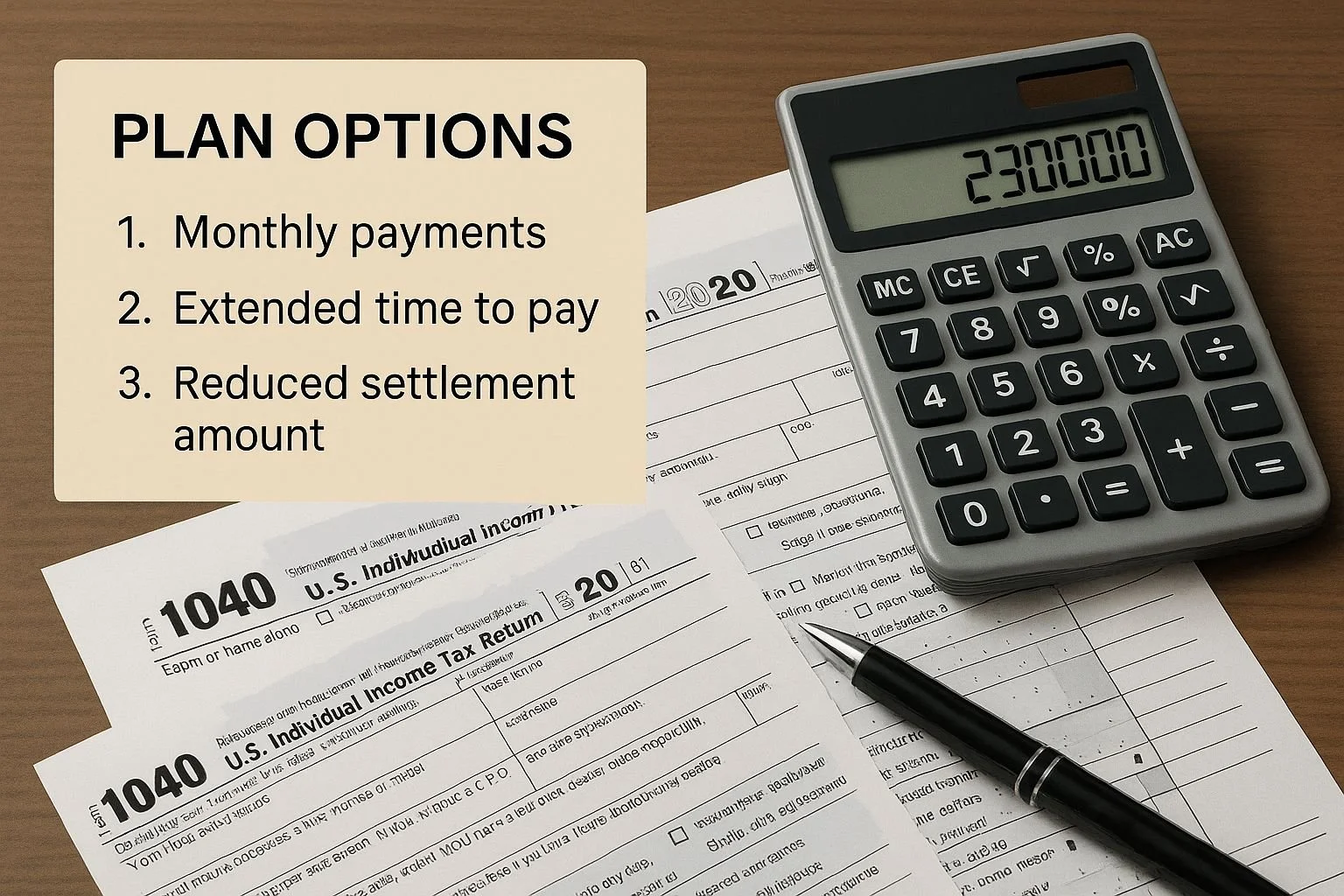
As you can see, the decision really hinges on that 180-day timeline.
This kind of agreement is a financial lifeline for millions. In fact, the IRS reports that around 2.5 million taxpayers set up formal installment agreements every year. Choosing an IA also puts an immediate stop to more aggressive collection actions, like wage garnishments or bank levies, as long as you stick to the payment schedule.
IRS Tax Payment Plans at a Glance
Sometimes seeing the details side-by-side makes the decision clearer. Here's a quick comparison of the two main plans to help you figure out which one aligns with your financial reality.
| Feature | Short-Term Payment Plan (STPP) | Long-Term Installment Agreement (IA) |
|---|---|---|
| Payment Timeline | Up to 180 days | More than 180 days (up to 72 months) |
| Setup Fees | None | Yes, fees vary ($31 to $225) |
| Best For | Temporary cash flow shortages | Significant tax debt needing extended time |
| Application | Online, phone, or mail | Online, phone, mail, or Form 9465 |
This table shows that the right choice really depends on your specific circumstances and how long you need to get back on solid ground.
Of course, for some people, even the monthly payments of an IA might feel impossible. If your tax debt is overwhelming and your ability to pay is severely limited, you might want to look into another route called an Offer in Compromise (OIC). An OIC allows certain taxpayers to settle their tax debt with the IRS for less than the full amount they owe.
Do You Qualify for an IRS Payment Plan?
First things first: before you even think about filling out an application, you need to make sure you actually qualify for an IRS installment agreement. It’s a crucial step. The last thing you want is to spend your valuable time on the paperwork only to get an immediate rejection.
The requirements are pretty black and white, but you have to meet them.
The Golden Rule: You Must Be Current on Your Tax Filings
This is the biggest hurdle for most people and it’s non-negotiable. You must have filed all required tax returns. The IRS simply won't even consider a payment plan if you have outstanding returns from prior years. Your application will be dead in the water.
It's a common misconception. I've seen people think they can set up a plan for their current tax bill and then circle back to deal with older, unfiled returns later.
Unfortunately, the IRS doesn't see it that way. To them, being "in compliance" means every single required return is on file, even if you couldn't afford to pay the tax you owed for those years.
What’s Your Total Debt? The Thresholds Matter
The total amount you owe the IRS is the next critical piece of the puzzle. This isn't just the base tax—it's the full amount, including all penalties and interest that have accumulated. This total balance dictates which type of plan you can get and how you can apply for it.
Here’s a quick rundown of the key numbers for streamlined online applications:
Owe less than $50,000? If your total balance is under this amount, you can usually apply for a long-term payment plan online. The best part is you typically don’t have to submit a mountain of financial documents to get it approved.
Owe less than $100,000? You might still be able to use the online system to set up a short-term plan, which gives you up to 180 days to pay in full.
A quick heads-up for business owners: the rules are a bit different. The streamlined online agreement threshold for businesses is much lower, often around $25,000. If your debt is higher than these limits, it doesn’t mean you’re out of options. It just means the process gets more involved—you’ll likely have to apply by phone or mail and be ready to provide a full financial disclosure.
The IRS website itself guides you through these different paths right from the start.
As you can see, the starting point of the application process is designed to route you correctly based on your specific situation.
A Practical Eligibility Checklist
So, before you go any further, take a moment and run through this quick mental checklist. It will tell you if you're ready to apply or if you have some prep work to do.
Are all my tax returns filed? Seriously, double-check. If you have any stragglers from past years, getting them filed is your absolute top priority.
What's my exact total balance? Don't guess. Log into your IRS online account or pull out your most recent notice to find the up-to-the-minute figure, including penalties and interest. This number determines everything.
Am I applying as an individual or a business? The debt limits and rules change depending on your entity type, so make sure you're looking at the right set of guidelines.
Answering these questions honestly from the get-go will save you a ton of time and frustration. If you discover unfiled returns, that's where you need to focus your energy first. If your debt is over the online limits, just know that you'll need to be prepared to gather your financial records for a more hands-on application.
What You Need Before You Apply
The secret to a successful tax payment plan application? Preparation. I can't stress this enough.
Going in unprepared is a recipe for frustration. It's like trying to build a desk without the instructions—you'll spend hours getting nowhere and probably have to start over. Trust me, taking 30 minutes to gather your documents now will save you a massive headache later.
Think of this as your pre-flight checklist. Having everything you need right at your fingertips makes the whole process feel less intimidating and much more manageable.
The Basic Essentials for Every Applicant
No matter which type of payment plan you're after, the IRS needs to confirm who you are and what you owe. Before you even think about logging into their website or picking up the phone, get these key details in order.
Primary Taxpayer's Social Security Number (SSN) or Individual Taxpayer Identification Number (ITIN). If you filed a joint return, you'll need your spouse's number, too.
Your Date of Birth. This is a standard ID check.
Your Filing Status. Be sure you know if you filed as Single, Married Filing Jointly, Head of Household, etc.
A Copy of the Tax Return you owe on. You’ll need the specific tax year and the form number, like a 2023 Form 1040.
The Exact Balance You Owe. Grab the most recent notice the IRS sent you (like a CP14). This will have the most current total, including any penalties and interest that have been added on.
A Valid Email Address and Phone Number. The IRS needs this for verification and any follow-up communication.
Having this information ready prevents that frantic search through file folders while the clock is ticking on the IRS website.
Financial Details for More Complex Agreements
Things get a bit more involved if you owe more than $50,000 or can't afford the monthly payment the online system suggests. At this point, the IRS wants a much closer look at your finances, which means you'll need to fill out a Collection Information Statement (Form 433-F).
The purpose of this form is to give the IRS a complete picture of your actual ability to pay.
This isn't just about jotting down your budget. The IRS compares your numbers to national and local standards for living expenses to decide what you can "reasonably" afford. Common mistakes like underestimating expenses or forgetting a source of income can lock you into a payment you can't keep up with or get your application denied outright.
To fill out this form correctly, you'll need to pull together records for:
All Sources of Income: This means recent pay stubs, records of any self-employment income, Social Security benefit statements—basically any money coming in.
Bank Account Information: Have recent statements handy to show your current balances.
Monthly Living Expenses: Gather up your recent bills for rent or mortgage, utilities, car payments, groceries, and medical costs.
Asset Information: You'll need to know the current value of your vehicles, real estate, and any major investments.
Other Debts: Make a list of your other loan payments, like your mortgage, auto loans, or student loans.
I've seen many people get tripped up on this part. To make sure you get it right, take a look at our comprehensive guide to completing Form 433-F. It walks you through how to present your financial situation to the IRS accurately and effectively. Getting this part right is what makes or breaks most complex payment agreements.
Using the IRS Online Payment Agreement Tool
If you owe the IRS, their Online Payment Agreement (OPA) tool is almost always the quickest way to get things sorted out. It's a self-service platform that lets you apply for and get an installment agreement approved on the spot, often in just a few minutes. You can skip the long phone hold times and the hassle of mailing in forms.
Think of it as an interactive application. The system guides you through a series of questions to verify who you are and confirm your tax details. Based on what the IRS knows about your account, it will then show you the payment plans you're eligible for.
Getting Started and Proving You're You
First things first, you'll need to head over to the official IRS application page. You’ll either log into your existing IRS online account or be prompted to create one with their partner, ID.me. This security step is non-negotiable and is there to protect your sensitive information.
I won't sugarcoat it—the initial ID.me verification can feel a bit tedious. You'll need to provide personal details and likely upload a photo of your driver's license or another government ID. It’s a one-time setup, though, and once it's done, you're in.
After you're securely logged in, you'll see a list of the tax years where you have a balance due. You simply select which debts you want to roll into the payment plan, and the tool will calculate and display a proposed monthly payment. This is where you get to have some input.
Finding a Payment Amount That Actually Works
The initial monthly payment the IRS suggests is based on a simple formula: your total tax debt divided by the maximum repayment period, which is usually 72 months. For some, that number is perfectly fine. But if you look at it and your stomach sinks a little, don't panic. You are not stuck with it.
The OPA tool lets you propose a different amount that fits your real-world budget.
Let's walk through a common scenario:
The IRS Suggests: The system says you should pay $450 per month.
Your Reality: You've run the numbers, and after rent, groceries, and other bills, you know you can consistently afford $300 a month without financial strain.
What You Do: You simply enter $300 into the "propose a different amount" box.
The system will crunch the numbers again. As long as your proposed amount is reasonable and will still clear the debt within the allowed time frame, it’s often accepted instantly. If the number is too low, the IRS might ask you to either bump it up or consider a more detailed application by mail using Form 433-F, which involves a full financial disclosure.
My Advice: Never just click "accept" on the first number you see. Compare it against your actual household budget. It's far smarter to commit to a realistic payment you can make every single time than to agree to a higher amount and risk defaulting down the road.
Lock in Your Success with Automatic Payments
One of the best features inside the OPA tool is the option to set up a Direct Debit Installment Agreement (DDIA). This simply means you authorize the IRS to automatically pull the payment from your bank account each month on the date you pick.
Why is this a big deal? Because life happens. It's incredibly easy to forget a due date, and just one missed payment can technically default your entire agreement. That can trigger the collection process all over again. Automating your payments takes that worry completely off the table.
Better yet, the IRS gives you a nice financial perk for choosing this option. The one-time setup fee for an online plan with direct debit is only $31. If you opt out and decide to pay manually by check or card each month, that fee shoots up to $130.
To get direct debit set up, just have this info handy:
Your bank's routing number
Your account number (checking or savings)
You’ll enter that information, review the terms, and e-sign the agreement. In an instant, you'll get confirmation that your payment plan is locked in. It provides a clear path forward and, most importantly, some well-deserved peace of mind.
How to Successfully Manage Your Payment Plan

Getting your IRS payment plan approved is a huge relief, but it’s really just the starting line. The real victory comes from managing the agreement all the way through to that final payment. This is where your diligence and commitment will turn a temporary fix into a permanent solution for your tax debt.
The single most important part of this is consistency. You have to treat your IRS payment like any other critical monthly bill—think rent or a mortgage. It's a serious financial obligation, and the IRS certainly sees it that way.
The Consequences of a Missed Payment
Don't underestimate the fallout from a missed payment. Missing even one can trigger serious problems, as the IRS can declare your installment agreement in default. This isn't just a slap on the wrist; it essentially voids the entire agreement you worked so hard to get.
Once you default, the collection process that was put on hold roars back to life. More aggressive tactics are immediately back on the table. The agency could move to file a federal tax lien or, even worse, start the process of levying your bank account or garnishing your wages.
A default is like hitting a reset button you never wanted to press. All the protections you gained vanish, and you're right back where you started—often facing an even more determined IRS.
It's a nightmare scenario, but thankfully, one you can completely avoid with some proactive management.
Navigating Life Changes and Payment Issues
Life happens. A sudden job loss, an unexpected medical bill, or another financial crisis can make that monthly payment feel impossible. If you find yourself in this spot, the absolute worst thing you can do is ignore it.
Instead, get on the front foot. The moment you realize you're going to have trouble making a payment, contact the IRS directly. Use the phone number on your agreement notice. Be prepared to explain your situation honestly and clearly.
The IRS can be surprisingly willing to work with you, provided you communicate. Depending on your specific situation, they might offer a few options:
A short-term payment deferral: They may let you skip a payment or two and tack them onto the end of your plan.
Revising your monthly payment amount: If your income has taken a significant and lasting hit, you can often renegotiate for a lower monthly payment by submitting updated financial information.
Communication is everything. The IRS is far more lenient with people who are upfront about their struggles than with those who just disappear.
Staying Compliant with Future Taxes
This is a big one, and it’s a non-negotiable rule that trips up countless taxpayers. To keep your payment plan in good standing, you must stay completely current on all future tax obligations.
This breaks down into two equally critical parts:
File on Time: You must file all your future tax returns by the annual deadline. This is true even if you know you can't afford to pay what you owe.
Pay on Time: Any new taxes you owe must be paid in full by the deadline. You can't just roll a new tax bill into your existing installment agreement.
Failing on either of these points is one of the fastest ways to default on your agreement. The IRS sees it as proof that your underlying financial problems aren't solved. This is why it’s so important to adjust your payroll withholdings or start making estimated tax payments to avoid another surprise bill next April.
If you ever find yourself facing enforced collections, our guide on how to stop IRS wage garnishment can provide crucial information to help protect your income.
Managing your payment plan is an ongoing process. By making your payments, staying current on new taxes, and reaching out when trouble strikes, you can ensure your plan is what it was meant to be: a clear path out of tax debt for good.
Common Questions About Tax Payment Plans
Even with a solid plan in place, it's natural to have questions about the road ahead. Navigating an IRS agreement can bring up new concerns, especially when life throws you a curveball. Let’s tackle some of the most common questions taxpayers ask once their payment plan is up and running.
What Happens if I Miss a Payment?
Missing a payment is a big deal and can jeopardize your entire agreement. When you skip a payment, the IRS considers your plan to be in default, and this isn't a situation you want to ignore.
The first thing that will happen is you'll get a formal notice in the mail, usually a CP523, warning you that your agreement is at risk of being terminated. If you don't act quickly to get back on track, the IRS will cancel the plan. Once that happens, the hold on more serious collection actions is lifted. They can go back to pursuing things like filing a tax lien or even levying your bank accounts and wages.
The best advice I can give is to be proactive. If you know a financial emergency will prevent you from making a payment, call the IRS before the due date. They are much more willing to work with you if you're upfront about the problem instead of just letting the payment lapse.
Can I Pay Off My Installment Agreement Early?
Absolutely! In fact, you should if you can. There is no prepayment penalty for paying off an IRS installment agreement ahead of schedule. You’re free to make extra payments whenever you have the funds or pay off the whole balance in one lump sum.
Doing this is one of the smartest things you can do financially. Remember, interest and penalties keep piling up on your outstanding balance for the entire duration of the agreement. Every extra dollar you pay is a dollar that stops racking up those charges, which can save you a significant amount of money in the long run.
Does a Payment Plan Affect My Credit Score?
This is a huge source of anxiety for many people, but the answer is usually a relief. An IRS installment agreement, by itself, is not reported to the major credit bureaus like Equifax, Experian, or TransUnion. So, just having a payment plan won't directly hurt—or help—your credit score.
However, there’s a critical piece to this puzzle: the federal tax lien.
If your tax debt is over a certain threshold (typically $10,000), the IRS might file a Notice of Federal Tax Lien. This is a public document that stakes the government's claim to your property, and because it's public, credit bureaus can find it. A tax lien can seriously damage your credit score.
The good news is that setting up a payment plan can often help you avoid a lien in the first place or even get an existing one withdrawn. But if a lien is already on your record, the installment agreement won't make it disappear. It will stay there until the debt is paid in full and the IRS releases the lien.
What if I Cannot Afford the Proposed Payment?
This happens all the time. You go through the online application, and the system spits out a monthly payment that you know you simply can’t manage. Whatever you do, don't agree to a payment you can't afford just to get it over with. You're just setting yourself up to default down the road.
If the proposed payment is too high, you have other options. This usually just means the IRS needs a clearer picture of your actual financial situation. To do that, you'll likely need to fill out a Collection Information Statement (Form 433-F).
This form is a detailed snapshot of your household income, assets, and necessary living expenses. The IRS uses this information to figure out a monthly payment that reflects your true ability to pay. Going through this process can lead to a few different outcomes:
A Lower Monthly Payment: Based on your numbers, the IRS may simply approve a smaller payment that actually fits your budget.
Offer in Compromise (OIC) Qualification: Your financial statement might show that there's no way you can pay the full debt back. This could open the door to an OIC, which lets you settle your tax bill for less than you owe.
Currently Not Collectible (CNC) Status: If you're facing extreme financial hardship, the IRS might place your account in CNC status. This temporarily pauses all collection efforts until your financial situation improves.
The key is to be completely honest and thorough when you fill out the form. Proving you can’t afford the standard payment is the first step toward getting a solution that won't break your bank.
At Attorney Stephen A Weisberg, we know that every tax problem is unique. We don’t use high-pressure sales tactics; instead, we start with a FREE Tax Debt Analysis to find the best way forward for your specific situation with the IRS or state. If you need expert guidance, visit us at weisberg.tax to see how we can help.
Want to understand your options before you call anyone?
Download my free book — Freedom From Tax Debt — a plain-language guide to how the IRS collections process actually works and what resolution really looks like.
➥ Contact Attorney Stephen A. Weisberg for a free Tax Debt Analysis.
Contact Me Here: https://www.weisberg.tax/contact-1
Email: s.weisberg@weisberg.tax
Phone/Text: (248) 971-0885
Address: 300 Galleria Officentre, Suite 402, Southfield, MI 48034
