Innocent Spouse IRS Relief: Protect Your Finances Today
Nothing feels more unfair than getting a massive tax bill from the IRS for something your spouse or ex-spouse did without your knowledge. It's a gut-wrenching, isolating experience.
Fortunately, the IRS has a set of provisions known as innocent spouse relief, which can act as a financial shield, protecting you from tax debts that aren't truly yours.
What Is Innocent Spouse Relief and Why It Matters

When you sign a joint tax return, you’re agreeing to what the IRS calls joint and several liability. It’s a bit like co-signing a loan for someone.
If they stop paying, the bank doesn't just go after them for their half; they can come after you for the entire amount. The same principle applies to your taxes, even if you get divorced years later.
But let's be realistic—that arrangement isn't always fair. The IRS gets this. They recognize that it’s unjust to force someone to pay for their partner’s hidden income or fraudulent deductions.
Innocent spouse relief is the mechanism designed to correct this injustice, giving you a way out from under a tax debt that rightfully belongs to your current or former spouse.
Understanding the Three Paths to Protection
Most people use "innocent spouse relief" as a catch-all term, but there are actually three distinct ways the IRS can grant you this protection.
Each one is built for a different set of circumstances, and picking the right one is absolutely critical to getting your case approved.
To help you get a quick sense of which might apply to you, here's a brief breakdown of the three options.
Quick Overview of the Three Types of IRS Spousal Relief
| Type of Relief | Primary Purpose | Best For Situations Where... |
|---|---|---|
| Innocent Spouse Relief | To completely absolve you of responsibility for the tax. | Your spouse or ex-spouse created the tax debt without your knowledge, and you can prove you were unaware. |
| Separation of Liability | To divide the tax debt between you and your spouse. | You are divorced, legally separated, widowed, or have lived apart from your spouse for at least 12 months. |
| Equitable Relief | To provide relief when it would be unfair to hold you liable. | You don't qualify for the other two types, but the overall situation makes it clear you shouldn't have to pay. |
Think of these as three different doors to the same goal: freedom from an unfair tax burden.
The entire point of these rules is to make sure you aren't financially ruined by a spouse who was dishonest or hid things from you. The IRS is looking at the facts and circumstances to determine what's fair.
An IRS notice is intimidating enough on its own. When it’s tied to a difficult or ended relationship, the stress can feel unbearable.
If this is where you find yourself, the most important thing you can do is understand your options.
You can explore our guide on what to do when love fades and the IRS comes knocking to get a clearer picture.
The goal is to move from confusion to a clear plan of action.
The Three Roads to IRS Relief
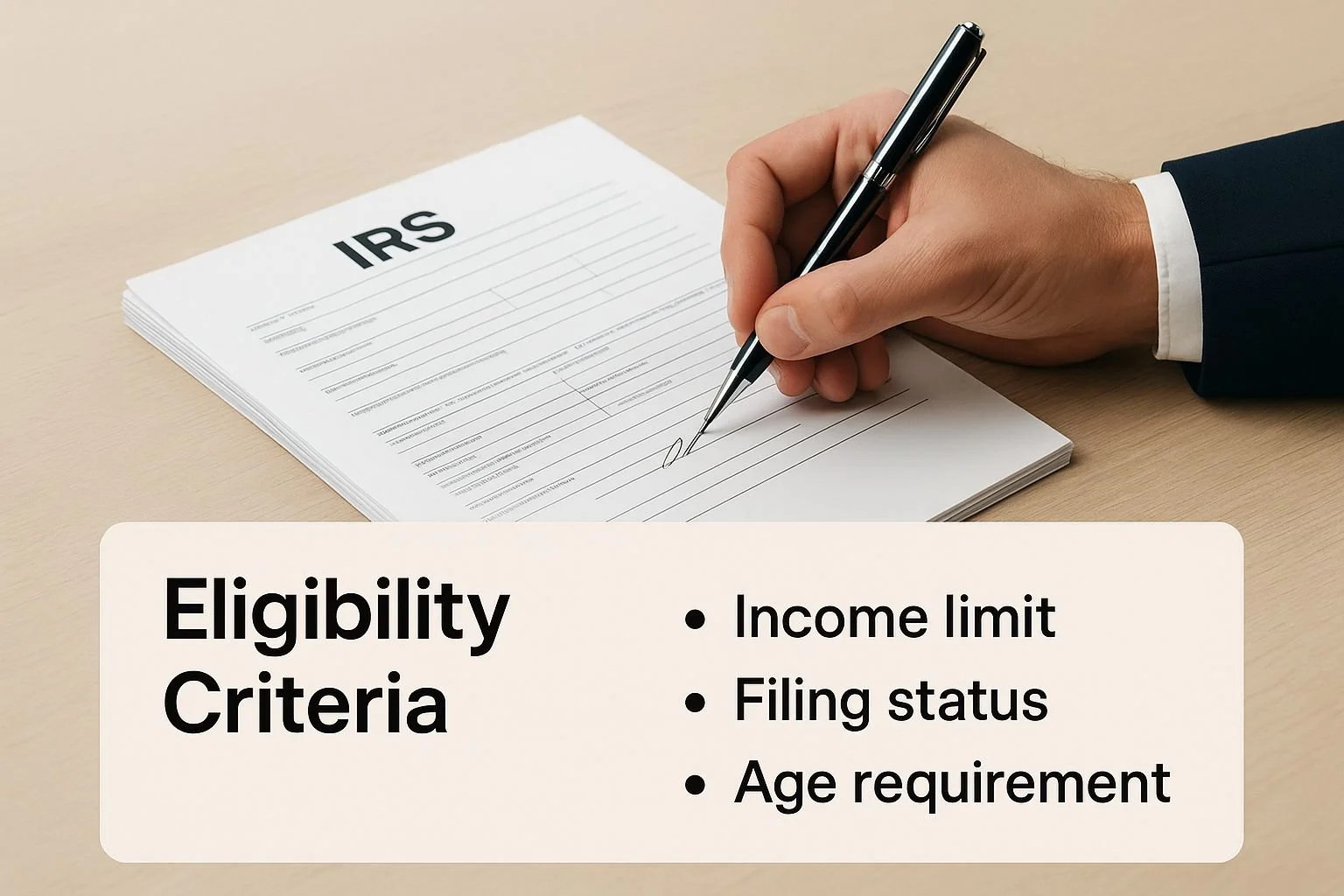
When you're facing a tax problem from a joint return, the IRS doesn't just offer one way out. Instead, there are three distinct paths you can take.
Think of it like having three different keys for three different locks—picking the right one is absolutely the most crucial step in solving your innocent spouse IRS problem. Getting to know the details of each option is where we need to start.
This image gives a great bird's-eye view of the general ideas the IRS considers for each type of relief.
What this really shows is that the IRS looks at the unique facts of your situation to decide if making you pay the tax bill would be fundamentally unfair.
Path 1: The Classic Innocent Spouse Relief
This is the one most people have heard of. It’s the traditional route where you have to prove that your spouse (or ex-spouse) was completely at fault for an "erroneous item" on your joint tax return.
That error could be anything from hidden income they didn't report to bogus deductions or credits they claimed.
The biggest hurdle here is what the IRS calls the "reason to know" test. They're going to dig into whether you genuinely had no idea about the tax mistake when you put your signature on that return.
If you suddenly started living a much fancier lifestyle without a clear source of new income, or if you were the one who handled the family books, proving you were in the dark gets a lot harder.
A Real-World Example: Maria’s husband was a self-employed contractor who managed all of their finances. Turns out, he was consistently lowballing his income on their tax returns. When they got audited after the divorce, Maria was granted full Innocent Spouse Relief. She was able to prove she never had access to the business bank accounts and had absolutely no reason to think the income he reported was wrong.
Path 2: Separation of Liability
This path works differently. It doesn't wipe the tax debt away completely; it splits it up. With Separation of Liability, the IRS essentially divides the tax bill between you and your spouse based on who caused which error.
You are only responsible for the tax connected to your own income, deductions, and credits.
There's a catch, though. This option is only on the table if you're divorced, legally separated, or have been living apart from your spouse for at least 12 consecutive months before you file the claim.
The huge advantage is that you can have actually known about the tax shenanigans and still qualify to have your portion of the liability separated.
Your Part: You'll pay the tax owed on your income and your deductions.
Their Part: Your ex-spouse is on the hook for the tax from their unreported income or fake deductions.
Path 3: Equitable Relief
Think of Equitable Relief as the ultimate safety net. It’s designed for people who don’t quite fit into the first two boxes, but for whom it would be completely unfair—or "inequitable"—to be forced to pay the tax.
This is by far the most flexible option, as it’s based on a wide-ranging "facts and circumstances" test.
The IRS will look at a whole host of factors, including:
Economic Hardship: Would paying this tax bill make it impossible for you to cover basic living costs like rent and food?
Your Knowledge: Did you know about the problem on the return? Even if you did, you might still get relief if other factors, like abuse, are in play.
Spousal Abuse or Duress: Were you forced or threatened into signing a return you knew was wrong?
Significant Benefit: Did you get to enjoy a lavish lifestyle because of the unpaid taxes?
Figuring out which path makes the most sense often means diving into some complicated areas of tax law.
A Real-World Example: David knew his wife was claiming some very aggressive business deductions that made him nervous, so he can't get Innocent Spouse Relief. But she had total control over their money, and he was afraid to question her because of past financial abuse. After they split, paying the huge tax bill would mean he couldn't afford his apartment. The IRS might grant him Equitable Relief because of the powerful combination of financial abuse and the severe economic hardship he would face.
Do You Qualify for Innocent Spouse Relief?

Figuring out if you qualify for innocent spouse IRS relief isn't just about checking a few boxes on a form.
It’s about building a compelling case, and the burden of proof is squarely on your shoulders.
At its core, your claim hangs on a simple question: What did you know, and when did you know it?
Think of it this way. You’re a passenger in a car, and the driver is secretly breaking the speed limit. When the police pull you over, should you be on the hook for the ticket?
The IRS wants to know if you had any reason to believe something was wrong. Did you see the speedometer creeping up?
Did your spouse brag about getting away with something?
Proving your eligibility means showing you were truly just along for the ride, completely unaware of the tax "speeding" that was happening.
The Critical "Knowledge" Test
The single most important factor in any innocent spouse claim is knowledge. The IRS will dig deep to determine if you had actual knowledge or a reason to know about the shady business on the tax return when you put your signature on it. These are two very different things.
Actual Knowledge: This is straightforward. It means you knew, without a doubt, that income was being hidden or a deduction was bogus. If your spouse said, "I'm not reporting the cash I made from that side job," and you signed the return anyway, you have actual knowledge. Game over.
Reason to Know: This is where things get murky and where most cases are won or lost. It means a reasonable person in your shoes would have smelled a rat. The IRS plays detective here, looking for red flags you might have missed.
To figure out if you had a "reason to know," the IRS will poke around in your life, asking questions like:
Your Background: Do you have a degree in accounting or run your own business? A higher level of financial sophistication raises the bar.
Your Role in the Household Finances: Did you pay the bills and balance the checkbook? If so, the IRS assumes you had a better view of the money coming in and going out.
Sudden Lifestyle Changes: Did a new boat, luxury car, or extravagant vacation suddenly appear, funded by money you can't account for? That’s a huge red flag.
Your Spouse's Behavior: Was your ex-spouse cagey about money? Did they refuse to let you see bank statements or tax documents?
The IRS is essentially trying to determine if it would be unfair to stick you with the bill. A key part of that is figuring out whether you genuinely had no idea the tax wasn't being paid correctly.
Did You Receive a Significant Benefit?
Another hurdle you have to clear is the "significant benefit" rule. Your claim will be dead in the water if the IRS can show you directly and significantly benefited from the unpaid taxes. We’re not talking about just maintaining your normal standard of living. This refers to a clear upgrade, funded by the tax shenanigans.
For instance, if the money from your spouse's unreported income went toward a down payment on a vacation home or funded a lavish shopping spree, the IRS will argue you received a significant benefit. You'll need to show that the ill-gotten gains didn't land in your lap.
Your Marital Status Matters
Your relationship status when you file for relief is a huge deal and directly impacts which type of relief you can apply for.
Navigating a separation can be complicated, and finding affordable options for managing divorce legalities can ease some of that burden while you sort out your tax issues.
For IRS purposes, here’s how it generally breaks down:
Still Married: You can potentially qualify for Innocent Spouse Relief or Equitable Relief.
Divorced, Legally Separated, or Widowed: You’re in a position to apply for all three types: Innocent Spouse, Equitable, and Separation of Liability.
Living Apart: If you and your spouse have lived apart for at least 12 consecutive months, you may also qualify for Separation of Liability Relief.
Be prepared for a tough process. The Taxpayer Advocate Service often points out that many innocent spouse requests are denied simply because people don’t provide enough evidence or miss critical deadlines.
If you're facing a complex tax debt, other avenues might also be worth exploring. For some, a different kind of settlement like an IRS Offer in Compromise could be a better fit.
How to File Your Claim for IRS Relief
Knowing your relief options is one thing, but actually filing the claim is what puts a shield between you and an unfair tax debt.
The process for securing innocent spouse IRS relief isn't just about filling out a form—it's about building a compelling case and giving the IRS a crystal-clear reason to grant your request.
This is your chance to officially tell your side of the story. The entire process hinges on IRS Form 8857, Request for Innocent Spouse Relief. Don't think of it as just another tax form.
It’s the legal framework for your argument, where you lay out the facts and explain why you shouldn't be held responsible for the tax debt. Take your time with it. Every line matters.
Mastering IRS Form 8857
The real work on Form 8857 happens in the narrative section. This is where you move beyond the numbers and tell your story.
Vague answers won’t cut it. You need to be specific, honest, and persuasive.
Your goal is to paint a vivid picture for the IRS agent reviewing your file. What was your relationship like? Who handled the finances?
Why didn't you know about the tax discrepancy when you signed the return?
If you were dealing with abuse, intimidation, or were simply kept in the dark about the household's financial reality, this is where you need to state it clearly and without reservation.
Crucial Tip: A chronological narrative is incredibly powerful. Start from the beginning of your relationship and walk the IRS agent through your financial history together. Explain who made the money, who paid the bills, who hired the accountant, and what you knew—or more importantly, what you didn't know—when those tax returns were signed. A story with a clear timeline is far easier to understand and believe.
The Power of Supporting Documents
Words are one thing, but proof is another. Your story on Form 8857 becomes exponentially stronger when you back it up with hard evidence.
A huge part of this process involves mastering document collection effectively to build an undeniable case file for the IRS.
Think of it this way: your paperwork does the heavy lifting. It validates your claims and shows the IRS you're taking this seriously.
Gathering the right documents is critical for a successful claim. Use this checklist to ensure you have everything you need before you file.
Essential Documentation Checklist for Your Form 8857
| Document Category | Examples | Why It's Important |
|---|---|---|
| Marital Status Documents | Divorce decree, legal separation agreement, or documents showing separate households. | This proves your legal relationship status, which is a core requirement for Separation of Liability and can support claims of duress or abandonment. |
| The Tax Returns in Question | A complete copy of the joint tax return(s) for the years you're seeking relief. | The IRS needs to see the exact return that created the tax liability. You can’t build a case without it. |
| Proof of Your Financial Story | Your separate bank statements, pay stubs, W-2s, or other income documents. | This shows your financial reality versus your spouse's and helps prove you didn't benefit from the unpaid tax or erroneous items. |
| Evidence of Abuse or Hardship | Court records, police reports, restraining orders, or letters from therapists or social workers. | This is non-negotiable if your claim is based on duress or fear. It provides objective, third-party validation of your situation. |
| IRS Correspondence | Any notices, letters, or audit reports you've received from the IRS regarding the debt. | This helps establish the timeline and shows the IRS exactly what issue you are responding to. |
A well-organized and thoroughly documented claim package leaves no room for doubt and dramatically increases your chances of a favorable outcome.
Remember, filing for innocent spouse relief is a distinct process. If you also have other issues, like unfiled tax returns from previous years, you'll need to handle those separately. We cover that topic in detail right here: get help with unfiled tax returns and avoid penalties.
Once you've assembled everything, you'll submit Form 8857 and all your supporting documents by mail or fax to the IRS address listed in the form's instructions. A meticulously prepared submission is your best shot at finally closing this difficult chapter.
Critical Deadlines and Common Mistakes to Avoid
When it comes to getting tax relief from the IRS, timing and accuracy are everything. If you're pursuing an innocent spouse IRS claim, a missed deadline or a simple mistake on the application can bring an otherwise strong case to a grinding halt.
Knowing these critical timelines and common pitfalls is the first step toward building a successful claim.
Think of these deadlines as a statute of limitations on your financial freedom. The IRS gives you a specific window to ask for help, and once that window closes, it's usually shut for good.
In fact, failing to act in time is one of the most common reasons a request for relief gets shot down before anyone even looks at the facts.
The Two-Year Rule You Absolutely Cannot Ignore
The most important deadline to burn into your memory is the "two-year rule." As a general rule, you have to file your request for relief—using Form 8857—within two years from the date the IRS first took collection action against you for that specific tax debt.
So, what exactly counts as a "collection action"? It's not just a scary-sounding letter. The clock officially starts ticking after very specific IRS activities, such as:
A Notice of Intent to Levy: This is when the IRS sends a formal notice, like a Letter CP90 or Letter 1058, spelling out its right to start seizing your assets.
An Offset of Your Tax Refund: This happens when the IRS grabs a tax refund from a different year and applies it to the joint tax debt you owe.
Filing a Notice of Federal Tax Lien: This is a public notice the IRS files, giving them a legal claim against your property.
The IRS is incredibly strict about this deadline. Countless Tax Court cases have been lost for one reason only: the taxpayer filed their claim more than two years after the first collection action, like having a refund taken. For more detail straight from the source, you can check out the official IRS relief page.
Common Mistakes That Can Wreck Your Claim
Beyond blowing the deadline, a few other common missteps can seriously weaken or even kill your innocent spouse claim. If you know what they are ahead of time, you can steer clear and put your best foot forward.
1. Submitting a Vague or Incomplete Application Your Form 8857 is your first, and often best, chance to tell your side of the story. Just writing "I didn't know" won't cut it. You need to provide a detailed, chronological narrative that explains exactly why you qualify.
Proactive Strategy: Treat this form like you're giving a sworn statement. Explain who handled the family finances, describe your level of involvement (or complete lack thereof), detail any abuse or duress from your spouse, and clearly lay out why you had absolutely no reason to suspect a tax error.
2. Not Providing Enough Evidence A story without proof is just that—a story. The IRS needs documents to back up what you're saying. A lack of solid evidence is one of the top reasons claims are denied.
What to Include: Divorce decrees, separate bank statements from the time, proof that you lived a modest lifestyle (not one funded by hidden income), and any documentation of abuse, like restraining orders or letters from a therapist, are all powerful pieces of evidence.
3. Picking the Wrong Type of Relief This happens all the time. For instance, someone applies for Innocent Spouse Relief when they actually knew about the tax mistake but are now divorced. In that situation, Separation of Liability is probably the right path.
What to Do: Before you file anything, carefully read the rules for all three types of relief: Innocent Spouse, Separation of Liability, and Equitable Relief. Choosing the one that truly fits the facts of your situation is vital. If your claim gets denied, it’s important to know what your rights are, and you can learn more about how to appeal an IRS decision in our detailed guide.
Your Innocent Spouse Relief Questions, Answered
Even after laying out the basics, you probably still have some specific questions running through your mind. That’s completely normal. This process is deeply personal and can feel overwhelming, so let's tackle some of the most common questions we hear from clients.
Will the IRS Tell My Ex-Spouse I Filed a Claim?
Yes, they will. The IRS is legally required to notify your former (or current) spouse that you’ve filed Form 8857 for relief. This isn't just IRS policy; it’s the law.
Think of it this way: the law gives your ex-spouse the right to participate in the process since they were on the other side of that joint return.
They can provide their own information and perspective for the IRS to consider. But here’s the most important part: they cannot stop you from filing a claim. They also don't get a "veto" over the IRS's final decision. Their role is limited to providing their side of the story.
What Can I Do If My Innocent Spouse Claim Is Denied?
Getting a denial letter in the mail is gut-wrenching, I know. But it's crucial to understand that this is rarely the end of the story. If the IRS turns down your request, you have powerful appeal rights.
You’ll generally have 90 days from the date on that final determination letter to file a petition with the U.S. Tax Court. The Tax Court provides a completely fresh look at your case. Because this is a formal court proceeding, this is the point where having an experienced tax professional in your corner is absolutely critical to guide you through the process and represent your interests.
A denial from the initial IRS review is often just the first step. The Tax Court provides a neutral venue to re-evaluate all the facts and circumstances of your case, which can lead to a different outcome.
Can I Get Relief for My Spouse's Business Tax Debt?
Absolutely. This is a very common situation we see. Many innocent spouse claims stem from tax debts created by a spouse's business—especially a sole proprietorship that was reported on a Schedule C as part of your joint tax return.
The source of the debt isn't what matters. What matters is whether you meet the eligibility rules for the specific type of relief you're asking for. For traditional Innocent Spouse Relief, you'd still need to prove the core requirements:
The tax bill is from an "erroneous item," like unreported business income or bogus deductions.
You genuinely had no knowledge or reason to know about that error when you signed the return.
Holding you responsible for the debt would be unfair and inequitable.
So, while a business debt doesn't disqualify you, you still have to build a solid case based on the fundamental principles of the program.
How Does My Income Affect Equitable Relief Eligibility?
Your current financial situation is front and center when it comes to qualifying for equitable relief. The IRS will perform a deep dive into your finances to determine if paying the tax would cause you economic hardship. This is arguably the most important factor for this specific type of relief.
What is "economic hardship"? It means that paying the tax bill would leave you unable to cover your basic, reasonable living expenses.
The IRS will look at everything—your income, monthly bills, assets, and other debts—to paint a complete picture.
If you can clearly demonstrate that you are just getting by or that paying this tax would put you in a truly desperate financial spot, you have a very strong argument for equitable relief.
Navigating the complexities of an innocent spouse IRS claim can be overwhelming, especially when your financial future is on the line.
At Attorney Stephen A Weisberg, we understand the stakes. We begin with a FREE Tax Debt Analysis to determine exactly how we can help before you ever pay a fee. Protect your finances by scheduling your free consultation today at weisberg.tax.
➥ Contact Attorney Stephen A. Weisberg for a free Tax Debt Analysis.
Contact Me Here: https://www.weisberg.tax/contact-1
Email: s.weisberg@weisberg.tax
Phone/Text: (248) 971-0885
Address: 300 Galleria Officentre, Suite 402, Southfield, MI 48034
