IRS Audit Help: Expert Tips to Survive Your Tax Audit
Understanding Your Audit Risk and What Triggers IRS Attention

Let’s be honest, the thought of an IRS audit is enough to make anyone nervous. But knowing what actually puts you on the IRS's radar can turn that anxiety into proactive preparation.
It’s not about being paranoid; it's about being smart. The truth is, audit risk isn't the same for everyone. Certain income levels, business types, and even specific deductions can make your tax return stand out.
The IRS uses a powerful computer program called the Discriminant Information Function (DIF) system to score every return. This system compares your return to a set of norms established from millions of similar taxpayers.
If your numbers stray too far from the average—for instance, claiming unusually high charitable donations for your income level—it raises a flag. It's the IRS's first line of defense, automatically flagging returns that just don't look right.
Who Is Actually on the IRS Radar?
While a high DIF score is a primary trigger, some situations almost guarantee a closer look. For business owners, especially those running a sole proprietorship or single-member LLC, the line between personal and business expenses can get blurry.
This is a major focus area for auditors. For example, if your business reports a significant loss for several years in a row, the IRS might question whether it's a real business or a hobby used to write off personal expenses.
Certain deductions are also notorious for attracting attention:
Home Office Deduction: This is a classic audit trigger, particularly if the space you claim is a large percentage of your home. You must have a dedicated area used exclusively for business.
Vehicle Expenses: Claiming 100% business use of a vehicle is a major red flag unless you own a separate car for personal trips and have meticulous mileage logs to prove it.
Large, round numbers: Reporting exactly $5,000 in advertising or $10,000 for meals looks like an estimate rather than a documented, actual expense.
To get a clearer picture of who is most at risk, let's break down the audit rates and risk factors for different types of taxpayers.
| Taxpayer Category | Current Audit Rate | Primary Risk Factors | Risk Level |
|---|---|---|---|
| Low-Income (Under $25k) | 1.27% | EITC claims, dependents, filing status errors. | High |
| Middle-Income ($25k - $200k) | ~0.4% | Unusually high deductions (charity, medical), rental losses. | Low |
| High-Income ($200k - $1M) | ~1.0% | Schedule C/E losses, flow-through entities (S-corps, partnerships). | Moderate |
| Wealthy (Over $1M) | > 2.5% | Complex investments, foreign accounts, high net-worth, tax shelters. | Very High |
| Small Businesses (Schedule C) | Varies | Sustained losses, commingling funds, high T&E deductions. | Moderate to High |
This table shows that while audits are rare overall, the risk isn't evenly spread. Low-income filers claiming credits and high-income individuals with complex returns face the most scrutiny.
The New Landscape of IRS Enforcement
It's also important to know that the audit environment is changing. With new funding, the IRS is boosting enforcement, especially on higher-risk categories. Recent trends show a clear focus on taxpayers with earnings over $400,000, self-employed individuals, gig economy workers, and those with complex finances like cryptocurrency or foreign assets.
The agency is now using advanced AI to analyze data and find discrepancies that might have been missed before. This means accurate bookkeeping and proactive compliance are more critical than ever.
If you're in one of these groups, seeking professional IRS audit help isn't just a good idea—it's a vital strategic move.
You can read more about the shifting IRS audit risks and enforcement priorities.
Knowing the triggers is the first step, but you might also want to check out our guide on how to avoid an IRS audit in the first place.
Decoding Your IRS Audit Notice and Taking Immediate Action
Seeing that official IRS envelope in your mailbox is enough to make anyone’s stomach drop. Before you let your mind race to worst-case scenarios, just take a breath.
The first move isn’t to start frantically shredding papers or hiding under the bed—it's to figure out exactly what the IRS is asking. The type of notice you received will determine the entire path forward, making it the most important piece of the puzzle right now.
Not all audits are the same. In fact, most begin as a correspondence audit, which means everything is handled through the mail. These usually focus on a single, specific issue, like a question about a charitable donation you claimed or a particular business expense.
At the other end of the scale is the field audit, where an IRS agent requests to visit your home or business. This is the most serious type and usually means they want to do a deep dive into your financial records.
Somewhere in the middle is the office audit, where you’re asked to bring your documents to a local IRS office to meet with an agent.
Understanding the Request and Timeline
Your notice will have a specific code, like a CP2000, which is the IRS’s way of saying, "Hey, the information we have doesn't match what you reported on your tax return."
The letter will clearly state which tax year is under review and pinpoint the exact items they’re questioning. This isn't a random search; they'll tell you they need to see things like proof of dependents or the logbook for your business mileage.
The most critical detail on that notice is the response deadline. Typically, you have 30 days from the date on the letter to respond. Ignoring this deadline is a huge mistake.
If the IRS doesn't hear from you, they'll likely rule in their favor, tack on penalties and interest, and start the collection process. You need to take action right away, even if it's just to ask for an extension to get your documents in order.
To give you a better idea of what to expect, the table below breaks down the common types of IRS notices you might receive, what they typically mean, and what you need to do.
Types of IRS Audit Notices and Response Requirements
Detailed breakdown of different audit notice types, required responses, and deadlines
| Notice Type | Typical Issues | Response Deadline | Required Documentation |
|---|---|---|---|
| CP2000 | Underreported income (mismatch between your return and 3rd-party info like W-2s or 1099s). | 30 days | Pay stubs, corrected 1099s, bank statements, proof of basis for assets sold. |
| CP2501 | General information request about specific items on your return before an official audit begins. | 30 days | Receipts, invoices, bank statements, logs (mileage, etc.), or any proof for the specific item questioned. |
| Letter 566 | Notice of an upcoming correspondence audit, requesting information by mail. | 30 days | Copies of receipts, canceled checks, legal papers, and other documents supporting your claims. |
| Letter 2205-A | Notice of an upcoming in-person office audit at an IRS facility. | 30 days | Original documents (receipts, logs, etc.) and any records related to the items under review. |
| Letter 3253 | Notice of a field audit, where an agent will visit your home or place of business. | Varies; call to schedule | Comprehensive financial records, including bank statements, ledgers, expense reports, and asset records. |
This table shows that while the issues vary, the 30-day response window is a recurring theme. Missing it puts you on the back foot immediately, so prompt action is essential.
As you start gathering your papers, you'll see a pattern in what the IRS wants. Income verification is always on the list, but they often go deeper.
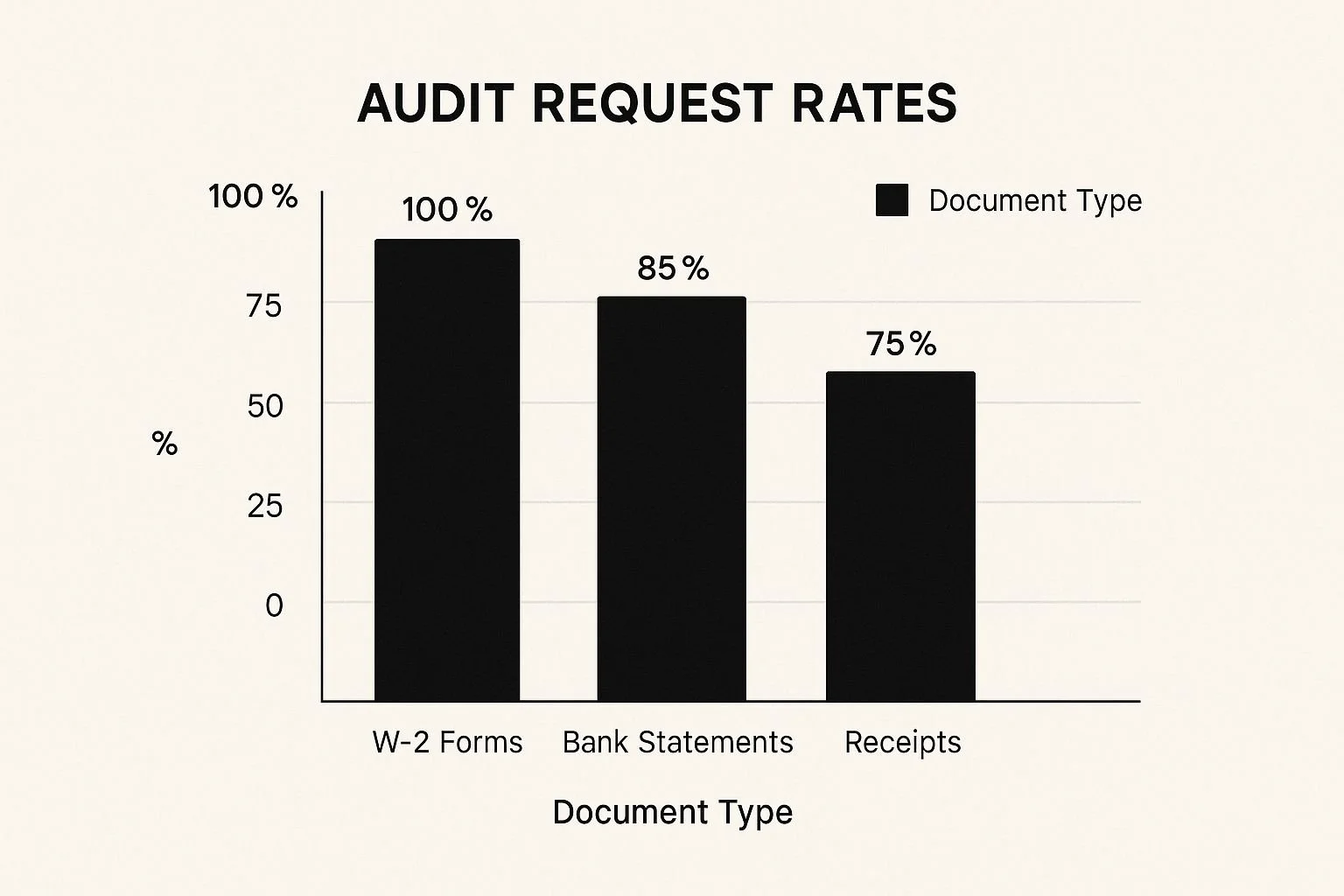
This data proves that the IRS is just as interested in verifying your expenses and cash flow as they are in your income. Having organized bank statements and receipts is non-negotiable.
Immediate Actions to Take
Once you’ve read the notice and know the deadline, there are a few things you should do right away. First, resist the urge to call the number on the letter immediately. Anything you say to an agent can be used as part of their examination. It's better to get your documents and thoughts organized first.
If you have new information that wasn't included with your original return, you may have the right to request an audit reconsideration. Whatever you do, never ignore the notice.
The problem won't go away; it will only get bigger as penalties and interest accumulate. Eventually, the IRS can escalate to actions like putting a lien on your house or levying your bank account. A strategic, timely response from day one is your best bet for getting through this with the best possible outcome.
Gathering Documentation and Building Your Defense Strategy
Once you've figured out exactly what the IRS wants to see, the real work begins. This is the stage where an audit is often won or lost, well before you ever have a conversation with an agent. Think of yourself as building a case for a trial.
Your mission is to assemble a complete, organized, and persuasive collection of documents that answers every question and leaves no room for doubt. Tossing a shoebox of receipts on the table just won’t work; you need a smart approach.
The best defense is a good offense, and that starts with organizing your records to respond directly to the points raised in your audit notice. A critical piece of advice: don't give them extra information.
If the IRS is questioning your business mileage for 2022, only provide records for that specific item and year. Handing over documents for other years or different deductions is an open invitation for them to start digging deeper.
Your goal is to be precise and thorough, not to open up new cans of worms. This focused strategy is a cornerstone of getting effective IRS audit help.
Creating Your Audit File
Your first practical step is to create a dedicated folder—either a physical one or a digital one on your computer—for everything related to this audit. This file will be your command center. As you collect your documents, sort them logically based on the categories the IRS has questioned.
For instance, if the audit is about your claimed business expenses, you should create subfolders for each type:
Meals & Entertainment: This should contain dated receipts along with notes detailing who you were with and what business was discussed.
Travel: Gather airline tickets, hotel receipts, and a clear log of the business activities you conducted during each trip.
Supplies: Collect invoices and corresponding bank or credit card statements that confirm the purchases.
This level of organization does more than just keep you sane. It signals to the IRS auditor that you are meticulous and that your records are trustworthy. It also serves as a self-check, helping you immediately spot any gaps. If you see that your mileage log is incomplete or a key receipt is missing, you have time to figure out a solution before the audit meeting.
Dealing with Missing Documentation
It happens to the best of us. A vital receipt vanishes, or a bank statement from three years ago seems to have disappeared into thin air. Don't panic. You can often reconstruct these missing pieces.
For a lost receipt, a credit card statement showing the transaction date, vendor, and amount is a strong substitute, especially if you add a note explaining the business purpose of the expense. For missing bank statements, your financial institution can almost always provide you with copies.
If you find documentation that contradicts the IRS's initial findings, you might have grounds to request an audit reconsideration. This formal process allows you to present new evidence that wasn't available or included when you first filed.
Getting your records straight isn't just about checking a box; it's about building the solid foundation you need for a successful resolution.
Choosing the Right Professional Help for Your Situation
Getting that IRS audit notice is stressful enough, but now you have to decide who to call for help.
Picking an expert for IRS audit help is more than just finding someone to do the talking; it’s about finding the right kind of expertise for your specific mess.
If you choose wrong, you could end up spending more money and getting a worse result than if you’d just handled it yourself.
Think of it like this: if you have a toothache, you go to a dentist, not a cardiologist. The same idea applies to tax professionals. Not all of them have the same qualifications or are allowed to do the same things.
An Enrolled Agent (EA) is a tax pro who has passed a tough IRS test and can represent you in front of the agency. They live and breathe tax code, making them a great choice for simpler audits, like a correspondence audit where the IRS just wants to see some extra documents.
A Certified Public Accountant (CPA) has a wider range of financial knowledge, which is perfect if your audit gets into complicated business accounting or messy financial statements.
When to Bring in a Tax Attorney
But what if your audit has a whiff of something more serious? If there's any hint of criminal activity, a major legal disagreement, or the possibility of ending up in Tax Court, you need a tax attorney.
They are the only professionals who can go with you to court, and everything you tell them is protected by attorney-client privilege. That protection is a huge deal if your case involves sensitive information.
Tax attorneys are crucial when the stakes are high and the financial fallout could be severe. This is becoming more relevant as the IRS ramps up its audits on high-income earners and large businesses.
For instance, the audit rate for people earning over $10 million is set to climb to 16.5%. This means more taxpayers could be facing complex disputes where having a lawyer is a necessity. You can read more about the IRS's strategic enforcement changes.
Before you hire anyone, grill them with questions. You want to know about their direct experience with your specific kind of audit. Ask for their PTIN (Preparer Tax Identification Number) to verify they are registered with the IRS.
Be wary of anyone who guarantees a specific result or demands a huge fee upfront without giving you a clear game plan. A professional you can trust will give you an honest look at your situation and a clear breakdown of their fees.
And if the audit does end with a big tax bill, don't panic—you still have options. You can learn more about how to negotiate IRS debt in our guide.
Navigating the Audit Process and Communicating Effectively

Once the audit is underway, every conversation and piece of paper you share matters. A successful outcome often depends less on what your records say and more on how you present them.
You need to manage the information flow carefully and keep things professional and cooperative, but without offering more than what's requested. This is where professional IRS audit help can be a game-changer, as a representative can serve as a vital buffer between you and the agent.
Your first interaction with the examining agent really sets the tone for everything that follows. Whether you're on the phone or meeting in person, the most important rule is to answer only the question that was asked.
Don't start rambling about extra details or trying to justify why an expense was legitimate. If the agent asks for your 2022 mileage log, give them that specific log. Don't launch into a five-year history of your business travel habits.
This discipline prevents "scope creep," where a simple inquiry about one item can spiral into a deep dive of your entire tax return.
Handling Information Requests and Maintaining Control
Treat the audit as a series of specific, controlled information exchanges. You will likely receive an Information Document Request (IDR), which is the IRS's formal shopping list of the exact records they want to review. Your task is to provide everything on that list—but nothing more.
Here’s a practical tip I always give my clients: never, ever hand over your original documents. Always provide clean, organized copies. This not only protects your primary records but also signals to the agent that you're organized and taking this seriously.
If you get hit with a tough question you weren't expecting, it is completely fine to say, "I'll need to check my records on that and get back to you." This buys you time to find the correct information and consult with your tax pro instead of fumbling for an answer on the spot.
This example of an official IRS letter from their website gives you a feel for the formal communication style you can expect.
Knowing how to communicate is half the battle. You build credibility by being polite, organized, and direct. Remember, the auditor is just a person doing their job.
If you make their life easier by giving them well-organized, relevant documents, you’re more likely to get a smoother, faster resolution. It's a delicate balance of cooperation and control.
For a complete walkthrough of this entire journey, check out our comprehensive IRS audit guide, which details everything from the first notice to the final outcome.
Understanding Your Options When Things Don't Go as Planned
Getting a bad audit report can feel like a gut punch, but it’s definitely not the final word. While your first reaction might be to just pay up and move on, it's important to understand you have rights and several ways to move forward.
This is a critical moment where getting the right IRS audit help can make all the difference, potentially turning a huge financial hit into a more manageable outcome.
Think of the audit report as the examiner's opinion, not an unbreakable verdict. If you disagree with their findings, a good first step is often to request a meeting with the examiner's manager.
This informal chat gives you another chance to state your case, maybe with a better explanation or new documents. If that doesn't work, it's time to formally challenge their decision.
Fighting the Findings: The Appeals Process
This is your chance to officially contest the audit results by filing a protest to go to the IRS Independent Office of Appeals. This office is a separate branch from the audit division, and its job is to settle disagreements without bias.
Their goal isn't to re-audit your return but to find a fair resolution based on the law and the facts you present. It's surprising how many cases get resolved in the taxpayer's favor here, long before a courtroom is even considered.
To have a real shot at winning your appeal, you need to bring a strong case. This might involve:
Submitting new proof that you've since found.
Pointing out specific tax laws that the auditor might have misinterpreted.
Building a solid legal argument for why your original return was correct.
This is a pretty intricate process, so having a professional on your side is a smart move. They can help you navigate the procedures and build the strongest argument possible.
Resolving the Bill: Payment and Relief Options
If an appeal isn't the best path for you, or if it doesn't work out, you still have options for dealing with the tax bill. The IRS processed over 101 million individual returns last year, so they've seen it all and have systems in place for people who can't pay a new tax bill in one lump sum.
You can see more about these trends in the IRS's latest filing season statistics.
Here are your main choices for managing the debt:
Installment Agreement: This is a straightforward monthly payment plan that lets you pay off what you owe over time.
Offer in Compromise (OIC): An OIC lets you settle your tax debt for less than you actually owe. However, the eligibility rules are quite strict.
Currently Not Collectible (CNC) Status: If paying your tax bill would cause you major financial hardship, the IRS might temporarily pause collections.
In certain situations, you might also get relief if your tax problems were caused by your spouse or ex-spouse. We cover this in detail, and you can read more about IRS Innocent Spouse Relief in our detailed article. The bottom line is, even a bad audit result doesn't have to be the end of the story.
Moving Forward After Your Audit Resolution
Getting that final letter from the IRS confirming your audit is closed feels amazing, but don't just file it away and forget the whole ordeal. Think of the audit as a very stressful, very expensive lesson in financial management.
It’s your chance to take everything you learned and build a much stronger, more organized financial system for yourself. This isn't about being scared of another audit; it's about being smart and proactive.
Establishing Bulletproof Record-Keeping
Your top priority now is to make those documentation habits you were forced into during the audit a permanent part of your routine. You just spent a ton of time and energy digging up old bank statements and receipts. Don’t let that go to waste by slipping back into old habits like the infamous "shoebox method."
Go Digital: You don’t need a fancy scanner. Just use your phone's camera to snap a picture of every business receipt right after you get it. Organize these images in cloud storage with simple, clear folders like "2024 Travel Expenses" or "2024 Client Lunches."
Use Dedicated Accounts: If you're not doing this already, stop everything and go open a separate bank account and credit card that are exclusively for business transactions. This one move makes tracking your income and expenses a thousand times easier and gives the IRS a clean, simple trail to follow if they ever look again.
Keep Contemporaneous Logs: When it comes to things like mileage, don't guess at the end of the year. Use a mileage-tracking app on your phone that logs your trips as they happen. For business meals, get in the habit of scribbling on the receipt (or in a digital note) who you were with and what business you discussed.
Rebuilding Your Confidence and Adjusting Your Strategy
An IRS audit can really rattle your confidence. The trick is to use that feeling to make positive changes. Take a hard look at what exactly the IRS questioned. Was it your home office deduction?
If so, make sure your workspace strictly meets the "exclusive and regular use" test. If it’s a gray area, you might decide it's not worth the risk and skip that deduction next year.
This is also the perfect moment to think about your relationship with your tax pro. If they gave you solid IRS audit help and got you through the process to a reasonable outcome, stick with them.
They now know the ins and outs of your finances better than anyone. But if you felt like you were flying blind or didn't have a strong advocate, it might be time to find a new expert who can help you stay on the right track.
The goal is to walk away from this whole experience smarter and more prepared. Dealing with tax problems can feel like a heavy burden, but you shouldn't carry it by yourself. I offer a FREE Tax Debt Analysis to show you exactly how I can help before you make any commitment.
➥ Contact Attorney Stephen A. Weisberg for a free Tax Debt Analysis.
Contact Me Here: https://www.weisberg.tax/contact-1
Email: s.weisberg@weisberg.tax
Phone/Text: (248) 971-0885
Address: 300 Galleria Officentre, Suite 402, Southfield, MI 48034
