How to Stop State Tax Garnishment Easily | Expert Tips
Breaking Down State Tax Garnishment: What You're Really Facing

State tax garnishment can feel overwhelming. It's a legal process where the state takes a portion of your earnings directly from your employer to pay off outstanding tax debts.
This doesn't happen randomly; there are specific procedures the state must follow. Understanding these steps is key to protecting your income.
How Does State Tax Garnishment Work?
Garnishment is typically a last resort after other collection attempts fail. These attempts can include notices, letters, and phone calls requesting payment.
If these are ignored, or if a payment plan isn't established, the state may escalate to garnishment. For instance, a state might issue a final demand notice giving you a set time to respond before starting garnishment.
This is why it's vital to address tax notices promptly, even if you can't afford to pay the full amount.
States also have varying thresholds for garnishment. Some pursue smaller debts aggressively, while others only use garnishment for larger outstanding balances.
The timeline also differs; some states act quickly, while others have a longer process. Understanding your state's specific regulations is essential.
State tax garnishment is a highly regulated process, though data specific to tax-related garnishments is often combined with other types. Studies show wage garnishment is widespread, impacting a notable percentage of workers.
Between 2014 and 2019, research indicated approximately 1% of U.S. private-sector workers faced some form of wage garnishment. While specific data for state tax garnishment isn't readily available, its impact is significant.
Why Does the State Choose Garnishment?
States often see garnishment as more effective and reliable than other collection methods. It secures regular payments directly from your income source, eliminating the need for voluntary payments. This allows the state to recoup the debt faster.
Knowing the process, potential timelines, and reasons behind state tax garnishment allows you to be proactive. This understanding can help avoid the stress and financial strain garnishment often brings. Addressing the issue early gives you more options to resolve the debt and stop the garnishment process.
Who's Most Vulnerable to State Tax Garnishment?
Beyond the statistics, there's a clear pattern of who's most likely to face state tax garnishment. This isn't random; certain demographics and circumstances significantly increase vulnerability. Understanding these patterns can help you assess your own risk and take preventative measures.
Income and Employment Factors
Income level plays a major role. Lower-income individuals and families often face greater financial hardship, making them more likely to fall behind on taxes. Unexpected medical bills or job loss can quickly deplete savings, leading to missed tax payments and, eventually, garnishment.
Low and moderate-wage workers—those earning between $25,000 and $39,999 annually—are disproportionately affected by wage garnishment.
Rates can be as high as 4.6% in this income bracket. Nationally, the average duration of any garnishment (including state tax) is about five months. During this time, approximately 11% of gross earnings goes to creditors or tax authorities. Find more detailed statistics here.
Certain industries also contribute to tax complexities. Fluctuating income or high rates of self-employment, such as in construction or freelance work, can make it harder to accurately estimate and pay taxes, increasing the risk of underpayment and garnishment.
Life Transitions and Financial Shocks
Major life transitions—like divorce, job changes, or the death of a spouse—can also increase vulnerability. These events often create unexpected financial burdens and disruptions, making it tougher to manage tax obligations. This is especially true if income decreases significantly, or expenses increase.
Sudden financial shocks, such as a major medical emergency or unexpected home repairs, can also strain finances and lead to missed tax payments. These unforeseen events can easily overwhelm individuals and families, making them more susceptible to garnishment.
Systemic Factors and Early Warning Signs
Underlying systemic factors, like lack of access to financial education or resources, also contribute to garnishment risk. Individuals may not fully understand their tax obligations or how to effectively manage their finances.
Recognizing early warning signs is crucial. Consistently receiving tax notices or struggling to make ends meet are key indicators.
Addressing these issues early and seeking professional advice can help mitigate the risk and develop strategies to protect your income. This proactive approach empowers you to manage your finances and seek help when needed, ensuring your financial well-being.
The following table provides a general overview of how income levels can be impacted by wage garnishment, and specifically by state tax garnishment where data is available.
It's important to note that these are estimates and actual figures can vary significantly depending on individual circumstances and state laws.
State Tax Garnishment Impact by Income Level
| Income Bracket | Overall Garnishment Rate | Estimated State Tax Portion | Average Duration | Average % of Income Garnished |
|---|---|---|---|---|
| Low (Under $25,000) | High | Varies significantly by state | Varies significantly by state | Can exceed 15% in some cases |
| Moderate ($25,000 – $50,000) | Medium-High | Moderate | Often around 6 months | Typically 10–15% |
| Middle ($50,000 – $100,000) | Medium | Lower | Shorter duration | Generally under 10% |
| Upper (Over $100,000) | Low | Lowest | Shortest duration | Typically under 5% |
As you can see, lower income brackets are more likely to experience longer durations and a higher percentage of income garnished. This highlights the importance of seeking financial guidance and addressing tax issues promptly to minimize the potential impact of garnishment.
Emergency Tactics to Stop State Tax Garnishment Now

When facing the immediate threat of state tax garnishment, taking quick action is critical. You need solutions that work right away, not weeks or months down the line. This section outlines practical legal procedures to stop garnishment, based on real cases where taxpayers successfully protected their earnings.
Understanding Your Options: Immediate Actions
First, understand you have options. Don't panic. Instead, explore these immediate actions that can put a stop to garnishment:
File a Hardship Exemption: This legal process shows the state that garnishment would cause undue financial hardship. It’s crucial to use precise language and provide supporting documentation when filing, clearly showing your essential expenses and limited income. Demonstrate how garnishment would prevent you from meeting basic necessities like housing, food, and medical care.
Execute an Administrative Appeal: This formal challenge to the garnishment order requires careful attention to detail. Make sure you meet all documentation requirements and deadlines, which are different in each state. A properly executed appeal can compel the state to re-evaluate your case.
Emergency Bankruptcy Protections: In desperate situations, filing for bankruptcy can provide immediate relief by putting a freeze on garnishment actions. This is a complex process and requires professional guidance to determine eligibility and manage the legal complexities. Check out our guide on Stopping IRS Wage Garnishment.
Navigating Legal Procedures and Deadlines
The legal landscape of state tax garnishment is complicated, with processes and deadlines that vary significantly from state to state.
Missing a single deadline can drastically affect your chances of stopping garnishment. This highlights the importance of knowing your state's specific rules.
For instance, some states require particular forms for hardship exemptions, while others accept detailed letters. Also, the required documentation to prove hardship can differ and may include bank statements, pay stubs, and medical bills.
The infographic below illustrates two key legal options for negotiating with tax authorities: an Offer in Compromise (OIC) and an Installment Agreement.
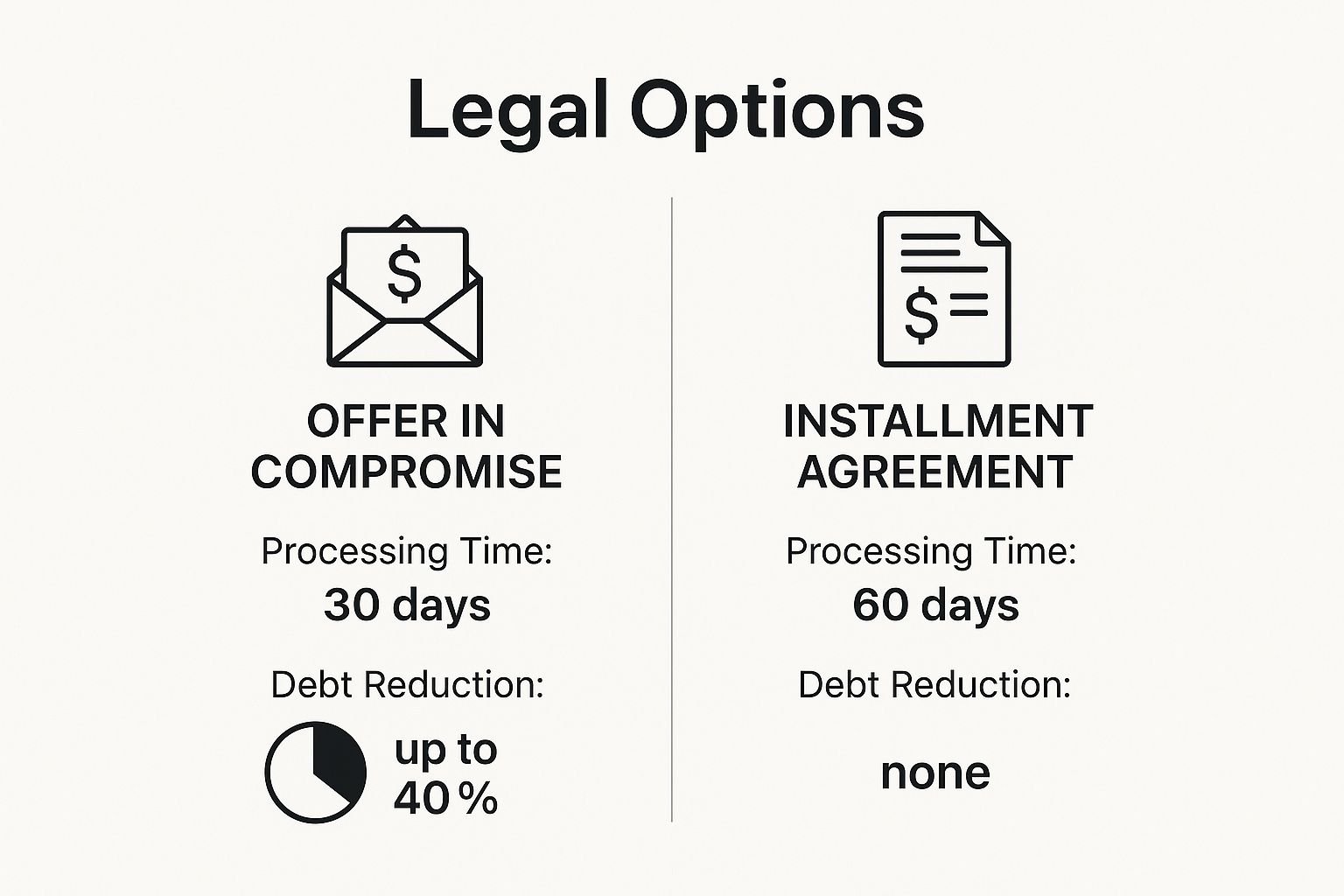
As the infographic shows, an OIC can potentially reduce your tax debt by up to 40%, but processing takes about 30 days.
An Installment Agreement takes longer to process (around 60 days) but offers no debt reduction. Choosing the right approach depends on your individual situation and financial goals. You might also be interested in Stopping IRS Wage Garnishment.
State-by-State Garnishment Exemption Comparison
To help you understand your state's specific protections, the following table compares garnishment limits and exemption thresholds across different states. Note that these are just examples and should not be considered legal advice - always consult with a professional for specific guidance in your situation.
| State | Maximum Garnishment % | Minimum Income Protected | Hardship Exemption Available | Special Protections |
|---|---|---|---|---|
| Example State A | 25% | $500/week | Yes | Protection for head of household |
| Example State B | 10% | $750/week | No | None specified |
| Example State C | 15% | $600/week | Yes | Protections for disabled individuals |
As demonstrated in the table, the level of protection against garnishment varies significantly by state. It's essential to research your state's specific laws and regulations to understand your rights fully.
Practical Steps for Success
These aren't theoretical strategies; they're practical steps proven to be effective. Many taxpayers have used these methods to maintain their financial stability while addressing their tax problems. However, navigating these procedures can be challenging.
Remember, understanding your rights and acting quickly can be crucial in stopping state tax garnishment. Don't hesitate to get professional advice to effectively navigate these challenges.
Negotiating With Tax Authorities: Insider Strategies That Work

Successfully resolving tax issues often involves more than just legal knowledge. It requires skillful negotiation with tax authorities. This means understanding their perspective, presenting a compelling case, and knowing the available resolution options.
Understanding the Psychology of Tax Negotiators
Tax authorities are individuals who respond positively to well-organized presentations and a willingness to cooperate. This involves presenting a realistic repayment plan, not appearing helpless.
For instance, clearly outlining your current financial hardship with supporting documents can be highly effective.
Even seemingly minor leverage points can be significant. This might include offering a lump-sum payment, even if less than the total amount owed, or demonstrating future compliance. Another strategy to stop wage garnishment is exploring personal bankruptcy.
Documentation That Makes a Difference
Your provided documentation forms the basis of your negotiation. Organized financial records, such as bank statements, pay stubs, and expense reports, are essential. These documents clearly illustrate your financial situation.
Presenting documents isn't enough; you need to frame them effectively. Highlight information supporting your case and explain any discrepancies or complexities concisely. Learn more about effective appeals in our article on How to Master the Appeals Process.
Resolution Options and Qualifying for Programs
Several resolution options exist, from installment agreements to offers in compromise. Understanding these options and your eligibility is key. An installment agreement allows you to repay the debt over time, while an offer in compromise lets you settle for less than the original amount. Carefully assess your long-term financial capabilities when choosing a strategy.
Timing, Follow-Up, and Avoiding Stalls
When you negotiate is as important as what you say. Proactive outreach before garnishment demonstrates a willingness to resolve the issue, potentially making authorities more receptive.
Consistent, professional follow-up is crucial to prevent delays once negotiations start. This shows your commitment to a solution.
By understanding negotiation dynamics, presenting your case strategically, and following up effectively, you can significantly improve your chances of stopping state tax garnishment and regaining financial control.
This proactive, well-prepared approach can make a substantial difference in protecting your income and achieving a positive outcome.
Building Your Tax-Safe Financial Foundation
Stopping state tax garnishment is a critical first step. However, true financial security comes from building a foundation that prevents future issues. This means developing a sustainable, long-term plan that goes beyond immediate relief.
Think of it like building a house: fixing the garnishment is like patching a leaky roof, but a strong foundation prevents future cracks and more serious structural problems.
Restructuring Your Finances for Tax Compliance
Financial counselors specializing in tax issues often recommend restructuring finances to prioritize tax compliance. This doesn't mean sacrificing basic needs, but it does involve carefully analyzing your income and expenses. The goal is to identify areas for adjustment.
For example, creating a realistic budget allows you to allocate funds specifically for tax obligations. This is similar to how you would budget for essentials like rent or utilities.
Understanding your tax obligations is also key. Keeping track of due dates, payment amounts, and required forms can help prevent accidental underpayment. Additionally, establishing good record-keeping practices makes tax season much simpler.
This means organizing receipts, invoices, and other relevant financial documents throughout the year, making it easier to accurately report income and deductions.
Breaking the Cycle of Repeated Tax Problems
Certain behavioral patterns can lead to recurring tax problems. These often involve procrastination, disorganization, or simply a lack of understanding about tax laws. For instance, consistently delaying tax filing or ignoring notices can escalate into serious issues like garnishment.
However, specific interventions can break these cycles. Setting reminders for tax deadlines, creating a designated space for tax documents, and seeking professional advice when needed can significantly improve tax compliance.
Think of it like managing any other important recurring bill—automating payments and tracking due dates minimizes the risk of late fees and penalties.
Budgeting for Variable Incomes and Self-Employment
Variable incomes, self-employment, and multiple income streams can make tax management more complex, sometimes leading to garnishment. Traditional budgeting methods may not be effective in these situations.
Instead, consider budgeting approaches designed for fluctuating income. This could involve creating a "worst-case scenario" budget based on your lowest expected income. Then, set aside surplus earnings during higher-income periods to cover your tax obligations.
You might be interested in: Learn more about navigating the IRS statute of limitations in our article. This is especially helpful for those with inconsistent income, helping them avoid future tax surprises.
Building Manageable Systems for Long-Term Success
This framework isn't about perfect compliance. It's about creating manageable systems that work even when you're facing financial challenges.
A solid tax management system allows you to navigate life's financial ups and downs without jeopardizing your financial well-being. Just as a strong foundation helps a house withstand storms, a sound tax strategy can protect you from financial difficulties.
By prioritizing tax compliance, building effective systems, and addressing underlying behavioral patterns, you create a solid financial foundation.
This minimizes the risk of future garnishments and maximizes long-term financial security. This proactive approach isn't just about avoiding problems; it's about building a stronger financial future.
Professional Help: When To Hire an Expert and Who To Trust
Dealing with state tax garnishment can be incredibly stressful and confusing. While self-help resources can be helpful, sometimes getting professional guidance is the best way to protect your finances. Knowing when to seek expert help and, more importantly, who to trust, can make all the difference.
Identifying the Right Professional For Your Situation
It's important to remember that not all tax professionals are the same. When you're facing garnishment, you need an expert with specific experience in that area. Tax attorneys, CPAs, and enrolled agents each bring different skills to the table.
Tax Attorneys: These legal professionals focus on tax law and have a deep understanding of tax court procedures and how to negotiate with tax authorities. They are the best choice for handling complex legal issues and can represent you in court if needed.
CPAs (Certified Public Accountants): CPAs are financial accounting and tax preparation experts. They can analyze your financial situation, find potential mistakes in your tax filings, and work with tax authorities to set up payment plans.
Enrolled Agents (EAs): EAs are federally authorized tax practitioners who specialize in representing taxpayers before the IRS. While they mainly focus on federal taxes, some EAs also have experience with state tax issues.
The right professional for you depends on your specific situation. A simple garnishment due to a calculation error might be best handled by a CPA. A more complex case involving legal disputes might require a tax attorney.
Key Questions To Ask Potential Representatives
Before hiring any professional, it's important to ask specific questions to understand their capabilities:
"What is your specific experience with state tax garnishment cases?"
"What is your success rate in stopping or reducing garnishments?"
"Can you provide client testimonials or case studies?"
"How do you structure your fees, and what are the estimated costs for my case?"
These questions will help you find truly qualified professionals and avoid those who rely more on marketing than experience. Discussing fees upfront helps prevent unexpected costs and allows you to compare your options.
Recognizing Red Flags and Avoiding Scams
Be cautious of professionals who promise guaranteed results or push you to sign a contract immediately. These are often warning signs of potential scams. Trustworthy professionals will thoroughly assess your situation, clearly explain your options, and give you time to make an informed decision.
Protecting your finances involves stopping garnishments and building a strong financial foundation. Exploring asset protection strategies can be a valuable part of this process.
Maximizing the Value of Professional Services
To get the most from your professional, be prepared for your first consultation. Gather all relevant documents, like tax returns, state notices, and financial statements.
This preparation can save you money on professional fees by reducing the time spent gathering information. It also lets the professional focus on creating a strategy for your specific case.
You might also want to Learn more about Innocent Spouse Relief. This can be especially helpful if your tax problems are related to a former spouse's actions.
Case Studies: The Power of Professional Intervention
Real-world examples show the positive impact of professional help. In one case, a tax attorney negotiated a significantly lower garnishment for a client experiencing financial hardship.
In another, a CPA discovered errors in a taxpayer's filings, resulting in a complete reversal of the garnishment. These cases demonstrate how the right professional can protect your income and resolve your tax problems.
Choosing the right professional is essential for stopping state tax garnishment. By understanding the different types of professionals available, asking the right questions, and being prepared, you can significantly increase your chances of a successful outcome.
Ready to take control of your state tax garnishment situation? Contact Attorney Stephen A. Weisberg today for a free Tax Debt Analysis. We'll help you explore your options and create a personalized strategy to protect your income and resolve your tax issues.
➥ Contact Attorney Stephen A. Weisberg for a free Tax Debt Analysis.
Contact Me Here: https://www.weisberg.tax/contact-1
Email: sweisberg@wtaxattorney.com
Phone/Text: (248) 971-0885
Address: 300 Galleria Officentre, Suite 402, Southfield, MI 48034
