What Happens When You Don't File Your Taxes? Find Out Now
When you don't file your taxes, the financial fallout isn't just a possibility—it's a certainty. The IRS has a system of penalties and interest that kicks in the very day after the deadline, and ignoring the problem only makes it worse.
The Snowball Effect of Not Filing Taxes

Think of an unfiled tax return like a small snowball at the top of a huge mountain. At first, it's manageable, maybe even easy to ignore. But once it starts rolling, it picks up speed and more snow—in this case, penalties and interest—growing bigger and more dangerous by the day. Before you know it, that tiny snowball has become a full-blown financial avalanche.
This is precisely what happens with the IRS. As soon as the tax deadline passes, the clock starts ticking, and two major penalties come into play. They're designed to work together, creating serious financial pressure to get you back into compliance.
The Two Main IRS Penalties
First up is the Failure to File penalty, and it's the more severe of the two by a long shot. This one is triggered simply for not getting your return in by the due date (including any extensions you filed for). The penalty is a steep 5% of your unpaid taxes for each month or part of a month your return is late.
Then there's the Failure to Pay penalty. This one applies if you filed on time but didn't pay the full amount you owed by the deadline. It's calculated at 0.5% of the unpaid taxes for each month or part of a month the balance remains unpaid.
Here's the key takeaway: The Failure to File penalty is 10 times higher than the Failure to Pay penalty. This is a clear signal from the IRS about what they prioritize. Even if you know you can't afford to pay your tax bill, you should always file your return on time to avoid the much harsher penalty.
What happens if both apply? If you haven't filed or paid, the IRS won't hit you with the full 5.5% each month. Instead, the Failure to File penalty is reduced by the Failure to Pay amount, capping the combined penalty at 5% per month.
Failure to File vs Failure to Pay Penalties
To see how these penalties stack up against each other, here's a direct comparison.
| Penalty Type | Penalty Rate | Maximum Penalty | When It Applies |
|---|---|---|---|
| Failure to File | 5% of unpaid tax per month | 25% of your unpaid tax | Your return is filed after the due date (including extensions). |
| Failure to Pay | 0.5% of unpaid tax per month | 25% of your unpaid tax | Your tax liability is not paid by the due date. |
This table makes it clear that filing on time, regardless of your ability to pay, is always the smarter move to minimize the damage.
To make matters worse, penalties aren't the only thing you'll be dealing with. The IRS also charges interest on the entire outstanding amount. This interest applies not just to your original tax debt but to the penalties as well, and it compounds daily. This is the fuel that really accelerates the snowball effect, turning a manageable tax issue into a serious financial crisis if left unaddressed.
How the IRS Identifies Non-Filers

It’s a common—and dangerous—misconception that if you don't file a tax return, you can just fly under the IRS's radar. The reality is quite the opposite. The IRS has a massive and incredibly effective information-matching program that makes hiding income almost impossible over the long haul.
Think of it like a digital puzzle. Every time someone pays you, whether it's an employer, a client, or a bank, they send a piece of that puzzle directly to the IRS. When all the pieces come together, they form a crystal-clear picture of your income for the year.
The Digital Paper Trail
The main tools the IRS uses to build this picture are called information returns. These are documents that third parties are legally required to file, creating an undeniable digital paper trail that leads straight back to you.
You've probably seen these forms before:
Form W-2: Your employer sends this, detailing your wages and exactly how much tax was withheld.
Form 1099-NEC: If you're a freelancer or independent contractor, your clients report what they paid you on this form.
Form 1099-K: Payment processors like PayPal, Venmo, or Stripe issue this to report transactions for goods and services.
Form 1099-INT/DIV: Banks and investment firms file these to show any interest or dividend income you earned.
When these forms land at the IRS, their automated systems get to work, matching the reported income to your Social Security Number (SSN). If the system finds a chunk of income reported under your SSN but no tax return from you, it triggers an immediate red flag. This automated cross-check is precisely why not filing is a strategy with a very short shelf life.
The IRS computer system is built to spot these gaps. When income is reported for you but no tax return is filed, the system automatically flags your account for review, kicking off the enforcement and collection process.
Global Reach and Modern Enforcement
This information-gathering network isn't just confined to the U.S. anymore. Thanks to global transparency efforts, hiding assets or income offshore is harder than ever. Back in 2010, the U.S. passed the Foreign Account Tax Compliance Act (FATCA), which forces foreign banks to report on their American clients. This has become a global standard, meaning your financial footprint is now worldwide.
With such powerful systems in place, the question isn't if the IRS will find out about your unfiled return, but when. And as technology gets smarter, the agency’s ability to pinpoint non-compliance only gets stronger. The IRS is always cracking down on non-filers and unfiled returns, which is why it's so important to get ahead of the problem.
Understanding IRS Enforcement Actions
If you haven't filed your taxes, the IRS won't just show up at your door one day. Their process starts with a series of letters, each one a little more serious than the last. Think of them as formal warnings, letting you know they've noticed a missing return and have started to calculate what you might owe.
This often leads to the IRS filing what's known as a Substitute for Return (SFR). Don't be fooled by the name—this isn't a friendly gesture. An SFR is filed to protect the government's interests, not yours. It usually only accounts for your reported income and applies the standard deduction, completely ignoring any valuable credits, business expenses, or other deductions you were entitled to.
The result? You’re almost guaranteed to get a tax bill that's far higher than what you actually owed. This inflated amount then becomes the starting point for all the penalties and interest that will pile on top.
Tax Liens and Levies
When the letters are ignored and the bill from the SFR goes unpaid, the IRS shifts gears from paperwork to more forceful collection tactics. One of the first major steps is filing a federal tax lien.
A lien is a legal claim against everything you own and will own in the future—your house, your car, your financial accounts. It’s a public record that tells every potential creditor that the government gets paid first. This can absolutely tank your credit score, making it incredibly difficult to get a loan, refinance your home, or even open a new credit card.
If a lien doesn't get your attention, the IRS can escalate to a tax levy. This is the big one. A levy isn't just a claim on your property; it’s the actual seizure of your assets. They are actively taking your stuff to pay the debt.
Here's what that can look like:
Wage Garnishment: The IRS orders your employer to send a chunk of your paycheck directly to them. You never even see the money.
Bank Account Levy: They can freeze your bank accounts and pull funds straight from your checking or savings to cover the debt.
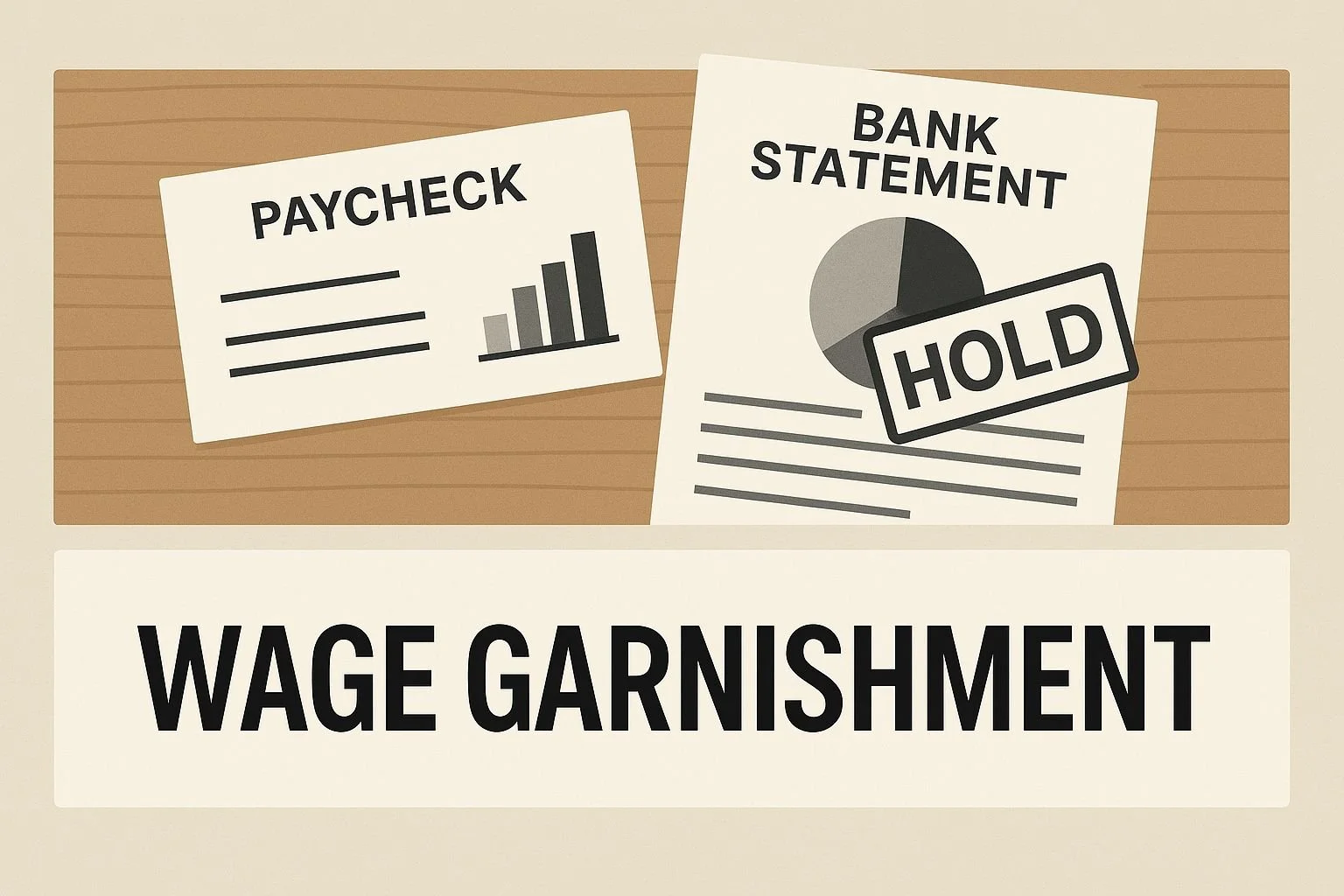
As you can see, a levy can bring your financial life to a screeching halt.
To give you a clearer picture, here’s a quick breakdown of the IRS's most common enforcement tools.
IRS Enforcement Actions Explained
| Enforcement Action | What It Is | Potential Impact |
|---|---|---|
| Substitute for Return (SFR) | The IRS files a basic tax return for you using only your income data. | Creates an artificially high tax bill, as it ignores all your potential deductions and credits. |
| Federal Tax Lien | A legal claim against all your current and future assets. | Severely damages your credit score and makes it difficult to sell property or get new loans. |
| Bank Levy | The IRS seizes funds directly from your checking or savings accounts. | Your accounts can be frozen and emptied without warning, leaving you with no access to your money. |
| Wage Garnishment | A legal order to your employer to send part of your paycheck to the IRS. | Your take-home pay is significantly reduced until the debt is paid, affecting your daily budget. |
| Passport Revocation | The IRS can have the State Department revoke or deny your passport. | You lose the ability to travel internationally, which can impact work, family, and vacations. |
These actions aren't just threats; they are very real consequences the IRS uses to collect on overdue tax debts.
Passport Revocation and Other Actions
For taxpayers with a seriously large debt, the fallout can even stop them from leaving the country. If your tax debt climbs above $59,000 (a figure that gets adjusted for inflation), the IRS can certify that debt to the State Department, which can then revoke your passport or deny you a new one.
This isn't a small problem. The federal tax gap—the difference between taxes owed and taxes paid—was an average of $458 billion per year between 2017 and 2019. Non-filers were responsible for a huge piece of that, about $59 billion. It’s a global issue, and tax authorities are more determined than ever to collect what they're owed.
The path is dangerously clear: what starts with a few ignored letters can spiral into seized paychecks, frozen bank accounts, and even losing your passport. Every step is a direct result of not taking action, which is why it's so important to face the problem head-on before it gets any worse.
When Not Filing Becomes a Criminal Offense
Most of the time, failing to file your taxes is a civil matter. It’s a costly headache, for sure—the IRS will come looking for the money you owe, plus a stack of penalties and interest—but it doesn’t usually involve handcuffs.
However, there's a critical line where simple non-filing can spiral into a serious criminal offense. It all hinges on one crucial word: willfulness.
Differentiating Negligence from Fraud
In the eyes of the IRS, willfulness means you knew you had a legal duty to file and pay taxes, and you intentionally decided not to. It’s the difference between being a procrastinator and being a schemer. The government isn't trying to lock up someone who got overwhelmed and missed the deadline; they're targeting those who deliberately try to cheat the system.
Think of it this way: a freelance writer who has a chaotic year, misplaces a few 1099 forms, and files late out of pure disorganization is probably just negligent. They’ll face civil penalties, but there was no intent to deceive.
Now, imagine a restaurant owner who skims cash from the register every night and keeps a secret set of books to hide the income. They know that money is taxable, but they consciously choose not to report it. That's a textbook example of willfulness and tax evasion.
The IRS has a sharp eye for specific red flags that suggest fraudulent intent, including things like:
Concealing assets through offshore accounts or titling property in a relative's name.
Hiding income by insisting on cash-only payments or funneling money through shell companies.
Falsifying documents or outright lying to IRS agents during an audit.
The Consequences of Tax Evasion
Once the government can prove you acted willfully, the game changes completely. Your tax problem is no longer just a financial issue—it’s a criminal one, and the penalties are severe.
A conviction for tax evasion is a felony. It can land you in federal prison for up to five years, with fines reaching $250,000 for individuals or a staggering $500,000 for corporations. On top of that, you'll still have to pay for the costs of your own prosecution.
And remember, those criminal penalties are in addition to the original tax debt, along with all the civil failure-to-file and failure-to-pay penalties and interest that have been piling up.
These aren't empty threats. The IRS Criminal Investigation (CI) division is dedicated to pursuing these cases. The harsh penalties are designed to be a deterrent, making it clear that the risk of hiding income far outweighs any potential reward. To get a better sense of how deep this rabbit hole goes, you can explore the various penalties associated with tax fraud.
Ultimately, what separates a massive financial problem from a life-altering legal catastrophe is your intent.
The Hidden Costs of Unfiled Taxes
Beyond the storm cloud of penalties and interest, there's another, quieter consequence of not filing your taxes: the opportunities you lose. It’s not just about what the IRS can take from you; it’s about what you’re failing to claim for yourself.
Every single year, millions of dollars in tax refunds sit unclaimed. Why? Simply because the people who are owed that money never file a return.
Think of an unfiled tax return as a locked door. A sizable refund check could be waiting for you on the other side, but the IRS won't hand over the key until you file. This isn't a minor slip-up; it's literally leaving your own money on the table.
The Three-Year Refund Deadline
The IRS gives you a strict window to claim what's yours. You have exactly three years from the original tax deadline to file that return and get your refund. If you miss that cutoff, the money is gone for good. It becomes the property of the U.S. Treasury, and no amount of pleading can bring it back.
Let's say you were due a $1,500 refund for the 2023 tax year, which had a filing deadline in April 2024. If you don't get that return filed by April 2027, you forfeit that entire amount. Forever. It's a surprisingly common and costly mistake.
Not filing when you're owed a refund is like finding a winning lottery ticket and never cashing it in. The money is legally yours, but there's a firm expiration date on claiming it.
More Than Just a Refund
A filed tax return is more than just a form; it's a foundational document for your entire financial life. Without it, you can find yourself shut out of major life milestones.
Lenders, for example, almost always require recent tax returns to verify your income when you apply for a mortgage or a business loan. It’s their proof that you can afford the payments. No returns, no loan.
This ripple effect extends into other critical areas, too:
Student Aid: Your tax information is a cornerstone of the FAFSA application. It's essential for determining your eligibility for federal student aid.
Social Security: If you're self-employed, the income you report on your tax return is how you earn credits toward future Social Security retirement and disability benefits. Not filing means you aren't building that crucial safety net.
Ultimately, what happens when you don't file your taxes isn't just about dodging penalties. It's about taking an active role in your financial future and making sure you don't forfeit the benefits you've rightfully earned.
A Practical Guide to Getting Back on Track
Staring down a pile of unfiled tax returns can feel paralyzing. It’s easy to get overwhelmed, but here’s the good news: there is always a clear path back to good standing with the IRS. Believe it or not, the IRS would much rather help you get compliant than chase you with endless enforcement actions.
Let's walk through the roadmap to get you from stuck to sorted.
The very first step is non-negotiable: you have to file the missing returns. Even if you can't pay a single dime of what you owe right now, filing is critical. It immediately stops the nasty Failure to File penalty from growing and, just as importantly, starts the clock on the statute of limitations for the IRS to assess and collect.
First, Gather Your Financial Documents
To file accurately, you need proof of your income and expenses. What if you're missing old W-2s or 1099s? Don't panic. This is a common problem with a simple solution.
You can request a free Wage and Income Transcript directly from the IRS. This document is a lifesaver—it lists all the income information that was reported to the IRS under your Social Security Number for a given year. It's the perfect starting point for piecing together your financial history and ensures the income you report matches what the IRS already has on file, avoiding an instant red flag.
Next, Understand Your Relief Options
Once all your overdue returns are filed, you'll know exactly what you owe. Only then can you explore the IRS's formal relief programs, which are designed specifically for people who can't pay their tax debt in full.
Here are the main options:
Installment Agreement: This is the most common path forward. It’s a formal payment plan that lets you make manageable monthly payments over time, usually for up to 72 months. Setting one up immediately halts more aggressive collection actions like levies.
Offer in Compromise (OIC): Think of an OIC as a settlement. It allows you to resolve your tax debt for less than the full amount you owe. This option is reserved for those facing genuine financial hardship. You'll need to prove to the IRS that you don't have the ability to pay the full debt now or in the foreseeable future.
Currently Not Collectible (CNC) Status: If making any payment would prevent you from affording basic living expenses (like housing, food, and utilities), the IRS can temporarily pause all collection efforts by placing your account in CNC status. Keep in mind that interest and penalties will continue to add up during this time.
Here's the key takeaway: these relief programs are only on the table after you have filed all your required tax returns. The IRS simply will not negotiate a payment solution until you are fully up-to-date with your filing obligations.
Dealing with tax authorities can be intimidating, especially when it comes to official correspondence. As you work through this, remember that technology can help. For instance, there are now advanced AI tools for replying to income tax notices that can help you draft clear and effective responses.
While sorting out your personal tax situation is a priority, it’s worth remembering that non-filing is part of a much bigger picture. Globally, governments lose an estimated US$492 billion every year from tax avoidance, with roughly $348 billion of that coming from multinational corporations shifting profits to tax havens. By getting your own situation resolved, you're doing your part to contribute to a system that works for everyone.
Your Top Questions About Unfiled Taxes, Answered
Let's cut right to the chase. When you're dealing with unfiled taxes, a lot of questions and "what-ifs" start swirling around. Here are some straightforward answers to the most pressing concerns I hear from clients every day.
How Many Years of Back Taxes Do I Really Need to File?
This is the big one. While there's no magic number that fits everyone, the IRS generally has a "lookback" period. To get back into good standing, they typically require you to file the last six years of your tax returns.
Now, this is a rule of thumb, not a hard-and-fast law. Sometimes, depending on the specifics of your situation—like if there's a large amount owed or a history of non-compliance—they might ask for more. This is where getting professional advice really pays off, because a tax pro can help you figure out the exact strategy for your case.
I Think I'm Owed a Refund. Is It Too Late to Claim It?
You might be in luck, but the clock is ticking. The IRS gives you a three-year window from the original filing deadline to claim a refund.
If you file within that timeframe, you can still get your money. But if you let that three-year deadline slip by, that refund is gone for good—it officially becomes property of the U.S. Treasury. Don't leave your own money on the table.
Are you facing an overwhelming tax problem? The first step is understanding your options. At Attorney Stephen A Weisberg, I offer a FREE Tax Debt Analysis to assess your situation and explain exactly how I can help, without any upfront fees.
Want to understand your options before you call anyone?
Download my free book — Freedom From Tax Debt — a plain-language guide to how the IRS collections process actually works and what resolution really looks like.
➥ Contact Attorney Stephen A. Weisberg for a free Tax Debt Analysis.
Contact Me Here: https://www.weisberg.tax/contact-1
Email: s.weisberg@weisberg.tax
Phone/Text: (248) 971-0885
Address: 300 Galleria Officentre, Suite 402, Southfield, MI 48034
