What Is Innocent Spouse Relief and How Does It Work?
When you sign a joint tax return, you’re usually on the hook for every number on that form—even the mistakes your spouse made. But what if you had no idea your spouse was fudging the numbers or hiding income? That’s where Innocent Spouse Relief comes in.
It’s a crucial protection from the IRS that can shield you from paying tax debts, interest, and penalties that your spouse (or ex-spouse) caused without your knowledge. Think of it as a way to tell the IRS, "Hey, that wasn't my fault, and I shouldn't have to pay for it."
Unpacking What Is Innocent Spouse Relief
At its core, Innocent Spouse Relief is about fairness. Imagine you and your spouse file a joint return. Later, you find out your spouse failed to report income from a side business. The IRS sends a massive bill for the unpaid taxes, plus penalties. You had no clue about that extra income, so why should you be responsible?
This is the exact problem the relief program solves. Normally, when you file jointly, you agree to something called "joint and several liability."
This is a legal term that basically means the IRS can come after either one of you for the entire tax debt, no matter who earned the income or made the mistake.
Innocent Spouse Relief is your way out of that agreement. It severs that joint liability, separating your financial responsibility from your spouse’s deception or errors.
Three Paths to IRS Spousal Relief
The IRS knows that "one size fits all" doesn't work for these complex situations. That’s why there are three different types of relief available, each designed for slightly different circumstances. Knowing which one might apply to you is the first step toward getting help.
The IRS website even provides a starting point for taxpayers trying to figure this out.
As you can see, the official guidance directs you to the right forms and confirms that relief is possible if you were genuinely unaware of an understated tax liability on a joint return.
And this isn't some obscure, rarely used program. The need for this protection is huge. Since the late 90s, the IRS has received tens of thousands of claims every year, stabilizing at around 50,000 annually in the early 2000s. It’s a well-established safety net for people caught in a tough spot.
Getting the details right is critical. You can learn more about how to navigate IRS innocent spouse relief in our full guide, but let's start with a quick look at the three main options.
Each type of relief has different rules, and understanding them is key to a successful claim. This table breaks down the basics.
Three Types of IRS Spousal Relief at a Glance
| Type of Relief | Core Requirement | Outcome |
|---|---|---|
| Innocent Spouse Relief | You had no knowledge or reason to know about the tax error when you signed the return. | You may be relieved of responsibility for the entire tax understatement. |
| Separation of Liability | You are divorced, legally separated, or have lived apart from your spouse for 12 months. | The tax debt is divided between you and your spouse based on individual fault. |
| Equitable Relief | It would be fundamentally unfair to hold you liable, even if you don't meet the others. | You may be relieved of responsibility if no other relief applies. |
As you can see, the path you take depends entirely on your personal circumstances—your marital status, what you knew (and when you knew it), and whether it would be simply unfair to make you pay the debt.
Exploring the Three Paths to Spousal Tax Relief
When you’re staring down a tax bill that truly isn't your fault, it's easy to feel helpless. But the IRS knows that life—and marriages—can get complicated. That’s why they don’t have a single, one-size-fits-all fix. Instead, they offer three distinct paths to relief, each designed for different situations and levels of awareness about the tax issue.
Getting a handle on the differences between Innocent Spouse Relief, Separation of Liability, and Equitable Relief is your first move. Think of them as different legal arguments you can make. One claims complete innocence, another splits the bill, and the last one appeals to basic fairness.
The infographic below gives you a quick visual rundown of the key things the IRS will look at.
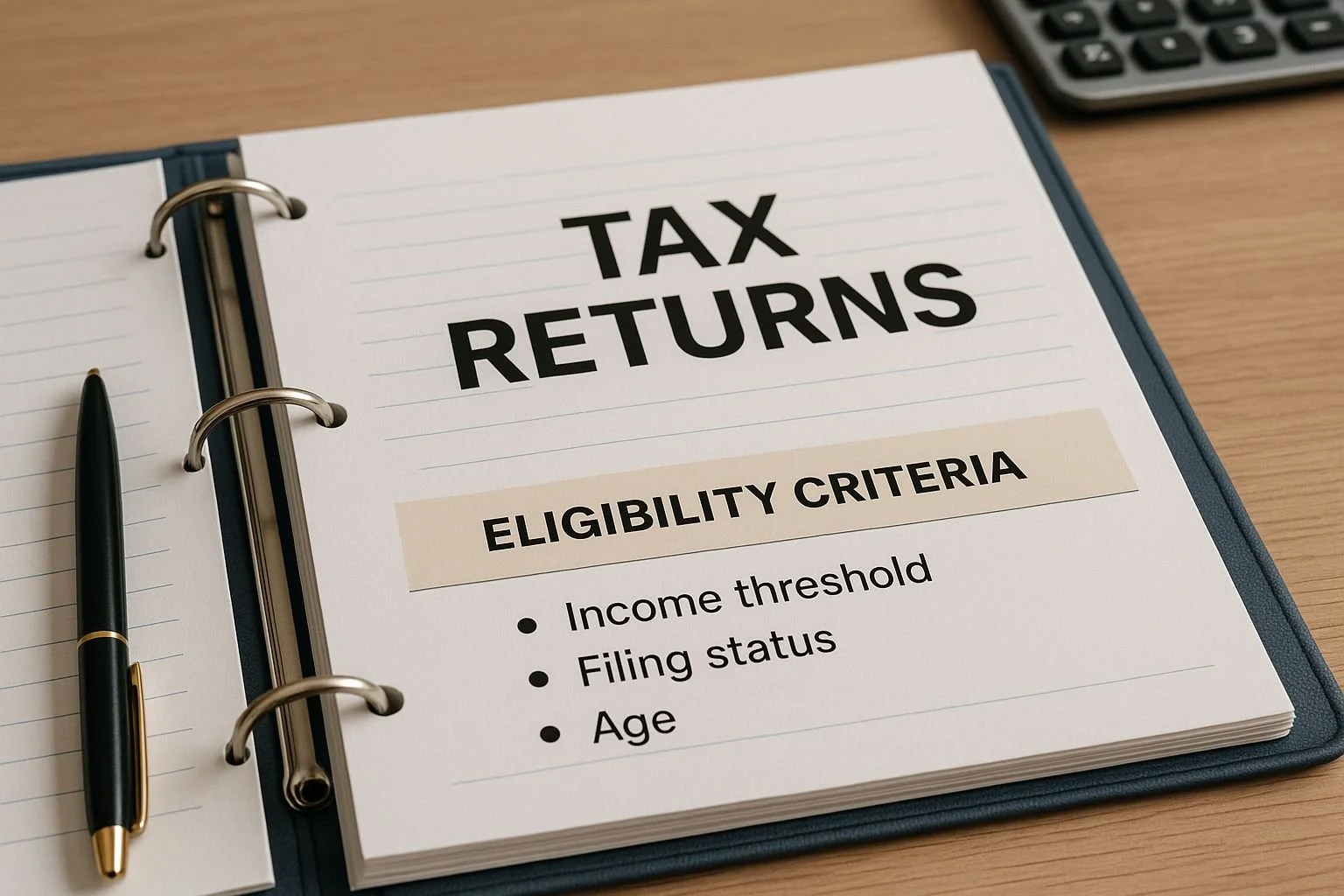
As you can see, a successful claim starts with getting your story and documents straight. So, let’s dig into what each of these options really means for you.
Path 1: Traditional Innocent Spouse Relief
This is the one most people have heard of. It’s built for spouses who can honestly say they had no idea there was an error on the joint tax return they signed. It completely absolves you of the debt, but you have to clear some specific hurdles.
Key Requirements:
You filed a joint return that has an understated tax liability. This means the tax reported was wrong because of bad information, like hidden income or phony deductions.
These errors must belong entirely to your spouse (or ex-spouse). You can't get relief for your own mistakes.
You have to prove that when you signed the return, you did not know, and had no reason to know, about the tax understatement.
Looking at all the facts, it would simply be unfair to make you pay the tax.
That "reason to know" part is a big deal. The IRS will play detective, looking at your lifestyle, your role in the family finances, and whether you benefited from the unpaid taxes. For example, if your spouse was hiding income but you were suddenly taking lavish vacations you couldn't otherwise afford, the IRS might argue you had a "reason to know" something wasn't right.
Path 2: Separation of Liability
This path is specifically for people who are no longer with the spouse they filed the joint return with. It doesn't wipe out the tax debt entirely. Instead, it’s like drawing a line down the middle of the bill and dividing it between you and your former spouse. You’ll only be on the hook for your portion.
To qualify for this option, you must meet one of these conditions when you file your request:
You are divorced or legally separated.
You are widowed.
You haven't lived in the same household as your spouse for at least the 12 months leading up to your filing date.
What makes this different from traditional relief is that you could have known about the tax issue. However, if the IRS can prove you had actual knowledge of the error when you signed the return, you likely won’t get relief for that specific part of the debt.
Path 3: Equitable Relief
Think of Equitable Relief as the ultimate safety net. It’s for people who don’t quite fit the strict rules for the other two types of relief, but who still have a compelling case that forcing them to pay would be fundamentally unjust. This is by far the most flexible option, and it looks at the big picture.
The IRS will look at the entire picture, including economic hardship, spousal abuse, and whether you received a significant benefit from the unpaid tax. The core question is one of fairness.
It wasn't always this way. The old rules for spousal relief were incredibly tough. Before reforms in 1984, you had to prove the hidden income was huge—often more than 25% of the gross income on the return—and that you were completely in the dark. You can learn more about how these strict standards evolved over time by reading the history on the University of Florida Law Scholarship Repository.
Equitable relief can apply to both understated tax (errors on the return) and unpaid tax (tax that was reported correctly but never paid). It's also your only shot if your spouse took the money you both set aside for taxes and spent it without your knowledge.
If your tax debt issues go beyond a spousal situation, it's worth looking at other programs.
Your Step-by-Step Guide to Filing Form 8857

Knowing you have options is one thing; actually getting the relief is another. That's where the rubber meets the road with Form 8857, Request for Innocent Spouse Relief. This is the official document you'll use to make your case to the IRS and ask for protection from a tax debt that isn’t yours.
Think of this form as more than just paperwork. It's your opportunity to tell your side of the story in a structured way that the IRS can process. It might look intimidating, but if you break it down step-by-step, you can build a strong, honest, and compelling claim that gives you a real shot at approval.
Getting Started with Form 8857
First things first, you need the form. You can grab the latest version of Form 8857 right from the IRS website. Make sure it's the current one—tax forms and their instructions get updated, and using an old one is an easy way to get your request rejected.
The initial sections are straightforward, asking for basic info about you, your spouse (or ex-spouse), and the tax years involved. Fill this out with care. The real meat of the application, however, is the narrative. This is where you explain why you deserve relief.
The Critical Two-Year Deadline
This is a big one. You generally have to file Form 8857 no later than two years from the day the IRS first took action to collect the tax from you. This is a hard-and-fast deadline, and missing it can slam the door on your chances.
So, what counts as a "collection activity"?
The IRS sends you a notice that they’ve applied your refund from one year to pay off the joint tax debt from another.
The IRS files a Notice of Federal Tax Lien against your property.
You receive a formal notice of the IRS's intent to levy your bank account, wages, or other assets.
If you let that two-year window close, you’ll likely lose your eligibility for traditional Innocent Spouse Relief or Separation of Liability. While there’s a bit more flexibility for Equitable Relief, you should treat this deadline as non-negotiable to keep all your options on the table.
Crafting Your Narrative: The Heart of Your Claim
The written statement you attach to Form 8857 is everything. This is where you connect the dots for the IRS agent reviewing your file, who knows absolutely nothing about your life or your marriage.
Think of yourself as the author of a very important story—yours. You need to paint a clear, detailed picture of what happened, why you couldn't possibly have known about the tax issue, and why it would be fundamentally unfair to hold you accountable for the bill.
Your statement needs to answer specific questions based on the type of relief you’re requesting:
For Innocent Spouse Relief: Why didn't you know about the understated tax? Was your spouse secretive about money? Did they lock you out of financial accounts? Explain exactly why you had no reason to be suspicious.
For Separation of Liability: Clearly state your marital status. Are you divorced, legally separated, or have you been living apart from your spouse for at least 12 months?
For Equitable Relief: Focus on the "fairness" angle. Would paying this tax cause you severe economic hardship? Were you a victim of spousal abuse or coercion that prevented you from questioning the return? Was your spouse deceptive?
Be brutally honest and get specific. If you had a gut feeling something was wrong but were afraid to speak up, explain why. The more detail and credibility you can pack into your story, the stronger your case will be. Keep in mind that filing Form 8857 is a very different animal from simply catching up on old tax returns.
Once your form and narrative are complete, it's time to gather your proof. Collect every document that backs up your claims. Finally, mail the whole package—Form 8857 and all your supporting evidence—to the IRS address listed in the form's instructions. Do yourself a huge favor and send it via certified mail with return receipt. That little green card is your proof that they got it, and it can save you a world of trouble down the line.
Building a Persuasive Case with the Right Evidence
When you’re fighting for innocent spouse relief, your personal story is the heart of your claim, but it's the hard evidence that gets you across the finish line. You have to prove it. Think of it less like filling out a form and more like building a legal case for an IRS reviewer to examine.
Your job is to get ahead of their questions and back up every single part of your story with solid proof. A well-documented application makes it easy for the IRS to say "yes." Without that backup, your claim is just a story. With it, it becomes a powerful, persuasive argument they can't ignore.
Substantiating Your Lack of Knowledge
This is often the trickiest part. How do you prove you didn't know something? The goal is to paint a clear picture showing you were kept in the dark, either through separate finances or because your spouse actively hid things from you.
Gather any documents that help tell this story:
Separate Bank Accounts: Show the statements. If you had your own small checking account while all the real money flowed through accounts you couldn't touch, that’s powerful. It proves you had no access to the funds where the unreported income was stashed.
Limited Financial Involvement: Can you prove your spouse was the one calling all the shots financially? Maybe they handled all the bills, hired the tax preparer, and made every significant decision. Evidence could be as simple as showing that all financial mail and bills were addressed only to them.
Your Level of Education: This isn't a silver bullet, but the IRS does take it into account. If your educational background or general financial literacy made it unlikely you'd spot a complex tax evasion scheme, it helps build your case.
Demonstrating Economic Hardship
For Equitable Relief, you absolutely must prove that paying this tax debt would ruin you financially. We’re not talking about inconvenience; we're talking about genuine economic hardship.
The IRS defines economic hardship as being unable to pay for reasonable basic living expenses. It’s a high bar to clear, meaning you couldn’t afford necessities like housing, food, or medical care if you were forced to pay.
To prove this, you need to lay out your financial reality, plain and simple:
Proof of Income: Get your recent pay stubs, Social Security statements, or anything else showing the money you have coming in.
List of Expenses: This is where you show where the money goes. Pull together your mortgage or rent statements, utility bills, car payments, grocery receipts, and critical medical bills.
Financial Statements: Your most recent bank statements can show a clear lack of savings, making it obvious you don't have a pile of cash ready to cover a massive tax bill.
The Power of Third-Party Documentation
Sometimes, the most compelling proof doesn't come from you at all. It comes from official, third-party sources. These documents are gold because they’re objective and carry a ton of weight with the IRS.
If they apply to your situation, these are the documents you absolutely want to include:
Divorce Decrees or Separation Agreements: These legal papers are invaluable. They officially mark the end of your marital union and can sometimes even assign the tax debt to your ex-spouse, which is huge for a Separation of Liability claim.
Police Reports or Court Orders: If abuse or coercion was part of your story, this is non-negotiable evidence. A police report or a restraining order makes it crystal clear why you couldn’t question or challenge a tax return—you were acting out of fear.
Sworn Statements (Affidavits): Getting written, sworn statements from people who saw what was happening can be incredibly effective. A letter from a friend, family member, therapist, or clergy member who witnessed the financial control or abuse provides an objective, third-party voice to back up your claims.
When you carefully organize this evidence and attach it to your Form 8857, you transform a simple request into a powerful, well-supported case for why you deserve to be granted innocent spouse relief.
What to Expect After You File for Innocent Spouse Relief
Hitting "send" or dropping that envelope in the mail with your Form 8857 feels like a huge weight off your shoulders. And it is! But it’s also the start of a new phase: the IRS review process. Knowing what’s coming can make the waiting game a lot less stressful.
The very first thing the IRS will do is notify your spouse (or former spouse) that you've filed for relief. This is required by law. They get a chance to chime in and provide their side of the story. I know this can feel incredibly uncomfortable, but it’s a standard part of the procedure. The IRS needs to hear from both parties to get the full picture before they can make a fair decision.
The IRS Examination and Timeline
Once your spouse is notified, your case lands on the desk of an IRS reviewer. This person will dig into your Form 8857, your personal story, and all the documents you sent in. Their job is to see how your situation lines up with the specific legal tests for Innocent Spouse Relief, Separation of Liability, or Equitable Relief.
Be prepared to wait. This isn't a fast process. It typically takes at least six months for the IRS to work through a case, and honestly, it can often stretch out much longer. It all depends on how complex your situation is and how busy they are. The reviewer might reach out with questions or ask for more documents. If they do, get back to them as quickly and completely as you can.
Understanding the Potential Outcomes
In the end, you'll receive a formal determination letter in the mail spelling out their decision. There are really only three ways it can go.
Full Relief Granted: This is the home run. The IRS agrees you're off the hook for the entire tax debt.
Partial Relief Granted: A partial win. The IRS might find you responsible for some of the tax but not all of it. They’ll split the bill, and you'll only owe the portion assigned to you.
Denial of Relief: This means the IRS concluded that you didn't meet the requirements for any of the three types of relief.
It's tough to get relief, but it's absolutely possible. According to a report from the Treasury Inspector General for Tax Administration, between 2019 and 2021, about 36% of filers received full relief and another 13% got partial relief. But with 48% of claims being denied, it's clear that a strong, well-documented application is non-negotiable.
What to Do If Your Claim Is Denied
Getting a denial letter is a gut punch, but it is not the end of the road. You have the right to fight the decision, but the clock is ticking.
A denial from the IRS isn’t a final "no." It’s an invitation to appeal. You can take your case to a neutral party, either within the IRS's own appeals division or to the U.S. Tax Court.
You have two main paths forward:
Appeal to the IRS Office of Appeals: This office is an independent branch inside the IRS. You can have a conference with an Appeals Officer who will review your entire case with a fresh set of eyes.
Petition the U.S. Tax Court: You can also take your case directly to a federal judge. You must file your petition within 90 days from the date on your denial letter. This is a hard-and-fast deadline—miss it, and you lose your chance.
To win an appeal, you need to be just as organized and thorough as you were with your initial application. This is often the point where bringing in a tax professional can make all the difference in turning that "no" into a "yes."
Common Mistakes That Can Jeopardize Your Claim
Filing for innocent spouse relief is a delicate process where small mistakes can have huge consequences. A simple oversight can be the difference between getting your claim approved and receiving that dreaded denial letter from the IRS. Knowing the common pitfalls ahead of time is the best way to build a strong, convincing case right from the start.
The single biggest mistake? Missing the filing deadline. You typically have just two years from the first day the IRS tries to collect the tax from you to file Form 8857. If you wait too long, you could be automatically barred from relief, shutting the door on your case before it's even heard.
Providing Insufficient Evidence
Your story is powerful, but it's rarely enough on its own. One of the most common reasons claims get denied is a simple lack of proof to back up your statements. The IRS examiner needs objective evidence, not just your word for it, no matter how sincere.
Think of it like this: if you claim you were kept in the dark about your spouse's financial dealings, you need to show it. This could mean providing:
Bank statements showing you had separate accounts and couldn't touch your spouse's money.
A written statement from a friend or relative who can confirm you weren't involved in the finances.
Copies of tax documents or financial letters addressed only to your spouse.
Without this kind of hard evidence, your argument is just an unsubstantiated claim.
A particularly sensitive, but critical, factor is spousal abuse. If you were coerced or controlled by your spouse, it's vital to provide credible evidence. This could be anything from police reports and restraining orders to statements from a therapist, clergy member, or social worker. The IRS treats these situations with the gravity they deserve, but they need the documentation to justify granting relief on these grounds.
Undermining Your Own Innocence
Sometimes, the way you tell your story can accidentally work against you. Admitting you had a "reason to know" something was off can be fatal to your claim. For example, if your family was living a five-star lifestyle on a one-star income, the IRS will argue that you should have known something was wrong.
Did you directly benefit from the unpaid taxes? Maybe there were expensive vacations, new cars, or a sudden home upgrade. You have to address this head-on. Don't hide from it. Maybe your spouse told you they received a big inheritance or a one-time work bonus. Being upfront about what you were told is far better than letting the IRS discover the discrepancy and assume you were complicit.
Finally, don't make the mistake of giving vague or incomplete answers on Form 8857. Be specific. Be thorough. Lay out exactly why you need relief, why you qualify, and why it would be fundamentally unfair to make you pay this debt. Every detail helps paint a complete picture for the reviewer, giving you the best shot at a successful outcome.
Frequently Asked Questions About Innocent Spouse Relief
As you start to unpack what innocent spouse relief could mean for you, a lot of questions are bound to pop up. It’s completely normal. This section is here to give you straight answers to the most common questions we hear, helping you get a much clearer picture of the path ahead.
Can I Still Qualify If I Am Married?
Yes, absolutely. You can apply for relief even if you're still married to and living with the spouse who's responsible for the tax issue. Both traditional Innocent Spouse Relief and Equitable Relief are available regardless of your current marital status.
The one exception here is Separation of Liability. For that specific form of relief, the rules are different. You must be either divorced, legally separated, or have lived in a separate household from your spouse for at least 12 consecutive months before you file your claim.
How Does Domestic Abuse Affect a Claim?
The IRS takes situations involving domestic abuse and financial control very seriously when they're looking at a claim. If you were pressured or forced into signing a joint tax return—or were simply too afraid to question what was on it—that becomes a powerful factor in your favor.
This kind of evidence is especially vital for an Equitable Relief claim, where the entire decision hinges on what is fair and just in your specific situation. The IRS recognizes that fear and intimidation can make it impossible to challenge a fraudulent return, and they will give this significant weight.
Of course, you’ll need to provide credible evidence. This could include things like police reports, court documents such as restraining orders, or even sworn statements from therapists, social workers, clergy, or anyone else who witnessed what was happening.
Will Applying for Relief Hurt My Credit Score?
This is a big worry for many people, but the short answer is no. Applying for innocent spouse relief doesn't directly touch your credit score. The IRS is a government agency, not a credit card company, so it doesn't report your application to Equifax, Experian, or TransUnion.
The real issue is the tax debt itself. If the IRS has already filed a Notice of Federal Tax Lien against you, that’s a public record that can definitely damage your credit. Getting relief is the key to having that lien withdrawn, which is a critical step in repairing your financial health. If your situation is more complex, exploring other tax debt solutions can give you a better sense of all your options.
If you're facing a tax issue that seems overwhelming, you don't have to navigate it alone. Attorney Stephen A. Weisberg offers a free, no-obligation Tax Debt Analysis to determine the best path forward for your specific situation.
➥ Contact Attorney Stephen A. Weisberg for a free Tax Debt Analysis.
Contact Me Here: https://www.weisberg.tax/contact-1
Email: s.weisberg@weisberg.tax
Phone/Text: (248) 971-0885
Address: 300 Galleria Officentre, Suite 402, Southfield, MI 48034
