Who Can Garnish Tax Refunds? A Complete Guide
If you’ve ever waited for a tax refund that never showed up, you've probably met the tax offset, also known as a garnishment. It’s a gut-wrenching feeling.
Here's the crucial thing to understand: federal and state government agencies are the only ones who can take your refund. That's it. Your credit card company, a personal loan lender, or a hospital can't just swoop in and grab it directly from the IRS. This is a specific legal process reserved for collecting certain overdue government debts.
Decoding Tax Refund Garnishment
So, how does this actually work? Think of your tax refund as a check the government is about to mail you. But before they put it in the envelope, a centralized system does a quick scan to see if you owe money to any other government agencies.
If the system flags an outstanding debt, it automatically reroutes—or "offsets"—your refund to pay off that debt first. You get whatever is left over, if anything.
This isn't just an IRS power play. The whole show is run by the Treasury Offset Program (TOP), which basically acts as a central collections agency for the government. It’s an incredibly effective system, recovering billions of dollars in delinquent debts every single year.
The Key Players With Garnishment Power
Only a select group of government entities can get in on the TOP action. You won’t see private creditors on this list.
Here are the main players who can intercept your refund:
The IRS: This one's the most obvious. If you owe back taxes from prior years, they're first in line.
State Tax Agencies: Behind on your state income taxes? Your state can ask the federal government to intercept your refund.
Other Federal Agencies: This is a big one. It covers things like defaulted federal student loans or unpaid Small Business Administration (SBA) loans.
State Agencies: This isn't just for taxes. States can also collect on non-tax debts like overdue child support or money owed from unemployment compensation fraud.
This visual gives you a good sense of how different agencies connect to intercept a refund.
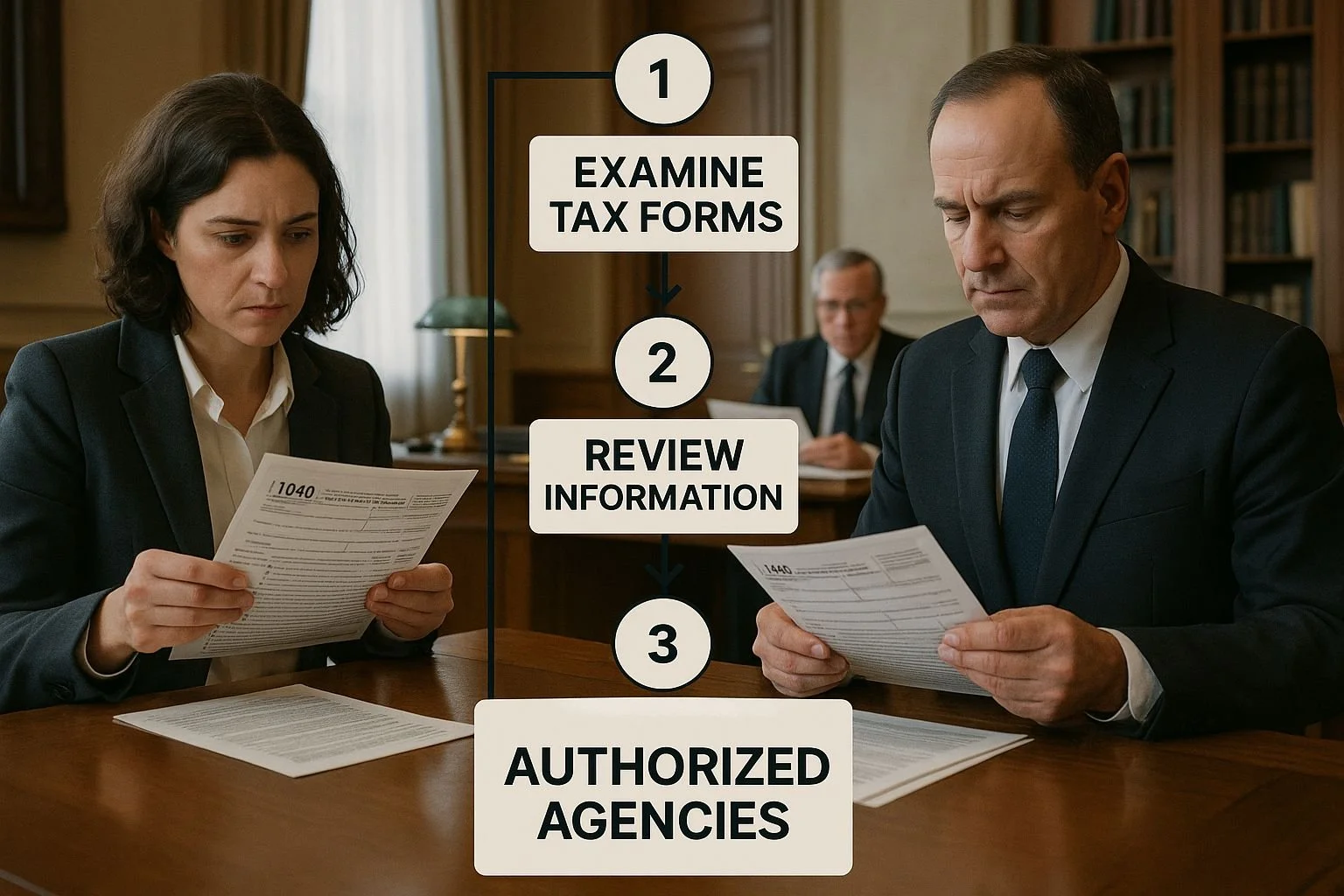
As you can see, it's a coordinated effort across a network of government bodies, not just a single tax authority acting alone.
For a quick reference, this table breaks down who can garnish your refund and why.
Quick Guide Who Can Garnish Your Tax Refund
| Entity That Can Garnish | Type of Debt | Governing Program |
|---|---|---|
| Internal Revenue Service (IRS) | Unpaid federal income taxes | Internal Levy Program |
| State Tax Agencies | Overdue state income taxes | Treasury Offset Program (TOP) |
| Other Federal Agencies (e.g., Dept. of Education) | Defaulted federal student loans, SBA loans | Treasury Offset Program (TOP) |
| State Agencies (e.g., Child Support Enforcement) | Unpaid child support, unemployment fraud | Treasury Offset Program (TOP) |
Essentially, if you owe a government-related debt, your refund is on the table.
While our focus here is on tax refunds, it's helpful to be aware of the various forms of legal asset seizure that can affect your finances. And if you're struggling specifically with IRS debt, looking into relief options is a smart move.
How the Treasury Offset Program Works

To really get who can take your tax refund, you have to pull back the curtain on the system that makes it all possible: the Treasury Offset Program, or TOP.
Think of it as the government's central collection agency. It’s the powerful engine behind nearly all federal tax refund garnishments, connecting what you owe to what you’re getting back.
Now, here’s a common misconception: the IRS doesn't actually run TOP. It’s managed by a different arm of the Treasury Department called the Bureau of the Fiscal Service (BFS). The IRS is a participant, but the BFS is the one pulling the strings.
When a federal or state agency decides your debt is delinquent, they don't just send a bill—they report you to this massive, interconnected system. From there, TOP acts like a bouncer at the door, checking every federal payment that’s about to go out, including your tax refund.
The Matching and Offset Process
So, you've filed your taxes, and the IRS has approved your refund. Great. But before that money hits your bank account, its last stop is a screening with TOP.
The system takes your taxpayer ID number and runs it against its huge database of overdue debts. It's a simple, automated check.
If it gets a hit? TOP automatically intercepts—or "offsets"—all or part of your refund. The money is rerouted to the agency that says you owe them, and you'll get whatever is left over (if anything). You’ll also get a letter from the BFS explaining exactly what happened and where the money went.
This isn't just the IRS collecting its own debts. It's a coordinated, government-wide effort to ensure that federal money is first used to clear outstanding obligations to other agencies.
Understanding this process is critical. It shows how various government bodies have a direct, legal pipeline to your refund, all thanks to a powerful system built for one purpose: collecting overdue debts.
How You Get Notified
The good news is that this shouldn't come as a complete surprise. The system has some built-in warnings.
Before an agency can even submit your debt to TOP, they are legally required to send you a Notice of Intent to Offset. This is your chance. It’s an official heads-up that gives you time to dispute the debt or work out a payment plan before they take action.
Here’s how the timeline usually plays out:
Notice of Intent: The agency you owe sends a warning letter, typically 60 days before they pass your file to TOP.
TOP Submission: If you don't resolve the issue, your debt officially goes into the TOP database, waiting for a payment to intercept.
Offset Notice: Once your refund is taken, the Bureau of the Fiscal Service mails you an official notice. It will break down how much was taken, who got it, and who to contact.
This process gives you a window to get ahead of the problem. But once the offset happens, your fight is with the agency that got your money—not the IRS or the BFS.
Federal and State Government Debts

When the government takes a piece of your tax refund, it’s almost always to settle an old score. Certain government debts are the main reason a refund gets "offset," turning what you thought was a nice windfall into a forced payment on a long-forgotten account.
The most obvious collector is, of course, the IRS itself. If you owe back taxes from a prior year, they don't have to go far. The IRS can simply use an internal levy to snatch your current year's refund and apply it to that old tax bill. It’s their fastest and most direct way of getting paid.
But the IRS isn't the only government player in this game. State governments have a powerful claim, too.
State Income Tax Collection
Think of the federal Treasury Offset Program (TOP) as a nationwide collections database for government agencies. State tax authorities can plug into this system to collect overdue state income taxes from people who are owed a federal refund.
It’s a common scenario. Let's say you used to live in California but now you're in Texas and you left behind an unpaid state tax bill. The California Franchise Tax Board can report that debt to TOP. The feds will then intercept your federal tax refund and wire the money back to California to square things away.
This federal-state partnership makes it clear that just moving across state lines won't make your tax problems disappear. It's an incredibly effective tool for states to enforce their own tax laws, even after you've left.
Other Federal Non-Tax Debts
The net for who can garnish tax refunds gets cast much wider than just tax agencies. A whole host of other federal agencies can use the Treasury Offset Program to collect on all sorts of non-tax debts once they become delinquent.
This opens the door for a surprising number of obligations to put your refund on the chopping block. Some of the most common ones I see are:
Defaulted Small Business Administration (SBA) Loans: If that business loan you took out from the SBA went south, the agency can come after your personal tax refund to recoup their losses.
Unpaid Federal Court Fines: Any fines, fees, or restitution ordered by a federal court can be collected this way.
Delinquent Federal Agency Debts: This is a broad category that could include money owed to agencies like the Department of Housing and Urban Development (HUD) or even the Department of Veterans Affairs (VA).
The bottom line is simple: if you owe money to Uncle Sam for pretty much any reason, your tax refund is a prime target for collection.
The Treasury Offset Program essentially acts as a master list for government debt. Any agency with a valid, delinquent claim can add your name to that list, putting your refund at risk.
Finding yourself in this position can be overwhelming, but you're not out of options. Exploring professional tax debt solutions can help you get a handle on the situation and figure out the best way to resolve the core problem.
State Unemployment Compensation Debts
States can also tap into the TOP for another specific type of debt: unemployment compensation. This usually pops up in one of two situations.
First, an individual might have received unemployment benefits they weren't actually entitled to. If the state discovers an overpayment, they’ll want that money back, and your federal refund is an easy target.
The second scenario hits business owners. An employer who fails to pay their state unemployment taxes can find their personal federal tax refund seized to satisfy the company's debt. It’s a stark reminder of how personal and business liabilities can get tangled up, especially for entrepreneurs.
Child Support and Student Loan Debts
Imagine expecting a nice tax refund only to have it vanish overnight. Two of the most common culprits? Overdue child support and defaulted federal student loans. The Treasury Offset Program (TOP) treats these obligations with top priority, because behind each debt is a family counting on support—or a government outlay that needs repayment.
The Power of Child Support Enforcement
When you fall behind on court-ordered child support, your state’s enforcement agency doesn’t need to head back to court. They simply flag the delinquency and feed it into TOP. From there, any federal payment—including your tax refund—is fair game.
“Child support obligations are a primary reason for tax refund garnishment. The TOP recovers over $1 billion in delinquent child support each fiscal year.”
—Treasury Offset Program Data
States and the federal government have built an almost seamless collection pipeline. Once your debt hits the database, that refund check you counted on gets rerouted automatically—no extra paperwork required. Learn more about state participation in TOP on the Treasury Offset Program resources page.
Defaulted Federal Student Loans
Similarly, if you default on a federal student loan, the Department of Education can use TOP to reclaim what’s owed. Here’s how the process typically unfolds:
Certification of Debt: After about 270 days of missed payments, your loan servicer declares the account in default.
TOP Entry: The U.S. Department of Education certifies that delinquency and uploads it to the TOP database.
Automatic Offset: When you file your taxes, TOP intercepts any refund to cover the defaulted loan.
For many borrowers, losing a refund—sometimes thousands of dollars—can feel devastating. Yet there are paths forward. If you’re juggling multiple federal debts, learning how to qualify for an Offer in Compromise might be the lifeline you need. It can help you negotiate down what you owe and avoid future intercepts.
When Your Refund Cannot Be Garnished
While it’s clear that various government agencies have a direct pipeline to your tax refund, it's just as important to know who can't touch it. There’s a world of difference between government debt and private debt, and only the government gets to automatically intercept your money at the source.
Private creditors—like your credit card company, the bank that gave you a personal loan, or the hospital where you had a procedure—are not on the list of entities that can garnish your tax refund directly through the Treasury Offset Program (TOP). They simply don't have a key to that particular door.
This means that overdue Visa bill or that lingering medical invoice won't trigger an IRS seizure of your refund. For them to get a piece of it, they have to jump through a completely different set of legal hoops.
The Private Creditor Process
So, how can a private creditor get at your money? It’s not a simple process for them. They have to take you to court first and come away with a win.
Here’s what that looks like:
File a Lawsuit: First, they have to sue you over the debt you owe.
Win a Judgment: They need a judge to rule in their favor, giving them a court judgment that legally confirms you owe the money.
Garnish Your Bank Account:Only after they have that judgment can they go after funds in your bank account.
This is the key distinction. They aren't snatching your refund from the IRS before you get it. They're going after the money in your bank account after the IRS has already deposited it. It's a completely separate action that happens long after the Treasury has done its part.
Protecting Your Share of a Joint Refund
This is a scenario that causes a lot of headaches: you file a joint return with your spouse, but the debt that triggered the garnishment is theirs and theirs alone. Maybe it’s a defaulted student loan from long before you two even met. Does your part of the refund get swallowed up by their old debt?
The short answer from the IRS is no. You have a way to protect your portion by filing for an Injured Spouse Claim.
You can file Form 8379, Injured Spouse Allocation, to tell the IRS that you are not responsible for your spouse’s debt. This form essentially asks them to do the math, figure out how much of that joint refund is yours, and send it back to you.
Filing this form is absolutely critical if you're in this boat. It prevents you from being unfairly penalized for debts that have nothing to do with you, ensuring your money doesn't get used to pay for your spouse's past-due obligations.
How to Respond to a Garnishment Notice
Getting that official-looking offset notice from the Treasury's Bureau of the Fiscal Service (BFS) can make your heart sink. But it's not the end of the road. The absolute worst thing you can do is ignore it.
Think of that notice as your roadmap. It tells you exactly which agency put in a claim for your refund and gives you their contact information. Your fight isn't with the IRS or the BFS—it's with the agency named in that letter.
Your Immediate Action Plan
Once that notice is in your hands, you need to move. It all comes down to understanding the debt and figuring out your options directly with the agency that took your money.
Pinpoint the Agency: The BFS notice will clearly state who got your refund. It might be the Department of Education for an old student loan or a state agency for child support.
Get Them on the Phone: Call the number listed. This is your chance to argue that the debt isn't valid, question the amount they claim you owe, or work out a payment plan to keep this from happening again.
Explore Your Options: Depending on the type of debt, you might be eligible for a loan rehabilitation program or an installment agreement. The only way to stop future garnishments for good is to tackle the underlying problem head-on.
Taking these steps now can save you the same headache next tax season.
The Offset Bypass Refund Lifeline
But what if you're in a real financial bind right now? There's a little-known escape hatch called the Offset Bypass Refund (OBR). It’s an emergency measure designed for taxpayers who are facing a genuine economic hardship.
An OBR allows the IRS to issue a portion of your refund directly to you, even if you have an outstanding federal tax debt. The goal is to help you cover immediate, essential living expenses and prevent a crisis like an eviction or having your utilities shut off.
Let's say you're due a $4,000 refund but owe the IRS even more. Normally, they’d keep the whole thing. But if you can prove you're facing a $1,000 hardship—maybe for rent to avoid eviction—the IRS can use the OBR to send you that $1,000. The remaining $3,000 would then be applied to your tax debt.
A Few Common Questions
Even after laying out the rules, I find clients still have a few specific questions that pop up time and time again. Let’s tackle some of the most common ones head-on.
Can They Garnish My State Tax Refund, Too?
Absolutely. While we've been focused on the federal Treasury Offset Program, you need to know that most states run their own version of this system. They use these programs to collect on debts owed to state agencies, and sometimes even for the IRS.
This means both your federal and state refunds are on the table, and they can be taken for completely different reasons. For example, the state might snatch your refund for old parking tickets, while the feds take theirs for back child support.
How Will I Know If My Refund Is Going to Be Taken?
They can't just take it out of the blue. You are supposed to get a heads-up. The agency you owe money to is legally required to send you a "Notice of Intent to Offset" before they ever hand your debt over to the Treasury. That letter is crucial because it outlines your right to fight the claim.
Once your refund is actually taken, the Treasury's Bureau of the Fiscal Service (BFS) will send you its own official offset notice. This document will break down exactly how much was taken, why, and which agency got the money.
When it comes to most federal non-tax debts, there's a harsh reality: there is no statute of limitations for collection through the Treasury Offset Program. As long as a debt is considered legally valid, they can keep offsetting your refund year after year.
Federal tax debts are a bit different, typically having a 10-year collection statute, though there are situations where that clock can be extended. State laws, of course, will have their own rules for their own debts.
If you’ve received a garnishment notice or you're just overwhelmed by a complex tax debt situation, the worst thing you can do is wait. Attorney Stephen A. Weisberg offers a free, no-obligation Tax Debt Analysis to map out a clear path forward. Take the first step toward putting this behind you by visiting weisberg.tax today.
If you’ve ever waited for a tax refund that never showed up, you've probably met the tax offset, also known as a garnishment. It’s a gut-wrenching feeling.
Want to understand your options before you call anyone?
Download my free book — Freedom From Tax Debt — a plain-language guide to how the IRS collections process actually works and what resolution really looks like.
➥ Contact Attorney Stephen A. Weisberg for a free Tax Debt Analysis.
Contact Me Here: https://www.weisberg.tax/contact-1
Email: s.weisberg@weisberg.tax
Phone/Text: (248) 971-0885
Address: 300 Galleria Officentre, Suite 402, Southfield, MI 48034
